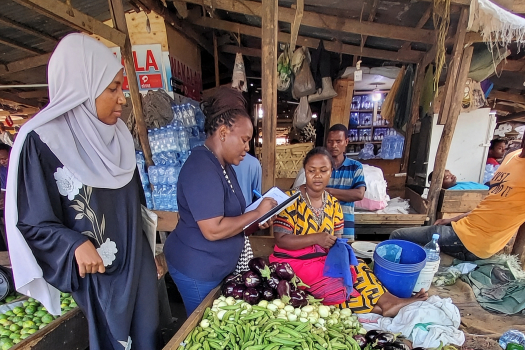
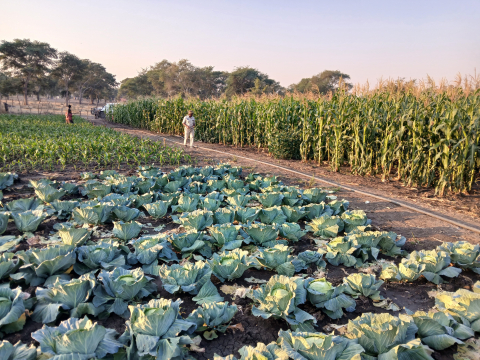
NatCap: Building evidence, partnerships and practical solutions in the Global South
In 2025, the Natural Capital collaborative (NatCap) amplified its ambitions to connect researchers and policymakers on the themes of water systems, forestry, agriculture, and biodiversity. NatCap helped identify governments’ evidence needs and advanced collaborative research to address them.
Two major workshops, in Cape Town in May and Dar es Salaam in October, brought together researchers and policy counterparts to refine a shared agenda.
NatCap also convened water-utility leaders (companies/ authorities) from Accra, Nairobi, Kampala, and Dar es Salaam with EfD researchers to discuss operational challenges and research needs.
The onboarding of two postdoctoral researchers placed in Tanzania and Uganda, respectively, further strengthened research capacity and collaboration across centers.
NatCap’s impact also emerged through focused research and policy engagement. In Zambia, EfD researchers analyzed the country’s electronic voucher reform for farm input subsidies. The evaluation found that the digital systems encouraged more diverse cropping choices while revealing practical constraints, such as limited access to certified seed and weak markets, that reduce its effectiveness. The findings provided Zambian agencies with concrete guidance for improving program delivery.
NatCap contributed to the African Development Bank’s African Economic Outlook 2025. EfD researcher Amin Karimu supported the chapter on natural capital, providing evidence for the Bank’s analysis of Africa’s growth prospects and resource mobilization strategies. The report is widely used by governments, development partners, and the media for policy discussions.
These achievements reflect a year in which NatCap sharpened the focus of collaborative research, aligned research more closely with policy needs, and contributed knowledge that supports more resilient and inclusive development.
SCOPE: Building momentum for sustainable consumption and production
In 2025, the SCOPE collaborative program brought researchers, policymakers, and practitioners...
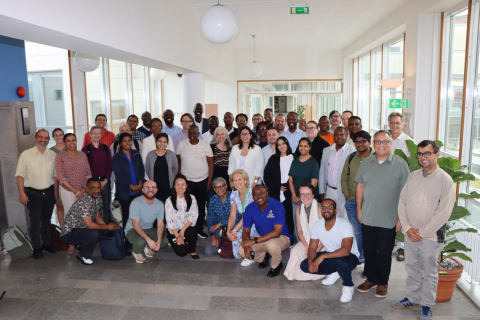
SETI: Advancing policy-relevant evidence for energy transitions
In 2025, the Sustainable Energy Transitions Initiative (SETI) strengthened its role as an...
CPfD: Research at the nexus of pollution, climate change, health and equality
In 2025, the Climate Policy for Development (CPfD) Collaborative expanded its research and policy...
BlueRforD: Advancing research for sustainable fisheries and aquaculture
In 2025, the Blue Resources for Development (BlueRforD) program has sharpened its research agenda in...

EfD research in 2025 focused on developing the collaborative programs
The year started with the implementation of 16 EfD-funded research projects that were approved in...