Dynamics of power-transmission capacity expansion under regulated remuneration

Submitted by Manuela Fonseca on

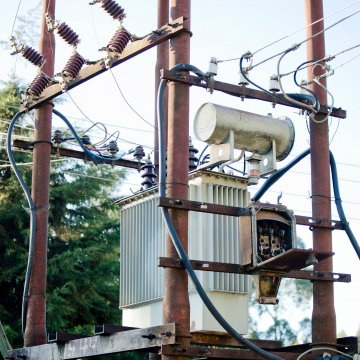
Efficient provision of electricity requires timely expansions of power transmission capacity. However, regulation does not always send the right signals to generate the required (and timely) investments. Therefore, it is important to evaluate the effect of alternative regulations on investment on transmission capacity. In this paper, considering regulated remuneration, we perform this evaluation with a behavioral simulation model of the transmission capacity expansion, in which capacity is endogenously determined by the demand/supply relation.

Energy

Climate impacts on hydropower in Colombia: A multi-model assessment of power sector adaptation pathways

Submitted by Manuela Fonseca on

Climate change is likely to affect water availability and therefore hydropower generation in many regions of the world. In drying regions, hydropower generation may be impaired, creating a need for new power investments that would otherwise have been unnecessary. In this study we apply two partial equilibrium models (GCAM and TIAM-ECN) and two general equilibrium models (MEG4C and Phoenix) to identify possible pathways of power sector adaptation for Colombia under climate change.

Energy

Understanding dynamics and policy for renewable energy diffusion in Colombia

Submitted by Manuela Fonseca on

Colombia has committed to reduce greenhouse gas emissions in 20% by 2030 with respect to business-as-usual in the COP21. One policy is the Renewable Energy (RE) law launched in 2014, aiming “to promote the development and use of non-conventional energy sources” with indirect incentives, such as tax reduction or exemptions. Direct incentives, such as price-based, are not included in the law. Experiences in other countries have proven that direct incentives are more efficient than indirect ones to promote RE.

Energy