

Building “microworlds” helps analyze the electricity markets
The analysis of electricity markets is difficult because of multiple possible solutions and different local conditions. Simulators facilitate this task for policymakers and researchers. An exciting…
Unmasking the mystery of the varying benefits from electrification
The evidence demonstrating the welfare impacts of electrification in Sub-Saharan Africa remains weak and inconsistent, leading some to assert that emphasis on access, in and of itself, is misplaced and that more should be done to identify the complementary conditions that are needed to deliver the anticipated economic growth and improved welfare outcomes. This project seeks to contribute to this debate, by focusing on the impacts of Uganda’s electrification efforts.
Does access to electricity accelerate home-based business creation in rural Ethiopia?
EfD Authors:
KEY MESSAGES
Most of the businesses in rural areas are home-based, i.e., the household runs businesses such as food sales, restaurants, mobile, and electronics shops, barbering, etc., within their residence. Rural households’ business ownership increased from 17.5% in 2011 to 28.5% in 2016. We found that:
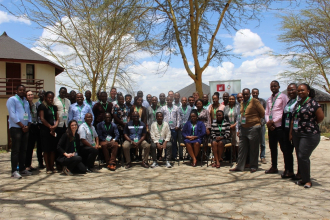
A new group of civil servants trained in Inclusive Green Economy.
The Inclusive Green Economy in practice program (IGE program) is now moving on into its second year, and a new group of participants, so-called IGE fellows, have embarked on the program. The IGE…
|
Climate Change, Energy, Forestry, Policy Design, Waste |
Ethiopia, Kenya, Sweden, Tanzania, Uganda
Show Me the Energy Costs": Short and Long-term Energy Cost Disclosure Effects on Willingness-to-pay for Residential Energy Efficiency
EfD Authors:
Abstract. Imperfect information on future energy costs can lower the demand for more energy efficient technologies, with clear implications for energy supply, emissions and climate change. These hypotheses are explored using a randomised discrete choice experiment for property rental decisions. Results show that when energy consumption is expressed in physical units (as per the current EU labels) the willingness-to-pay for energy efficiency improvements is small and marginally significant.
Inclusive Green Economy in Practice - Policy instruments for an inclusive green economy
The Inclusive Green Economy (IGE) in Practice program is a capacity development program to increase the knowledge and application of environmental economic policy instruments, organizational change, and strengthen national systems for inclusive and sustainable economic development.
Household energy expenditure in Ghana: A double-hurdle model approach
EfD Authors:
This study examines the factors affecting household energy expenditures in Ghana. We employ the
double-hurdle model to investigate whether the factors affecting fuel choice differ from those affecting
fuel expenditures. The following results are obtained using a nationwide representative household dataset.
First, we show that the factors influencing the household’s decision to participate in either the LPG or
charcoal market differ from those influencing how much is spent. Second, households that already use