
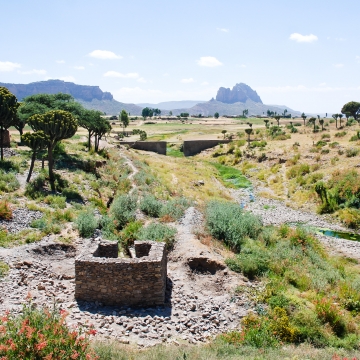
Clear, but don't invest: protected areas discourage some land uses more than others

EfD South Africa addresses the knowledge gap in ecosystem service valuation
Ecosystems are vital to human wellbeing yet the value of the services they provide is often ill-understood in the context of national accounts and policy analysis. EfD researcher, Jane Turpie…
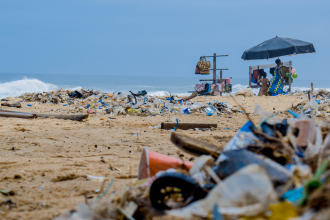
Scientists want to get rid of toxic chemicals in plastic
Thousands of toxic chemicals can be found in plastics on the market. If plastic containing toxic chemicals is collected and recycled, the chemicals can spread into new plastic products. In a new…
Stakeholders’ Perceptions on Agricultural Land-Use Change, and Associated Factors, in Nigeria
Agricultural Land-Use Change (ALUC) is a major driver of global environmental change, not least via its direct impact on the sustainability and resilience of the rural economy. Its drivers are complex and have remained contentious, necessitating further empirical study. This study aims to derive context-specific evidence on the driving factors and effects of ALUC from different stakeholders’ perceptions. We carried out household surveys and participatory rural appraisal across Benue State, Nigeria.
Valuing the unvalued recreational ecosystem services in developing cities of sub-Saharan Africa: urban parks in Dar es Salaam, Tanzania
EfD Authors:
Being mostly rural, Dar es Salaam has always been characterized by greenery and more recently by green space development. However, the values of these spaces are often not known. Note that these unknown values are common to sub-Saharan Africa. In order to make informed decisions in the management of these spaces, it is important that the values are assessed and documented. In this study, we do so by estimating the economic value of recreational parks in Dar es Salaam, Tanzania.
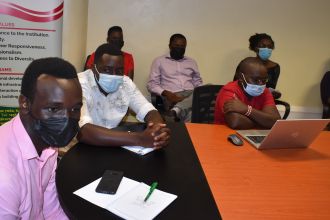
Academicians learned about the System of Environmental-Economic Accounting (SEEA)
Over 30 members of the academia comprising staff and graduate students from Makerere University School of Economics, Muni University and Makerere University Business School on 28th September, 2021…
|
Agriculture, Biodiversity, Climate Change, Conservation, Energy, Fisheries, Forestry, Health, Land, Waste, Water |
Uganda
Impacts of climate shocks on household consumption and inequality in India
EfD Authors:
AbstractThis paper examines the impact of climate shocks, measured as temperature and precipitation variability, on real monthly per capita consumption expenditure of Indian households over the 1988–2012 period, utilising data from the National Sample Survey Organisation's Consumer Expenditure Surveys. The regression results show an increase in consumption by 1.2 per cent on average, in response to a one standard deviation rise in temperature, with heterogeneous impacts across economic sectors.
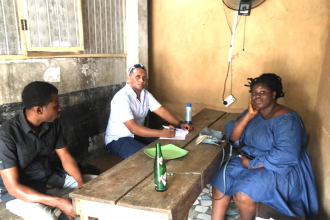
New study on how to make small firms switch to environmental-friendly fuel
Previous studies on energy use in Sub-Saharan Africa have focused almost entirely on households. Hardly any attention has been paid to small enterprises. EfD researcher Yonas Alem, together with…

Recreational value can help save wetlands in urban areas
Increasing urbanization and poor governance have led to the rapid degradation of urban wetlands around the world. However, urban residents are willing to pay for the valuable services a functioning…