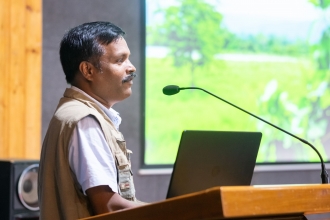
CECFEE Annual Policy Day 2019
CECFEE held its 2nd Policy Day on 10th November, 2019 by organizing a discussion on conservation of forest resources and wildlife. The key speaker for this event was Mr. P.Sivakumar, IFS, Director of…
CECFEE held its 2nd Policy Day on 10th November, 2019 by organizing a discussion on conservation of forest resources and wildlife. The key speaker for this event was Mr. P.Sivakumar, IFS, Director of…
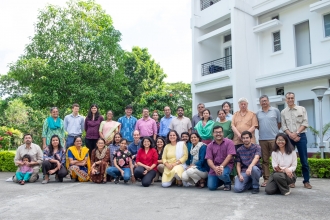
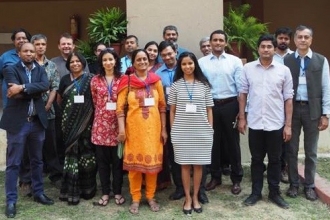
CECFEE hosted its 5th Annual Workshop at the University of Tezpur, Assam. The workshop spanned two days, 10-11 November 2019, and brought together an eclectic mix of researchers and academics. Broadly…

The Center for research on the Economics of Climate, Food, Energy and Environment (CECFEE) of the Indian Statistical Institute, New Delhi, will conduct the 4th Annual CECFEE Research and Policy…
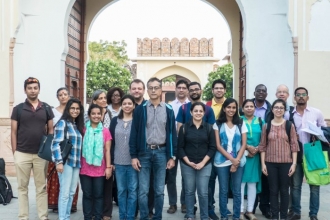
A workshop was organized by the Centre along with the Environment for Development Initiative (EFD) of the University of Gothenburg on October 15th and 16th at Ranthambhore. There were presentations…
AGENDA Monday, November 2, 2015 Morning Introduction and Welcome – E. Somanathan About EfD – Gunnar Kohlin, University of Gothenburg Credit, LPG Stove Adoption and Charcoal Consumption: Evidence from…
Biomass burning of agricultural field residue (stalks and stubble) during wheat and rice harvesting periods in the Indo-Gangetic plains has led to substantial emission of trace gases and particles. This paper seeks to address the regulation of emissions from open field burning of rice residue in Punjab, India by first uncovering the factors that explain on field residue burning of rice residue in Punjab. The results suggest that the use of a combine harvester was the single most important determinant of the decision to burn rice residue.
Air pollution is the largest killer among all environmental problems worldwide, ambient air pollution in India alone accounts for more than a million deaths annually (about 10% of all deaths), and the
Air pollution has large impacts on the Hindu Kush Himalaya (HKH), affecting not just the health of people and ecosystems, but also climate, the cryosphere, monsoon patterns, water availability, agriculture, and incomes (established but incomplete). Although the available data are not comprehensive, they clearly show that the HKH receives significant amounts of air pollution from within and outside of the region, including the Indo-Gangetic Plain (IGP), a region where many rural areas are severely polluted. In addition, the HKH receives trans-boundary pollution from other parts of Asia.

Dr. Farzana Afridi was one of the economists to meet the Prime Minister Among other things, she mentioned the effect of the Ujjwala Yojana on women's work based on her research in rural Indore in…
Professor E Somanathan and Dr. Farzana Afridi discuss ongoing work, aided by ASHA workers, on raising awareness about the detrimental health impacts of using solid fuels for cooking and the need for…