The Impact of Natural Resource Scarcity on Agriculture in Ethiopia

Submitted by Eugenia Leon on

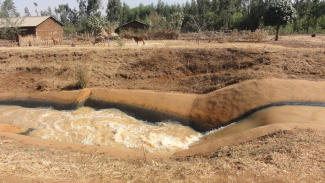
In developing countries such as Ethiopia, rural households spend a considerable part of their time in agriculture as well as resource collection.  However, rigorous empirical studies on the impacts of scarcity of environmental resources on productive activities such as agriculture are very limited—in developing countries in general and Africa in particular. Using a panel data set collected from Ethiopia, this paper examines the effect of scarcity of fuelwood and water on time spent in agriculture.

Agriculture

Biofuel Investments and Implications for the Environment in Ethiopia: An Economy-wide Analysis

Submitted by Eugenia Leon on

Biofuels production has received increasing focus by developed and developing countries due to rising fossil fuel prices and the need to mitigate greenhouse gas emissions. The net economic and environmental impacts of biofuel programs have become an important question of public policy. In particular, the anticipation that biofuels may have a lower environmental footprint than fossil fuels is one of the important drivers. This study investigates the economy-wide impact of biofuel investment in Ethiopia with the focus on greenhouse gas (GHG) emissions and the forest sector.

Energy, Forestry, Policy Design

Energy workshop: Lessons from Ethiopia

A workshop, titled ‘Sustainable energy transitions in low and middle-income countries: lessons for Ethiopia’ was held on June 1 st to 3 rd in Ethiopia to explore the potential for a new research…

Date: Monday 1 — Wednesday 3 June, 2015
Location: Addis Abeba and Kuriftu

The Residential Demand for Electricity in Ethiopia

Submitted by Eugenia Leon on

This paper examines the causality between residential electricity consumption and GDP in Ethiopia by using time series data for the period 1970–2011. Examining the link between economic growth and energy consumption can help policy makers design appropriate policy instruments.

Energy

Urban households in Ethiopia use multiple fuels as they get richer

Submitted by Anonymous (not verified) on

Using three rounds of survey data that cover a decade, we analyze household preferences for energy types and energy choice in urban Ethiopia. We find that, during 2000-2009, households in major cities of Ethiopia used multiple fuels as their income increased. Increased fuelwood prices encourage consumption of cleaner fuels, such as electricity, while increased kerosene prices encourage solid fuel consumption. Better educated households are more likely to consume cleaner fuels.

Energy, Forestry, Urban

The Land Certification Program and Off-Farm Employment in Ethiopia

Submitted by Anonymous (not verified) on

Land tenure security has long been touted as key to increased performance of the agricultural sector in developing countries. At the same time, off-farm employment is seen as a strategy to diversify rural economies.

Agriculture, Land

Profitability of Biofuels Production: The Case of Ethiopia

Submitted by Anonymous (not verified) on

This research investigates the profitability of biofuels production in Africa, taking Ethiopia as a case in point, and suggests an oil price threshold beyond which biofuel may be profitable. Specifically, the study analyzes the viability of bioethanol from molasses and biodiesel from other feedstock in the context of Ethiopia, using data from a biofuels investment survey by EEPFE/EDRI in 2010, and makes estimates based on field visits.

Energy