FILTER
Displaying 281 - 290 of 657 publications
Climate forecasting is a crucial tool for managing risks in climate- sensitive economic sectors like agriculture. Although rainfed farming dominates livelihoods in Africa, information on access, use…
| EfD Discussion Paper | South AfricaWe investigate whether a social information campaign aimed at reducing water use causes a spillover effect on the use of electricity. On average, water use decreased by 6 percent for the treatment…
| Peer Reviewed | Chile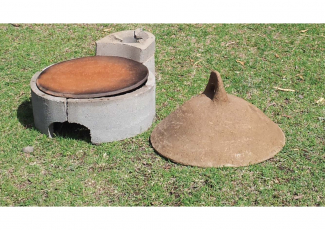
Deforestation and burning of forest products to meet cooking need massively contribute to global warming. In order to reduce the biomass fuel consumption of households in developing countries, various…
| EfD Discussion Paper | SwedenThis paper investigates the effects of prenatal exposure to extreme temperatures on birth outcomes—specifically, the log of birth weight and an indicator for low birth weight—using a nationally…
| Peer Reviewed | ChinaSocieties have adapted to climate and environmental variability throughout history. However, projected climate change poses multiple risks to mariculture because of the increased frequency of…
| Peer Reviewed | ChileThis paper develops a new perspective on stranded assets in climate policy using a partial equilibrium model of the energy sector. Political-economy related aspects are considered in the government's…
| Peer Reviewed |Forest plantations have increased rapidly in the last three decades, to a large extent due to direct and indirect financial incentives. At the farm level, forestry incentives can affect the investment…
| Peer Reviewed | ChileEvidence from south-central Chile shows that the concentration limits for PM10 and PM2.5, defined by both the World Health Organization and national standards, are systematically exceeded, affecting…
| Peer Reviewed | ChileIn this article, we estimate both the economic value of water and own-price and cross-price elasticities of water for the Chilean manufacturing industry using the production function approach…
| Peer Reviewed | ChileChina and the United States are the two largest emitters of greenhouse gases, making them pivotal players in global climate negotiations. Within the coming decade, however, India is set to become the…
| Peer Reviewed | Sweden