FILTER
Displaying 51 - 60 of 368 publications
Does access to electricity promote business creation over the short term and long term? Does the effect differ with grid and off-grid electricity access? We provide insights from the Electricity...
| Policy Brief | Ethiopia
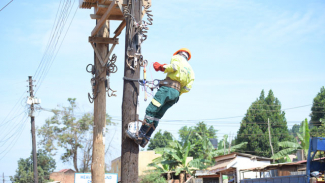
Access to grid electricity helps rural households start non-agricultural businesses.
| EfD Discussion Paper | EthiopiaAbstract A number of wetland ecosystem-services valuation studies around the world have been carried out, however, most of these studies have focused on wetlands in developed countries and few have…
| Peer Reviewed | Ethiopia| Peer Reviewed | Sweden, Ethiopia
For smallholder subsistence farmers, it is difficult to undertake adequate ex-ante strategies to prepare for shocks. These households are forced to attempt multiple ex-post coping strategies such as…
| Peer Reviewed | Ethiopia
Developing country forests sustain livelihoods, help to control flooding, recharge aquifers, pollinate crops, cycle nutrients, harbor biodiversity, and sequester carbon. As a result, forest loss and…
| Peer Reviewed | Ethiopia, KenyaHighlights • Farmers would rather receive compensation for soil and water conservation works than biodiversity. • Significant costs can be shared by farmers for forest conservation. • Investments in…
| Peer Reviewed | EthiopiaAbstract An empirical assessment of relationships between land use and land cover and drinking water chemical treatment cost is lacking in developing countries. This study is conducted to assess the…
| Peer Reviewed | Ethiopia
Abstract Agricultural production in sub-Saharan Africa faces a multitude of challenges arising from land degradation, climate change, and limited access to improved technology. In this context…
| Peer Reviewed | Ethiopia, Tanzania