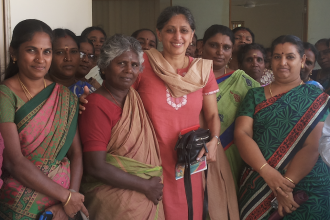
Conservation comes with difficult trade-offs
Managing trade-offs and finding a win-win between communities’ welfare and conservation – that is the preliminary joint topic of two exciting keynote presentations you can look forward to at EfD’s…
Managing trade-offs and finding a win-win between communities’ welfare and conservation – that is the preliminary joint topic of two exciting keynote presentations you can look forward to at EfD’s…
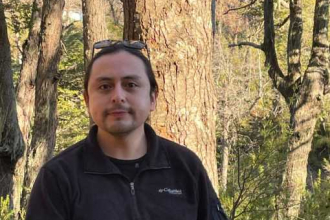
The Chilean Society of Regional Studies (SOCHER) active fellows has elected Mauricio Oyarzo, Associate Professor at the School of Business and Administration of the University of Concepción (UdeC) and…

Artificial Intelligence creates endless opportunities. But it also comes with risks and challenges traditional methods, forcing us to think innovatively. A course, hosted by EfD and Chalmers…
|
UCD School of Architecture, Planning and Environmental Policy, Temporary 5 years |
|
Applications are invited for the position of Lecturer/Assistant Professor (above the bar) in Environmental Policy. This is a 5-year position. The successful candidate will spend time in both UCD and in the newly developed Chang’an Dublin International College of Transportation (CDIC), in Xi’an, China. |

The Director of NENRE EfD-Chile, Marcela Jaime, was interviewed on the radio program "Todos Juntos"(All Together in English) by the host Marlene Guerrero regarding two studies: the evaluation of the…
|

Join this webinar to get acquainted with the Environmental Policy group at University College Dublin. Liana Ricci, Eoin O'Neill, and Shane McGuinness will present an overview of their group, how they…
Diarienummer: PAR 2023/974
Ekonomiadministratör till Environment for Development (EfD), Vikariat till en stor och inspirerande arbetsplats. Stark forskning och attraktiva utbildningar lockar forskare och studenter från hela världen. Med ny kunskap och nya perspektiv bidrar Göteborgs universitet till en bättre framtid.
Med cirka 3 700 heltidsstudenter, 500 anställda och 160 internationella partneruniversitet, erbjuder Handelshögskolan i Göteborg en unik akademisk miljö. Handelshögskolan i Göteborg är EQUIS, AACSB och AMBA ackrediterad.

Check your mailbox! (Check the spam filter too!) If you haven't subscribed yet, just fill in your e-mail address in the subscribe box at the bottom of this page, so you don't miss any news from us…
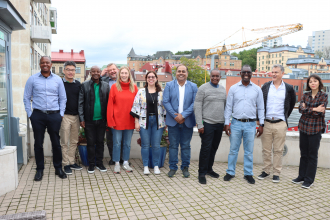
The SDG 8 Initiative, which is coordinated from the University of Gothenburg, includes several collaborating institutions, among others eight so-called Satellite Universities in low- and middle-income…