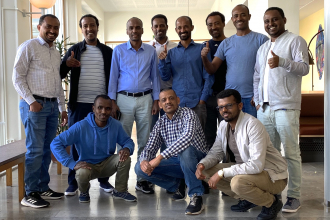
“I hope to help improve the livelihoods of people”
The premises of EfD's Global Hub, located at the University of Gothenburg, usually hosts a very international crowd of staff and visiting scholars. Currently, it’s even more so: Fourteen Ph.D…
The premises of EfD's Global Hub, located at the University of Gothenburg, usually hosts a very international crowd of staff and visiting scholars. Currently, it’s even more so: Fourteen Ph.D…
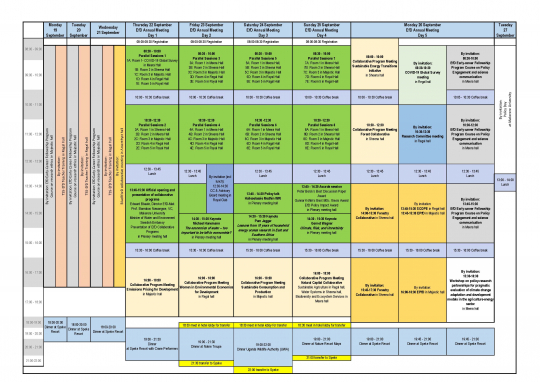
Here is the program.
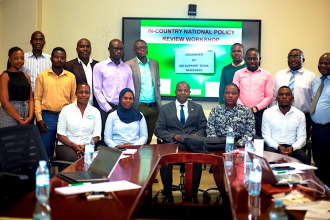
Uganda’s participants in the Inclusive Green Economy (IGE) program, so-called IGE fellows, call for national policy instruments that have clear objectives and implementation plans. They also emphasize…
The 11th Congress of the Asian Association of Environmental and Resource Economics (AAERE) will be held in University of Economics Ho Chi Minh City (UEH), Vietnam, August 19 to 20, 2022, co-hosted by…
Since 2021, the International Development Research Centre (IDRC) has launched an annual Women, Peace, and Security (WPS) Research Award to advance knowledge of the lessons learned, good practices…
The Economy & Environment Partnership for Southeast Asia (EEPSEA) is pleased to announce a call for concept note for a seed grant which provides researchers in Southeast Asia the chance to develop a…
Climate change is challenging the ability of protected areas (PAs) to meet their objectives. To improve PA planning, we developed a framework for assessing PA vulnerability to climate change based on consideration of potential climate change impacts on species and their habitats and resource use. Furthermore, the capacity of PAs to adapt to these climate threats was determined through assessment of PA management effectiveness, adjacent land use, and financial resilience. Users reach a PA-specific vulnerability score and rank based on scoring of these categories.
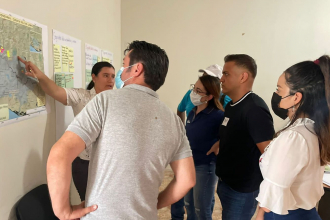
EfD Central America researchers, Roger Madrigal, and Eduardo Pacay visited the Trifinio Region, where the territories of El Salvador, Honduras, and Guatemala meet. The purpose was to network and…

Michael Hanemann has been working on the economics of water most of his professional life, but with a different perspective than many others. He claims that the economics of water is too important to…