Finance ministries better informed on climate change
As climate impacts has begun to affect national budgets and long‑term planning, the interest of Ministries of Finance for analysis has increased significantly.
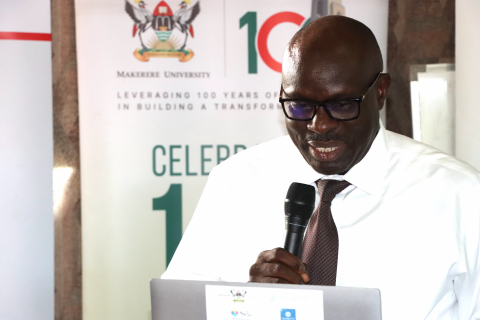
Dr Sam Mugume of Uganda’s Finance Ministry, co-chair of the Coalition of Ministries of Finance for Climate Action, exemplifies this shift.
“Five years ago, the Ministry of Finance in Uganda didn’t have a climate finance unit, we did not do disaster risk assessments, and we were not assessing risks and opportunities as a result of climate action through macroeconomic analysis and modelling. We do all of this now, and I see similar development in other countries,” he says.
As climate-related considerations are informing decisions, ministries need to balance climate with spending needs like health and education.
“You need a strong justification backed with numbers. With the right arguments, people can accept higher costs, for instance, for more resilient infrastructure,” Sam Mugume explains.
The coalition has developed guidance to integrate climate risks and opportunities into macroeconomic analysis and budgeting. EfD contributed insights from the Global South and took part in the Coalition’s launch of the guidance in 2025.
According to Sam Mugume, capacity remains a constraint, both in specialist skills and a shared understanding of climate-economy linkages across the ministry. EfD’s Inclusive Green Economy Program has helped fill some of these gaps through its close collaboration with Makerere University and the Ministry of Finance.
Sam Mugume is also a member of EfD Uganda’s Advisory board and notes, “I see a big role for EfD in assisting central governments, like Ministries of Finance, with training and research.
Looking ahead, Sam Mugume underscores the next major challenge: mobilizing the finance required to put climate‑responsive policies into practice at scale.
The Coalition of Ministries of Finance for Climate Action brings together fiscal and economic policy makers from 100 countries and launched a Global Compendium of Practice in June 2025. In February 2026, the annual deputies meeting was held in Uganda.
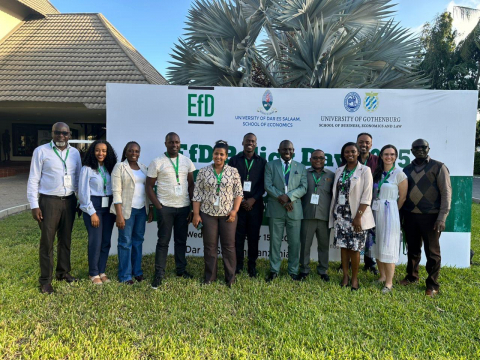
Creating a community for a greener future across Eastern Africa
The Inclusive Green Economy in Practice (IGEP) network made a significant leap forward in 2025 to...
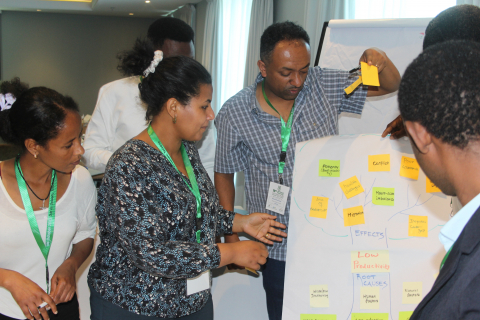
Inclusive Green Economy Program: Highlights from 2025
In 2025, the Inclusive Green Economy (IGE) program continued to strengthen capacity among civil...
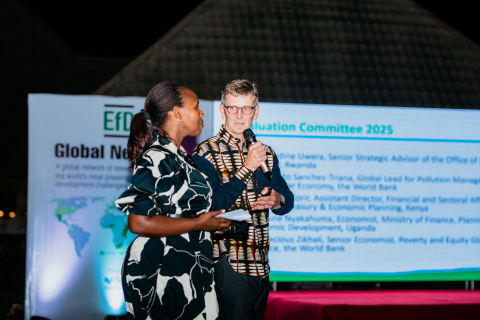
EfD Policy Impact Award encourages researchers' engagement
The EfD Policy Impact Award was presented for the fourth time at the EfD Annual Meeting in Dar es...
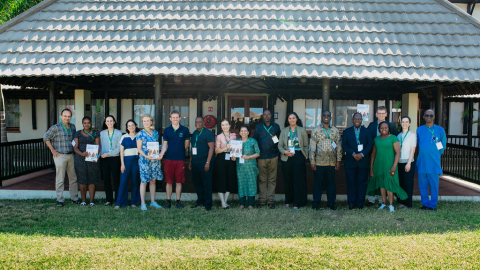
Launched in 2025: Handbook for researchers
It took over two years and involved 26 authors from across the EfD network. It was officially...
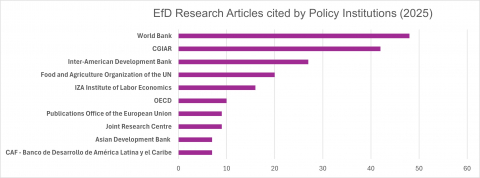
EfD research is cited in policy documents
EfD used, for the first time this year, the Overton tool to measure the policy impact of EfD...
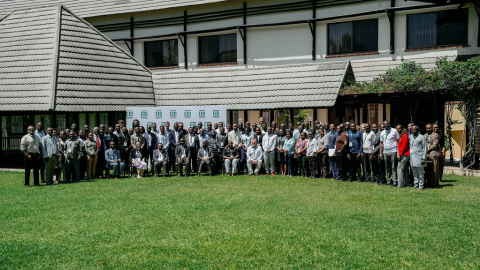
EfD's Policy Day: Solutions for resilient and sustainable agriculture
The Policy Day brought together 120 participants - policymakers from Eastern Africa, researchers...