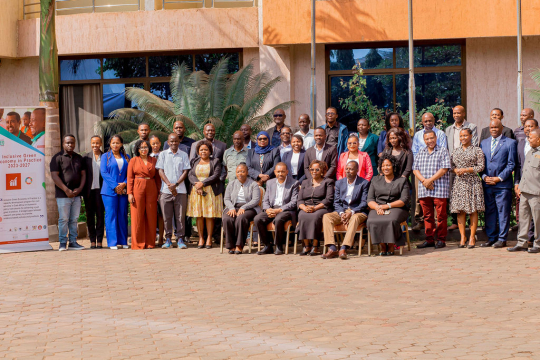
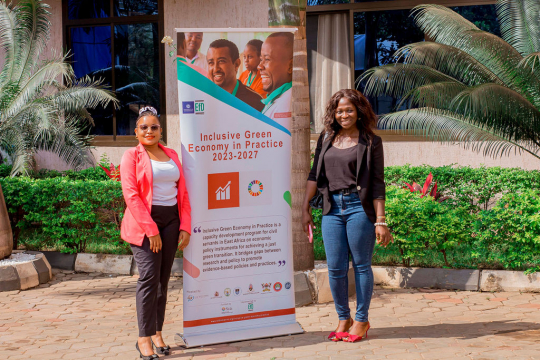
A new Inclusive Green Economy (IGE) programme theme was introduced to government and other stakeholders on 22nd July 2026 in Morogoro, Tanzania. This was an opportunity to consult and gather perspectives so researchers could complement policy demands.
What happens in a forest does not stay in the forest. When catchments are degraded, the effects ripple downstream into farms, water systems, and the communities that depend on them. This connection is the centre of EfD Tanzania’s new Inclusive Green Economy theme, Sustainable Forestry and Water Management.
The workshop held on 22nd July in Morogoro, Tanzania was an opportunity to consult and gather perspectives so researchers could complement policy demands.
The discussion quickly moved beyond protecting trees and water sources. Participants raised questions about livelihoods, carbon markets, water losses, mining, agriculture, local government, and even who should be involved in the Inclusive Green Economy (IGE) program itself. These conversations showed that managing forests and water sustainably is as much an economic and institutional challenge as it is an environmental one.
Starting with government priorities
A key part of the Inclusive Green Economy approach is needs matching. This means linking government priorities with relevant research and policy tools.
Before introducing the new theme, the IGE team reviewed national strategies including the Environmental Master Plan 2022–2032, Vision 2050, Tanzania’s Nationally Determined Contributions, forest assessments, and data on water sources and abstraction.
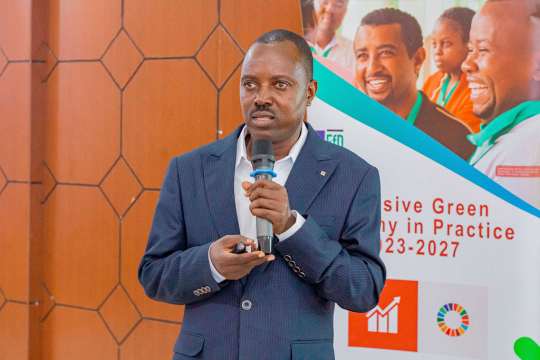
IGE lead Dr. Aloyce Hepelwa explained that this process ensures the program works on issues useful to government rather than selecting research questions in isolation. Stakeholders were then invited to challenge, expand, and refine those priorities.
Forest loss vs livelihoods
Stakeholders discussed the Tanzania Forest Service’s (TFS) role in managing protected forests and the challenges of deforestation, encroachment, and settlement. They also looked beyond protection alone, asking whether government and community forests could generate greater economic value through carbon credits. Such solutions can create incentives to conserve while producing revenue.
Furthermore, participants pointed to pressure on catchment areas from agriculture, livestock, settlement, and other economic activities. Lakes Tanganyika and Victoria were cited as examples where catchment degradation affects wider water systems. This raised a key economic question: can keeping a forest standing become economically valuable enough to compete with the activities that drive its loss?
Small-scale mining was also a concern, as even legal operations can increase demand for natural resources and add environmental pressure.
Water management means tackling losses too
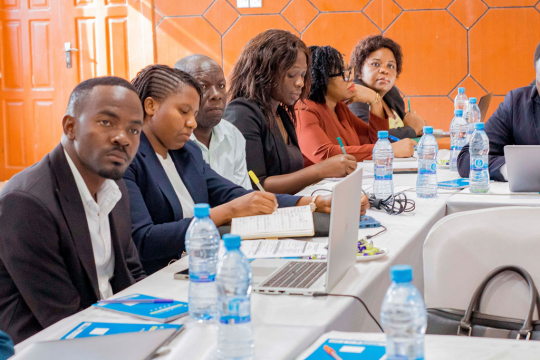
The water discussion took a similar direction. Mr. Shaban Mpwepwe, a representative from the Ministry of Water highlighted challenges including illegal extraction, land acquisition for infrastructure, vandalism, and the continuing task of expanding access to safe water. He also highlighted different solutions the ministry has explored and need help strengthening, such as rainwater harvesting.
“Protecting rivers and catchments is vital, but sustainable water management must also address what happens on the user side,” said Shaban Mpwepwe.
The nations concern is not only where more water will come from, but is rather shifting towards how Tanzania can manage the water it already has better.
Conservation has to work for people
Forestry and water policies also affect livelihoods. If people depend on cutting trees or farming sensitive areas to earn an income, regulation alone may not create lasting change. Stakeholders at the forum stressed the need for alternative livelihoods alongside conservation.

Awareness was another recurring issue. Knowledge must reach beyond those already engaged in discussions. “This reflects the broader idea behind an inclusive green economy,” said Dr. Wilhelm Ngasamiaku from EfD Tanzania while facilitating the discussions. “Environmental protection must consider the people whose livelihoods and daily decisions are shaped by new policies,” he said.
Local involvement is needed
The consultation not only identified issues for researchers. It also raised questions about how IGE itself should work. Participants called for broader involvement of officials at operational levels, not just national policymakers. Local government authorities were particularly highlighted because they work closer to communities and are responsible for putting national policies into practice.
This is crucial for a theme such as Sustainable Forestry and Water Management, where decisions taken nationally must eventually work in forests, catchments, villages, farms, and water systems.
Shaping the questions before seeking answers
The Sustainable Forestry and Water Management theme is still at the beginning of its journey. Rather than starting with predetermined solutions, EfD Tanzania used the consultation to identify the questions research and policy engagement should help answer.
- How can forests generate value without being depleted?
- How can water losses be reduced?
- What incentives could change behaviour?
- How can communities benefit from conservation?
- And which institutions need to work together?
By Fisha Isaac