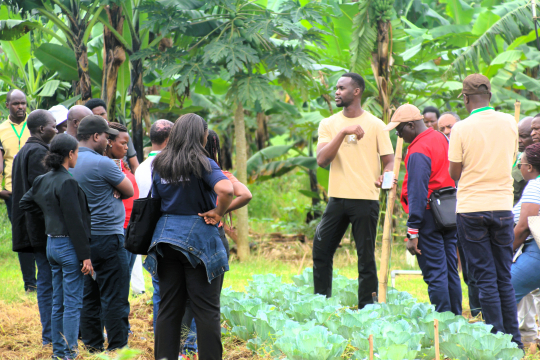
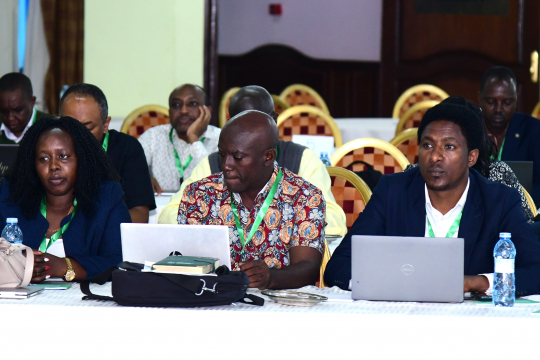
Twenty-three civil servants from five East African countries have converged in Uganda for a regional Inclusive Green Economy in Practice (IGE) Cross-Country Peer Learning workshop aimed at strengthening policy and research collaboration through sharing experiences on climate-smart agriculture.
Convened by EfD Uganda, the five-day workshop (April 21–24) brought together participants from Uganda, Kenya, Tanzania, Rwanda, and Ethiopia to review and refine their Transformation Initiatives (TIs). Those are country-led policy projects designed to address climate and agricultural challenges.
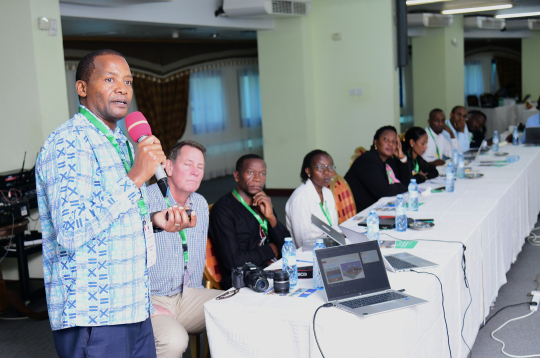
Each country team is advancing a distinct initiative aligned to its national priorities. Kenya is examining barriers to the adoption of climate-smart agriculture technologies, while Uganda is focusing on accelerating the uptake of such practices, particularly among smallholder farmers. Ethiopia is promoting solar-powered irrigation systems to expand agricultural production, Rwanda is working to bridge the gap between scientific evidence and policy implementation, and Tanzania is prioritizing climate-smart irrigation technologies to improve farmer livelihoods.
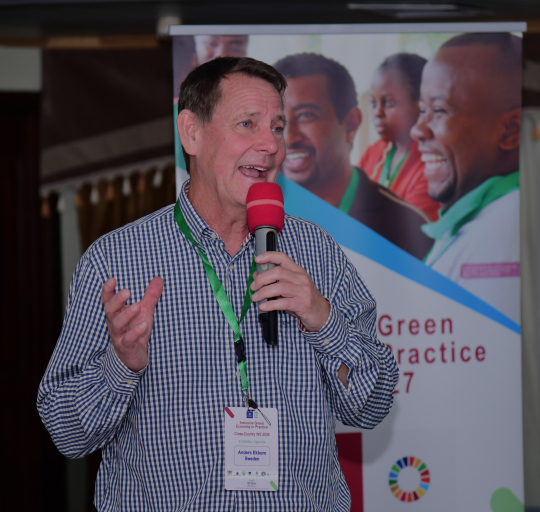
The Program Manager of IGE, Anders Ekbom, underscored the central role of peer learning in the program, and the Transformation Initiatives (TI) are the foundation of the workshop.
“Peer-learning is an important component of the IGE program. The starting point for this process is the Transformation Initiative developed by the IGE fellows together with their country support teams,” he said.
The workshop aims to share experiences and achievements, build capacity through collaborative learning, and strengthen a regional network linking civil servants and academics in all five countries.
EfD Uganda IGE Lead, Edward Bbaale, described the gathering as a key event in advancing the IGE agenda, emphasizing its focus on practical policy impact.
“This workshop presents an important milestone in the implementation of the IGE program, and at its core is peer learning,” Prof. Bbaale said.
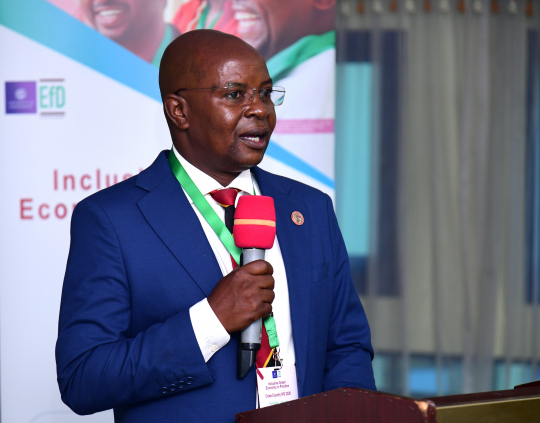
Uganda Policy Engagement Specialist Peter Babyenda said the workshop is structured to generate actionable outcomes.
“All five countries are discussing climate-smart agriculture practices. We are sharing experiences and will identify key takeaways that can be implemented back home,” he said.
Peter Babyenda emphasized that TIs are central to translating training into real-world policy action.
“IGE is about building the capacity of senior public servants. After the training, the fellows are expected to apply what they have learned in their countries, and the TI is one way of doing that,” he added.
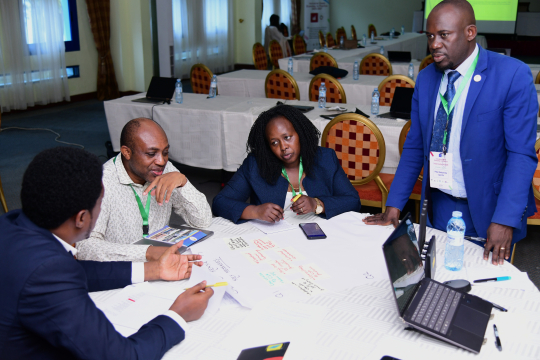
Fellows seek practical solutions
Uganda IGE fellow, Thomas Epeet, explained that the fellows focused on scaling climate-smart agriculture at the household level, particularly among rural and female farmers. The initiative aims to identify barriers limiting the adoption of sustainable farming practices.
“We are looking at what is hindering communities and female participation in climate-smart agriculture,” Thomas Epeet said. He noted that limited access to reliable data from rural farmers remains a major challenge.
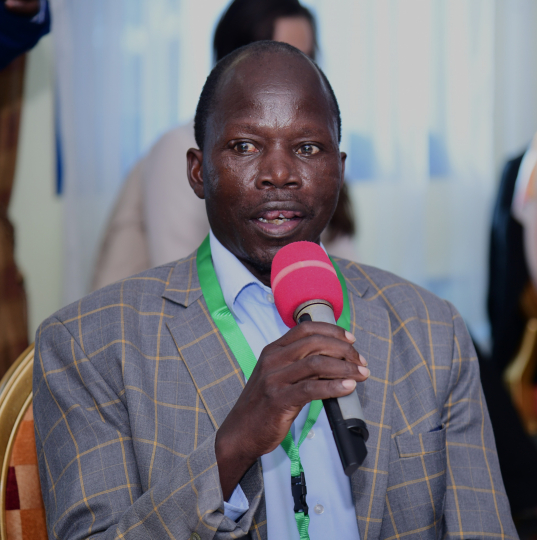
He expressed optimism about the workshop’s impact, saying, “This meeting is helpful because other countries have similar challenges, and we are brainstorming solutions together. We expect to improve and finalize our initiative.”
Ethiopia’s TI is an initiative on solar-powered irrigation for smallholder farmers, aimed at expanding the country’s underutilized arable land. He explained that despite the vast agricultural potential, irrigation coverage remains low.
“The amount of cultivated land is still very small, so we must expand through irrigation,” said Ethiopian IGE fellow Habtamu Alamayo.
However, high costs of solar equipment, limited maintenance infrastructure, and low farmer awareness pose significant barriers. Habtamu Alamayo noted that the workshop offers a platform for shared learning.
“We are learning from each other’s experiences. Some challenges we face may not exist in other countries, and this exchange helps us improve our approach.”
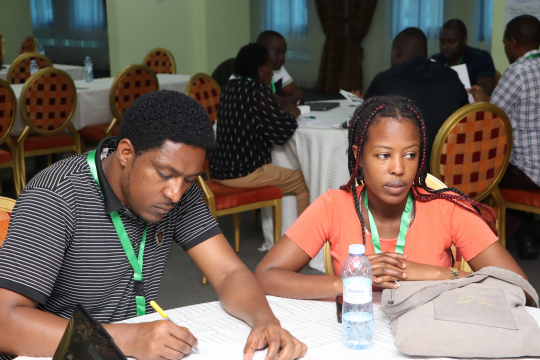
Rwanda’s Etienne Hagumiraga reported that the fellows are working on bridging the gap between scientific research and climate-smart agriculture policy implementation. This initiative seeks to ensure that agricultural solutions are adapted to Rwanda’s specific environmental and socio-economic conditions.
“Sometimes practices are copied without considering context,” Etienne Hagumiraga said. “This initiative will help policymakers design CSA policies based on local realities.”
He emphasized that factors such as climate, agro-ecological zones, and rainfall patterns must guide implementation for effective results.
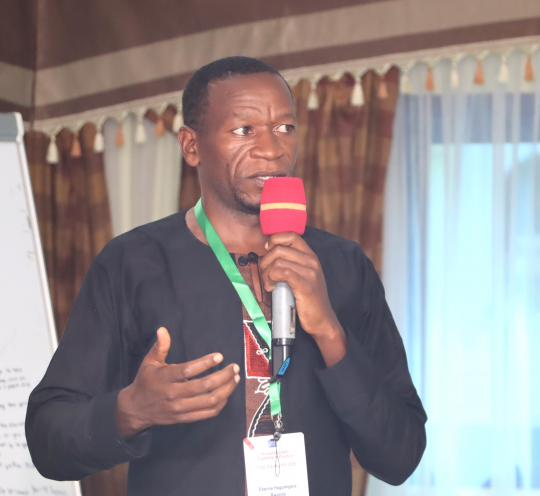
Tanzanian Policy Engagement Specialist Wilhelm Ngasamiaku highlighted a TI on promoting climate-smart irrigation to improve livelihoods and welfare. The initiative aligns with government priorities to expand irrigated land and modernize agriculture.
“The government is investing heavily in irrigation, aiming to double the area under irrigation,” Wilhelm Ngasamiaku said.
He added that the workshop is expected to strengthen policy design through shared experiences.
“We expect to learn what has worked and what has not worked in other countries so we can improve our initiative and develop better policy instruments.”
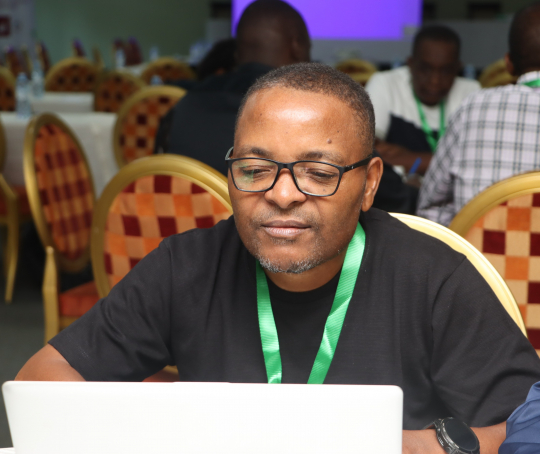
Kenya’s team is investigating barriers to the adoption of climate-smart agriculture technologies. Despite the availability of such technologies, uptake among farmers remains low.
“We want to understand why the adoption is so low and what the government can do to improve it,” said IGE fellow Naomi Kihara.
Climate change impacts, including drought in arid and semi-arid areas, are currently a great threat to food production.
“We are looking forward to learning from countries where adoption is higher so we can overcome these barriers and improve food production,” she added.
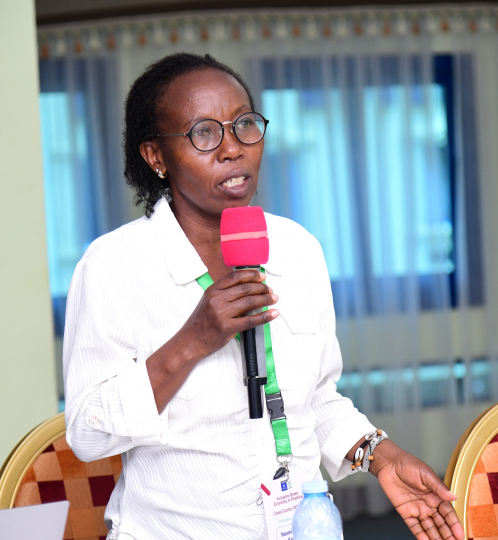
The fellows will consolidate their discussions into a joint report, capturing lessons and strategies that could shape climate-smart agriculture policies and practices across East Africa.
By Jane Anyango