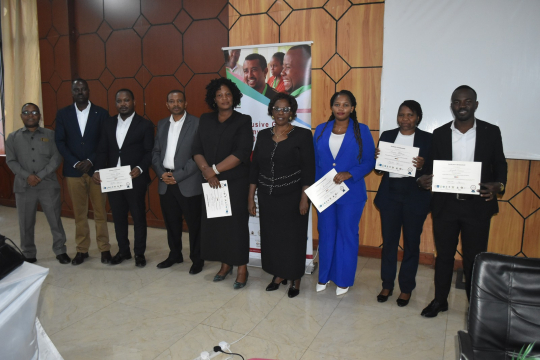
The Inclusive Green Economy (IGE) program continues to build capacity for sustainable policy. On 22 July 2026, the 2025–2026 fellows graduated in Morogoro, Tanzania, having concentrated their training on climate‑smart agriculture that can support both sectoral growth and ecosystem protection.
Agriculture remains central to Tanzania’s economy and livelihoods, yet climate change, water scarcity, and pressure on natural resources are making farming increasingly difficult. A new cohort of the Inclusive Green Economy (IGE) program has completed training designed to help policymakers use research and economic tools to address these challenges.
The 2025 - 2026 IGE fellows graduated on 22 July 2026 in Morogoro, Tanzania, after working on climate smart irrigation technologies. This area links agricultural productivity, water management, climate resilience, and economic policy. The graduation program included presentations, discussions, and reflections from fellows and invited experts, highlighting both achievements and ongoing challenges in climate smart agriculture.
Through the IGE program, fellows are connected with researchers and introduced to economic instruments that can help address practical policy challenges. The broader aim is to support economic growth without harming the environment. IGE has worked across energy, agriculture, water, forests, and finance, with the goal of helping policymakers make greater use of research and economic thinking in their work.
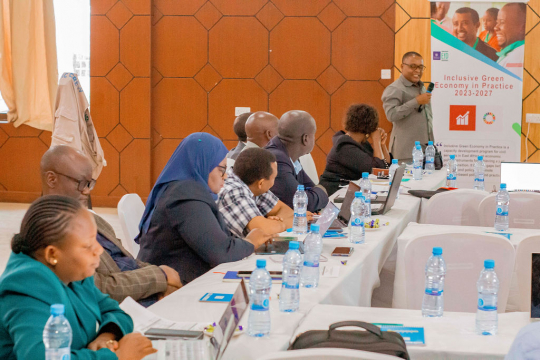
Agriculture under strain
In opening remarks, Dr. Mtui from the School of Economics at the University of Dar es Salaam emphasized the importance of climate smart agriculture for Tanzania. He noted that the agricultural sector is growing at about 5% per year, which he described as relatively low compared with some other sectors.
Guest of honor Dr. Rose Mbezi, representing the Permanent Secretary from the Ministry of Agriculture, highlighted the importance of agriculture across Africa, where many economies and livelihoods continue to depend heavily on the sector. She explained that apart from the macro impact a collapse in agriculture would cause, there is also the direct impact on livelihoods.
“Although climate smart adaptation is not yet strong nationally, different methods must be used to sustain this important sector, particularly context-specific technologies, based on agroecological zones and economic tools,” she said. Rose Mbezi also noted that this is where research such as that produced by EfD becomes essential.
Cost is a major obstacle
One of the main issues explored by the graduating cohort was how Tanzania can expand the use of climate smart irrigation technologies.
IGE fellow Norbert Mwitta, an economist at the Ministry of Finance working on international partnerships, climate finance, and national development planning, presented findings on practical barriers farmers face when adopting sustainable practices. One challenge is the high cost of irrigation infrastructure. Participants questioned whether individual farmers, particularly smallholders, can reasonably be expected to finance irrigation systems on their own.
Water is also a shared and limited resource. Poorly managed abstraction can reduce availability for other users and damage surrounding ecosystems. Irrigation policy must therefore consider not only how farmers gain access to water, but also how the resource is managed over time. The discussion pointed to an important role for public investment, regulation, and collective management of irrigation systems.
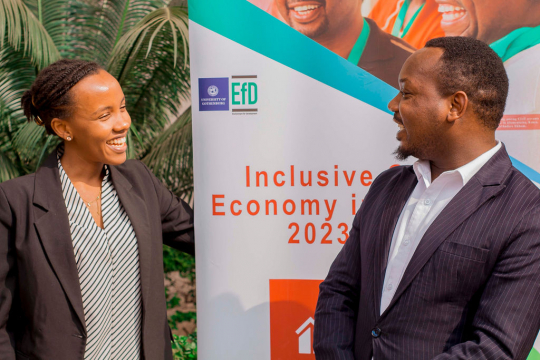
Farmers need solutions that make economic sense
Climate smart agriculture cannot succeed if farmers are asked to adopt technologies or practices that undermine their livelihoods. Participants stressed the importance of crop varieties that are resilient to changing climatic conditions but also have a reliable market. A seed may perform well environmentally, but farmers still need assurance that they can sell their produce and earn an income.
The same concern applies to technologies.
“There is value in developing local technologies for local challenges and local economic development, rather than assuming one solution will work everywhere,” emphasized Norbert Mwitta.
Practical experiences in Tanzania
During the event, Dr. Innocensia John shared examples of what has been done in climate smart agriculture in Tanzania.
“We have seen progress in areas such as seed improvement, post-harvest management, and irrigation. However, irrigation schemes remain a challenge because of high costs and procurement hurdles,” she said. She emphasized that climate smart technologies are expensive, and farmers often struggle to access equipment that is truly suited to their needs. While funding has been brought in from development partners and government, much of it has been operational rather than directed to infrastructure.
“Closing the financing gap will require practical measures, for example removing VAT on equipment so that farmers can access what they actually need,” she said.
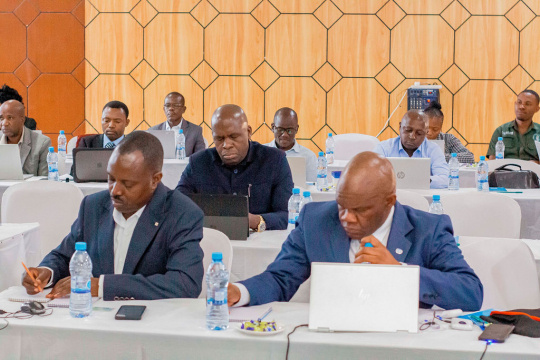
Connecting research with government needs
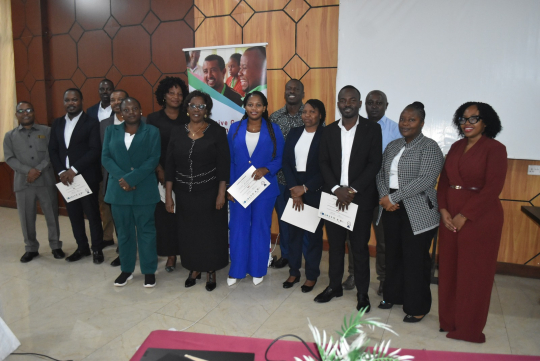
Rather than separating environmental protection from economic development, the program encourages policymakers to consider how economic instruments can support both objectives. The graduation therefore marked more than the completion of a training program. The fellows leave having explored policy questions that directly affect farmers, government institutions, and natural resource management in Tanzania.
“Through IGE I gained new skills to integrate environmental law, soil and water conservation, and pollution control into agricultural practice. I now approach climate smart agriculture with a stronger technical and policy foundation, which I will use to design and implement programmes that balance productivity with ecosystem protection,” said Suzana Mbilinyi, Vice President’s Office Environment Division.
By Fisha Isaac