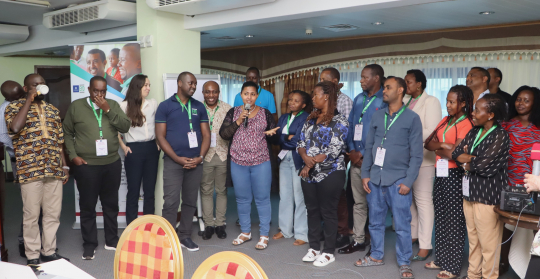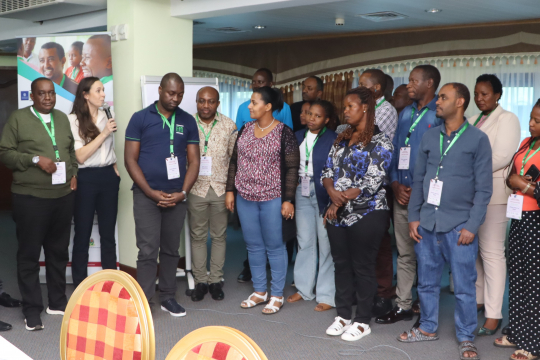
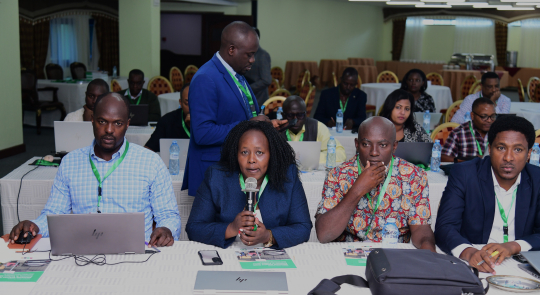
Ugandan Fellows and alumni of the Inclusive Green Economy in Practice (IGE) training program said, as they met for a cross-country IGE workshop in Uganda, that the initiative is reshaping how they think, work, and influence policy, with early signs of impact emerging across government institutions and national development processes.
Implemented by EfD, the IGE program has so far trained 30 fellows comprising policymakers and researchers from government ministries, departments, agencies, private and civil society organizations.
Speaking during a regional peer-learning workshop in Entebbe, Uganda, IGE alumnus Nathan Mununuzi, a Senior Environment Officer at the Ministry of Water and Environment, said the program has fundamentally changed how he approaches his work. Nathan Mununuzi is also Chairperson of the IGE national alumni network.
“Ever since I got through this program, my consciousness has increased. Every time I look at something, I look at the green part of it,” Mununuzi said.
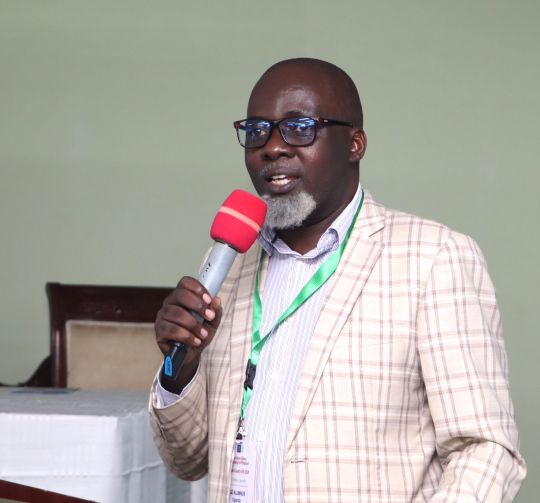
Mununuzi noted that the training has enabled him to contribute meaningfully to ongoing national initiatives. He cited his role in drafting regulations on extended producer responsibility targeting plastic pollution, an issue he studied and worked on during the program.
The proposed policy, once enacted, will require producers to take responsibility for recycling and disposal of plastic waste, a move expected to strengthen Uganda’s environmental management framework.
He also pointed to his involvement in Uganda’s green jobs program, where he serves on a steering committee advancing climate-smart initiatives, including the establishment of incubation centers for green practices.
At the national planning level, IGE alumna Elizabeth Kebirungi, an Environment and Natural Resource Planner at the National Planning Authority, said the program bridged a critical gap between environmental science and economics.
“I hadn’t fully understood how the environment can drive the economy,” Elizabeth Kebirungi said. “This program helped me understand how natural resources can be turned into economic opportunities.”
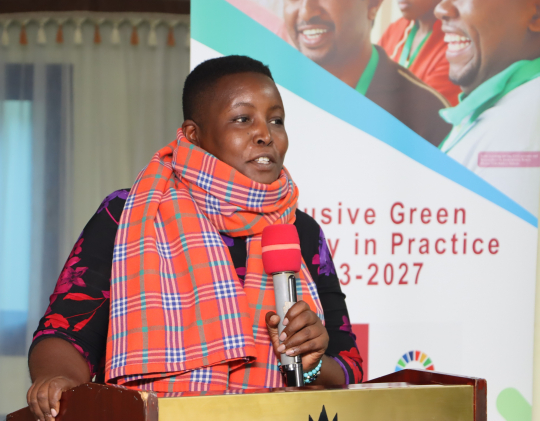
She highlighted her role in integrating green growth principles into national planning processes, including the adoption of approaches such as payment for ecosystem services, an economic tool that incentivizes environmental conservation.
She added that the training strengthened inter-agency collaboration, enabling planners to work more effectively across sectors such as finance, energy and environmental management.
“With this knowledge, I bring everyone to the table – environment experts, economists, and policymakers – to think together on how we can generate value from natural resources,” she said.
Both alumni emphasized the program’s strong networking component, which has facilitated cross-country knowledge sharing and professional collaboration across Uganda, Ethiopia, Kenya, Tanzania and Rwanda.
Mununuzi noted that expanding exposure beyond Africa could further strengthen the program.
“If we could learn from experiences in other parts of the world, it would really broaden our perspective on handling green economy challenges,” he said.
Despite this, participants say the program is already contributing to a shift in policy direction. Uganda’s National Development Plan IV (NDP IV) now identifies green growth as a key priority, reflecting a broader regional push toward sustainable development.
As more fellows graduate and join the alumni network, there are growing expectations that the program will deepen its impact across institutions.
“We need more ambassadors in different sectors,” Mununuzi said. “Going green is the direction the whole world is taking.”
The IGE program continues to position itself as a catalyst for embedding sustainability into policy and practice, with its fellows increasingly influencing decisions government decisions and planning.