Urban authorities called to harness human waste for biogas and fertilizers
Environmental economists from Makerere University have called on urban authorities to harness the abundant human and organic waste in the cities to produce biogas and organic fertilizers. They argue…
Researchers and graduate students skilled in science communication.
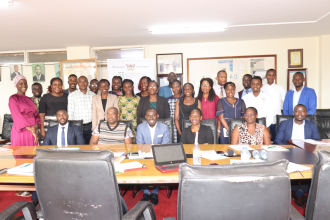
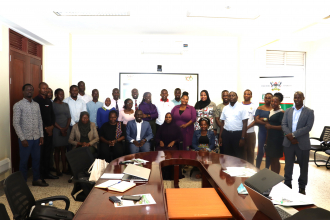
Research fellows and graduate students taking environmental-related courses at Makerere University have been retooled on communicating research findings. The training was part of the EfD-Mak seminar…
More and better resources are needed to help female farmers adapt to saltwater intrusion
EfD Authors:
Research questions: What factors affect male and female farmers’ choices of adaptive measures to saltwater intrusion?
|
Key Messages |
Better access to social activities and education would improve women’s adaptation to salinity intrusion
EfD Authors:
Research questions: How does gender matter in intra-household adaptation choices in response to salinity intrusion and which factors affect the choices?
Is mango farming sustainable? An integrated analysis of remote sensing techniques and smallholder farmers’ perception in mango farming communities in Ghana
EfD Authors:
In sub-Sahara Africa, sustainable agricultural sector has been trumpeted as the surest way for livelihood transformation through poverty reduction and ensuring food and nutritional security. Using mango farming as a case study, the paper determines how sustainable agriculture can be achieved by examining the environmental, social and economic impacts of mango farms in a rural setting. Qualitative and quantitative approaches were used to collect primary data from 400 respondents from the Shai Osu-Doku and Yilo-Krobo Districts of the Greater Accra and Eastern Regions respectively of Ghana.
Supply-Side Interventions in Cocoa Production in Ghana: A Regional Decomposition of Technical Efficiency and Technological Gaps
EfD Authors:
Although Ghana Cocoa Board (COCOBOD) promotes technical change in cocoa farming with innovative technologies and input support, crop productivity is better advanced by improving on the efficiency of input use by farmers. This study thereby investigates the technical efficiency of cocoa farmers in Ghana. The study uses cross sectional field data covering Western North, Ashanti, Eastern, Volta and Brong-Ahafo regions of Ghana on a sample of 899 cocoa farmers and adopts Meta frontier stochastic frontier analysis to derive production efficiencies for each region.
Valuing Pollination as an Ecosystem Services: The Case of Hand Pollination for Cocoa Production in Ghana
EfD Authors:
The promotion of cocoa farm productivity has necessitated the intensification of input use with ensuing loss of natural pollinators. Ghana Cocoa Board’s (COCOBOD) remedy to declining pollinator population is addressed in the rolling out of hand pollination in the 2016/17 crop year. Applying contingent valuation on field data covering 608 farmers in five cocoa growing regions, we estimate the value of pollinator services to the cocoa industry in Ghana and farmers willingness to pay for the service.
Does combining traditional and information and communications technology–based extension methods improve agricultural outcomes? Evidence from field experiments in Mali
EfD Authors:
AbstractAdequate flow of appropriate information to farmers is vital for accelerating the uptake of modern agricultural technologies and improving access to markets, all of which are important for the transformation of African economies. Yet there is limited evidence regarding how information should be disseminated to farmers to achieve the needed impact. Should ICT‐based approaches be used together with traditional methods, or should they be used alone?
Heterogeneous market participation channels and household welfare
EfD Authors:
This paper uses panel data and qualitative interviews from southwestern Ghana to analyse farmers’ heterogeneous oil palm marketing decisions and the effect on household welfare. We show that despite the supposed benefits that smallholders could derive from participation in global agribusiness value chains via formal contracts, such arrangements are rare although two of Ghana’s ‘big four’ industrial oil palm companies are located in the study area. In the absence of formal contracts, farmers self-select into four main oil palm marketing channels (OPMCs).