Improved Biomass Cooking to Fight Climate Change and Poverty

Submitted by Eugenia Leon on

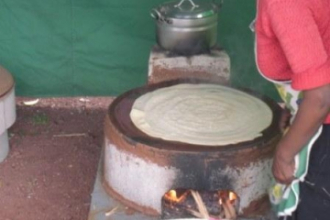
Inefficient firewood and charcoal usage contributes massively to global greenhouse gas emissions and causes four million mortal diseases a year. Relative to other climate protection measures, public investments in the dissemination of improved biomass cooking stoves provide a very effective low cost measure to reduce greenhouse gas emissions. More than three billion people in developing countries rely on inefficient cooking stoves fuelled by firewood and charcoal.


Energy, Policy Design

Infrastructure and Poverty in Sub-Saharan Africa

Submitted by Eugenia Leon on

Since the 1960s and 1970s, the international community has dedicated a considerable amount of its lending portfolios and technical assistance capacities to investments into infrastructure such as roads, electricity, and water networks. In spite of these continous efforts, billions of people worldwide are still lacking acces to electricity, clean water, sanitation, and quality roads. At the same time, the lack of infrastructure access is often said to be a major barrier to sustainable human development.

Energy

A First Step up the Energy Ladder? Low Cost Solar Kits and Household’s Welfare in Rural Rwanda

Submitted by Eugenia Leon on

More than 1.1 billion people in developing countries are lacking access to electricity. Based on the assumption that electricity is a prerequisite for human development, the United Nations has proclaimed the goal of providing electricity to all by 2030. In recent years, Pico-Photovoltaic kits have become a low-cost alternative to investment intensive grid electrification. Using a randomized controlled trial, we examine uptake and impacts of a simple Pico-Photovoltaic kit that barely exceeds the modern energy benchmark defined by the United Nations.

Energy

Does Large-Scale Infrastructure Investment Alleviate Poverty? Impacts of Rwanda’s Electricity Access Roll-Out Program

Submitted by Eugenia Leon on

The objective of the United Nations Sustainable Energy for All initiative (SE4All) is to provide electricity by 2030 to the 1.1 billion people in developing countries that hitherto lack access. The OECD/IEA quantifies the investment requirements of this to be at 640 billion USD. Little evidence exists on socio-economic impacts of electrification. The present paper is the first to causally investigate the effects of electrification in Africa on all beneficiary groups.

Energy

Renewable energy policies and competition for biomass: Implications for land use, food prices, and processing industry

Submitted by Anonymous (not verified) on

We use a mathematical programming model to examine the impacts of simultaneous implementation of two US biofuel and bioenergy policies on commodity markets and spatial distribution of future cellulosic biorefineries.

Energy

Supply of cellulosic biomass in Illinois and implications for the Conservation Reserve Program

Submitted by Anonymous (not verified) on

We developed a mathematical programming model to estimate the supply of cellulosic biomass in Illinois at various biomass prices and examine the implications of biomass production for the maintenance costs of the Conservation Reserve Program (CRP). We find that Illinois has the potential to produce about 38.4–54.5 million dry metric tons (MT) of biomass in 2020 at a biomass price of $150/MT, depending on the production costs of cellulosic feedstocks, residue collection technology, and rates of yield increases of conventional crops.

Energy

Economic potential of biomass supply from crop residues in China

Submitted by Anonymous (not verified) on
EfD Authors:

Using a mathematical programming model, we estimate the economic potential of biomass supply from crop residues in China at various exogenously-given biomass prices and identify the areas that are likely to produce crop residues. Our analysis indicates that China can potentially produce about 174.4–248.6 million dry metric tons of crop residues per year when biomass prices are larger than $100 per metric ton. Rice straw is expected to account for about 47% of total residue production across the different biomass prices and residue production scenarios that we considered.

Energy