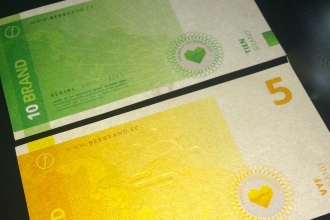
Social experiment with parallel currency
A tattoo artist, a bread maker, a ‘spaza’ shop owner, and a hair stylist - all from the small town of Piketberg, in the wheat- and fruit-farming region about an hour’s drive north-east of Cape Town -…

A tattoo artist, a bread maker, a ‘spaza’ shop owner, and a hair stylist - all from the small town of Piketberg, in the wheat- and fruit-farming region about an hour’s drive north-east of Cape Town -…
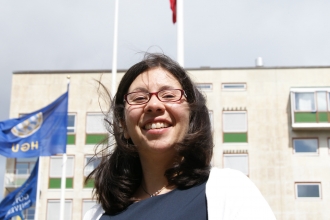
Marcela Jaime recently defended her thesis: Essays on behavioral Economics and Policy Design. What it is about? My thesis is about unintended effects of behavioral and policy interventions and its…

On Thursday and Friday this week, May 28-29, Maria Naranjo visits The Choice Lab. During her stay, she will discuss the design of the project "Risk taking and fairness: A lab in the field experiment…

Fewer industrial firms would violate environmental legislation and a higher number would adopt cleaner technologies if environmental authorities would focus their monitoring efforts on companies with…
This project about the congestion charge in Beijing is in three parts. Each part will look at different aspects of the congestion charge, one is on valuation of travel time, the other will analyse the
This research project will study if and how procedural fairness concerns affect coordination such as in the provision on threshold public goods. The provision of such goods can be modeled as a
In this project, we implement carefully designed field experiments in urban Tanzania to investigate if poor households do overweigh low-probability events. We also investigate time preference
The aim of this project is twofold. First, by testing the theory of strategic ignorance in real purchase decisions, we analyze whether the existing lab results are transferable to everyday decisions
The project includes two studies. One project is on possible differences in subjective and objective risks in four different zones with different malaria exposure, and whether a person´s subjective
Neoclassical microeconomic theory of the consumer postulates that a rational consumer maximizes utility subject to a budget constraint. The direct implication of this theory is that the source of the