| Gender | India

Claudia Goldin’s Nobel Prize winning research

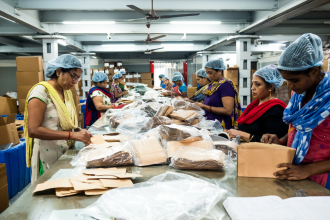
On Sunday, December 12, Claudia Goldin was awarded the Nobel Prize in Economic Sciences for her work on women’s progress in the workforce. In this piece, Farzana Afridi reflects on the significance of Goldin’s win and the contribution of her research to understanding the gender dynamics of labour markets. She also delves into the implications of this research for developing countries like India, where female labour force participation has remained low despite economic growth, and why this matters for economic growth.

Intrahousehold bargaining power and time allocation for multiple activities

Submitted by Cristóbal Vásquez on

During the last decades, important policies have been implemented to incorporate women into the labor market and reduce persistent gender inequalities, trying to balance the time allocation between paid and unpaid work. We assess the Chilean case considering couples' time allocation with explicit consideration of intrahousehold bargaining power (relative wages and education). The Chilean case is interesting because we use the first urban national survey of time use, which could help understand gender differences in labor participation.

Gender, Policy Design, Urban