FILTER
Displaying 141 - 150 of 327 publications
A Contingent Valuation Approach to Estimating Regulatory Costs: Mexico’s Day Without Driving Program
Little is known about the cost of environmental regulations such as residential zoning restrictions and recycling mandates that target households instead of firms, partly because of significant…
| Discussion Paper, EfD Discussion Paper | Central America and Mexico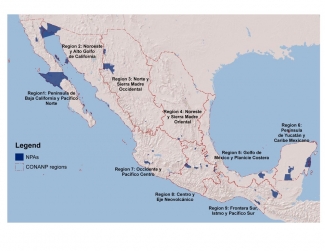
Although developing countries have established scores of new protected areas over the past three decades, they often amount to little more than “paper parks” that are chronically short of the…
| Peer Reviewed | Central America and MexicoAccording to advocates, eco-certification can improve developing country farmers’ environmental and economic performance. However, these notional benefits can be undercut by self-selection: the…
| EfD Discussion Paper | Central America and MexicoWe estimate the effect of hydro-meteorological emergencies on internal migration in Costa Rica during 1995–2000. We find that, on average, emergencies significantly increase average migration. However…
| Peer Reviewed | Central America and MexicoFuelwood and charcoal are fundamental fuel sources for the residential sector in Mexico. A Business-As-Usual (BAU) projection by means of a spatially-explicit approach was developed to assess national…
| Peer Reviewed | Central America and Mexico ,
,  ,
, 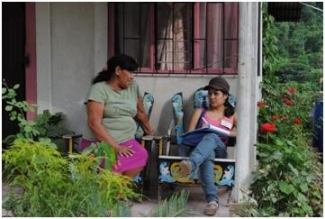
Protected areas have been established for the conservation of natural resources and biodiversity worldwide. Funding for conservation activities in protected areas is not always available and this is…
| Policy Brief | Central America and Mexico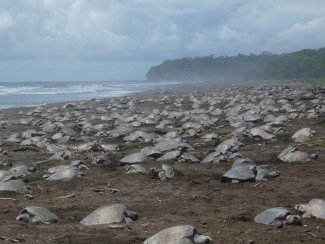
Marine turtles are a flagship species for conservation because of their ecological role in marine ecosystems as well as the existence value that humans attach to them. Despite the legal ban on turtle…
| Research Brief | Central America and Mexico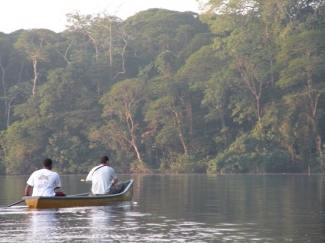
Small-scale fishing constitutes the main source of marine products and a central component of local livelihoods for poor families in coastal areas of Costa Rica. This country has been defining marine…
| Research Brief | Central America and Mexico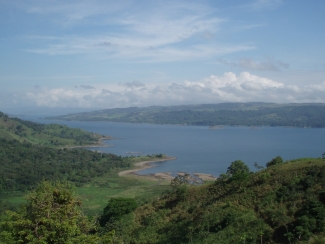
Programs of payments for ecosystem services are policy instruments that compensate those who provide those services for the costs they incur. One of the most attractive characteristics of this type of…
| Research Brief | Central America and Mexico
This article reviews the history of the Environment for Development (EfD) initiative, its activities in capacity building and policy-oriented research, and case studies at its centres in Chile, China…
| Peer Reviewed | South Africa, China, Chile, Sweden, Ethiopia, Tanzania, Kenya, Central America and Mexico, Global Hub