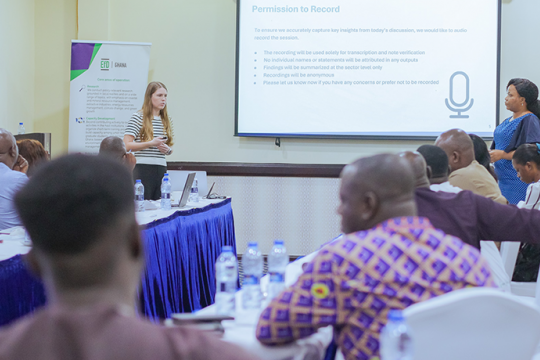
EfD Ghana convened stakeholders to review new research findings and advance collaborative solutions for strengthening Ghana’s Voluntary Carbon Market (VCM) ecosystem. The event -- the third stakeholder engagement session under the Ghana VCM project – built on earlier engagement efforts and further strengthened relationships with key players and influencers across Ghana’s carbon market sector.
The participants expressed strong confidence in the findings as a credible resource to inform policy and sector coordination – a result of the project teams’ sustained efforts to engage participants throughout the implementation process. Many urged the team to share the findings with policymakers and technical institutions, underscoring the value of continuous engagement in building trust, strengthening stakeholder ownership, and enhancing the potential for research uptake.
That confidence was reflected in participants’ feedback
“It would be great to share the final product of the study with relevant policymakers and technical agencies as a significant resource for policy formulation,” said Mohammed Aminu Lukumanu, Chief Executive Officer of the Ghana Alliance for Clean Cookstoves and Fuels (GHACCO).
“For the first time, I have seen dedicated studies on the subject and engagement with all VCM stakeholders. This is very remarkable, “ added Glenn Kwabena Gyimah from the Green Transition Office of the Jospong Group of Companies, a key private sector actor in Ghana’s environment sector.
Findings highlight progress and opportunities
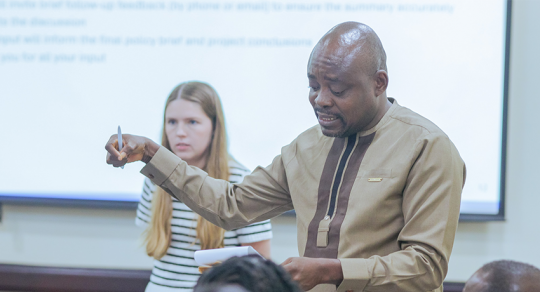
Presenting the findings, EfD Researcher Francis Atsu noted that Ghana’s voluntary carbon market ecosystem is active and evolving, with growing participation from public institutions, private sector actors, project developers, and civil society organizations. He highlighted increasing awareness of carbon market opportunities, expanding local technical capacity, and strong potential for carbon finance to support climate mitigation and sustainable development initiatives.
The study also identified structural gaps that could limit the sector’s growth if unaddressed, including fragmented institutional roles, weak coordination across the carbon project lifecycle, overconcentration of foreign actors, and limited female participation in technical and operational roles. Addressing these gaps through clearer institutional mandates, stronger coordination, and more inclusive participation will be critical to building a resilient and locally grounded carbon market.
Scaling clean cooking through carbon market opportunities
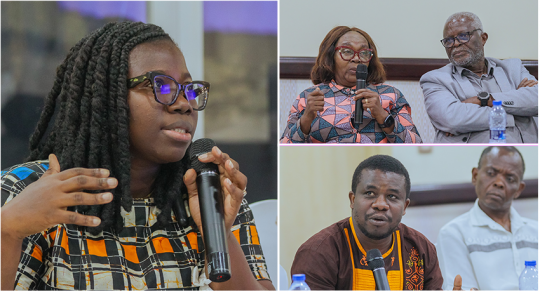
Logan Richardson of North Carolina State University and Alice Nubuor, both project consultants, facilitated a session on Ghana’s Clean Cooking Carbon Market Model. The session examined how clean cooking initiatives can be more effectively integrated into carbon market frameworks and highlighted opportunities to leverage carbon finance to scale clean cooking solutions. Participants -- including cookstove manufacturers and distributors, carbon project developers, and implementing organizations -- discussed the findings and shared practical insights based on their operational experience.
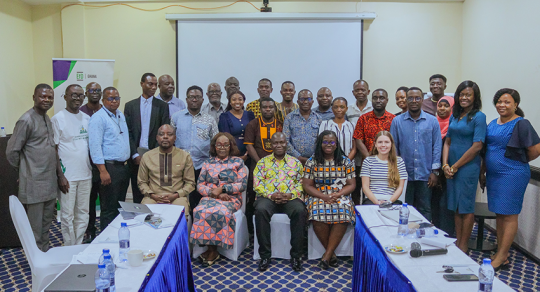
The workshop was held on February 17, 2026, at the AH Hotel in Accra and drew participants from across Ghana’s voluntary carbon market ecosystem, including government agencies, private sector actors, clean cooking enterprises, civil society organizations, and research institutions. The workshop forms part of a broader multi-country initiative spanning Ghana, Kenya, Rwanda, Nigeria, Côte d’Ivoire, and Morocco to support national efforts to harness voluntary carbon markets for climate and development goals.
Speaking on EfD Ghana’s approach, Director Wisdom Akpalu said, “Voluntary carbon markets require more than technical research; they demand continuous collaboration with the institutions and actors who shape policy. This ensures our findings are grounded in sector realities and relevant for decision-making.”
By Vicentia Quartey