Farmers in Ethiopia are struggling with climate shocks, post-harvest losses and inefficient practices and poor market systems. The research project Accelerating Climate Resilient Food System in Ethiopia (ACRFSE) is a multi-institutional effort funded by DANIDA (Danish International Development Agency), aiming to address these challenges.
The project spans approximately three and a half years and is scheduled to continue through 2028.
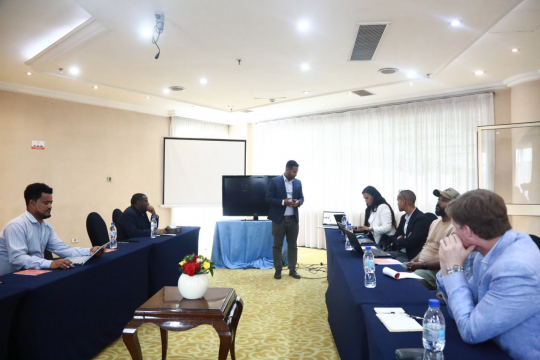
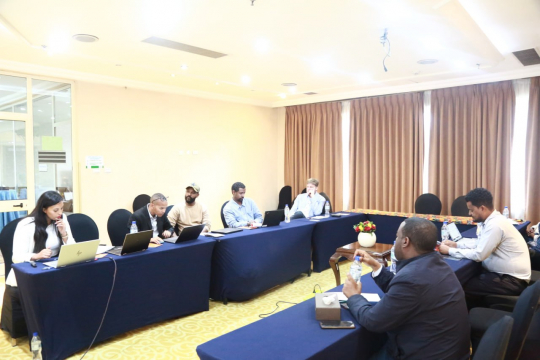
EfD and SETI research fellow, Selamawit Kebede, delivered a progress update and baseline research findings to implementation partners Agriterra (a Dutch NGO that empowers agricultural cooperatives and farmer-led businesses), ETG (an agricultural conglomerate that operates as a supply chain manager) and Mary's Meal (a school feeding program) in Addis Ababa, Ethiopia.
The presentation shared data collected before March 2026, to establish a starting point for the study, from 2,000 farmers in the Jimma and Wolaita zones, and outlined the project's strategy to improve agricultural productivity and resilience against climate change.
Preliminary results and future research goals
The baseline findings reveal an Ethiopian farming system under heavy pressure from climate shocks and structural gaps. Most households are stuck in a "mid-range" of resilience, lacking the tools to survive erratic rainfall and rising temperatures that are already harming their livelihoods.
This vulnerability is compounded by staggering post-harvest losses, with up to 72% of maize crops being ruined due to traditional storage. In regions like Wolaita, these issues have pushed food insecurity to critical levels, underscoring an urgent need for modern storage solutions and localized support.
Growth is currently stalled by high costs and skepticism toward new technology. Innovations like biochar could restore soil health, but only 3% of farmers are even aware of it, and most prefer to "wait and see" whether others succeed before risking a change.
Intends to benefit 10,000 farmers
In addition, a broken market system means farmers face long travel times, high transport costs, and informal, unreliable sales. Even where cooperatives exist, they are often weakened by poor governance, leaving farmers without the professional network needed to secure fair prices and long-term financial stability.
By addressing food insecurity, high post-harvest losses, limited market access and weak cooperative governance, and the need for sustainable, "climate-smart" agricultural practices like biochar (turning organic waste into charcoal) and improved storage, this initiative intends to benefit 10,000 smallholder farmers who are highly vulnerable to climate-related risks, such as erratic rainfall and temperature fluctuations, specifically soybean, maize, and teff producers, women and youth through empowerment initiatives and leadership opportunities, and 20,000 schoolchildren through improved distribution networks.
Click here to learn more about this project.
By Belén Pulgar.