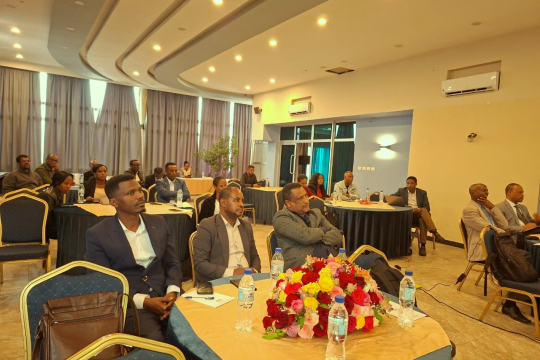
The Inclusive Green Economy Program (IGEP) Forum of 2025 brought together policymakers, researchers, IGE alumni, and development partners to exchange ideas, strengthen collaboration, and celebrate the graduation of the 2025 IGE Fellows.
The event provided a platform for presenting innovative policy solutions while reinforcing the importance of evidence-based decision-making in advancing Ethiopia's inclusive green economy agenda.
Dr. Abebe Damte, IGE Lead, highlighted the significance of the Inclusive Green Economy Program in building the capacity of civil servants and government institutions, and promoting practical policy solutions to address Ethiopia's environmental and development challenges.
Robel Seifemichael, Policy Engagement Specialist, made a presentation onThe IGE program: Regional IGEP funding and training opportunities. The presentation introduced participants to the program's regional funding mechanisms, training opportunities, and the expanding IGE network, underscoring its role in strengthening collaboration and knowledge sharing among policymakers and practitioners.
One of the forum's highlights was the presentation of the 2025 Transformation Initiative (TI) by the graduating IGE Fellows. Mr. Habtamu Alamayo from the Ministry of Finance (MoF) and Ms. Netsanet Tesfaye from the Ministry of Irrigation and Lowlands (MILLS) presented their TI titled Enhancing climate resilience of Ethiopia's agriculture through the adoption of climate-smart agriculture (CSA): The case of solar-powered irrigation systems.
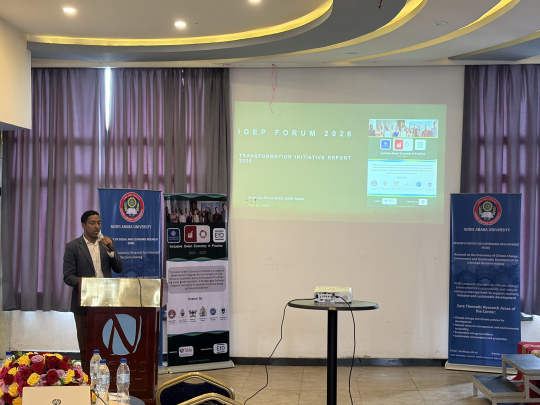
The fellows shared key findings and policy recommendations to promote climate-smart agriculture by encouraging wider adoption of solar-powered irrigation systems. Their proposed initiative demonstrates how renewable energy technologies can help strengthen agricultural resilience, improve water management, and support sustainable agricultural development in Ethiopia.
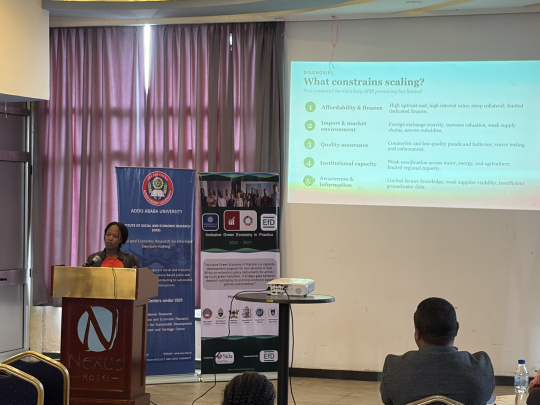
The presentation was followed by an interactive discussion, during which participants provided constructive feedback to strengthen the Transformation Initiative. The graduating fellows responded to questions and took valuable suggestions to further refine their TI. IGE alumni also actively participated in the discussion, sharing their professional experiences and offering practical insights to enhance the initiative's quality and potential impact.
The forum concluded with the Graduation and Certificate Award Ceremony for the 2025 IGE Fellows. Professor Alemu Mekonnen, Director of the Institute of Social and Economic Research (ISER) at Addis Ababa University (AAU), presented certificates to the graduating fellows in recognition of their successful completion of the program.
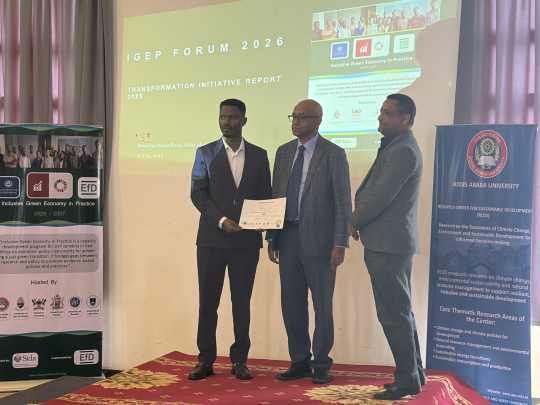
Alemu Mekonnen congratulated the graduates and encouraged them to continue applying the knowledge and skills gained through the program to support evidence-informed policymaking and sustainable development. He also emphasized the importance of maintaining the strong network established through the Inclusive Green Economy Program and fostering continued collaboration among fellows, alumni, academic institutions, and government organizations.
The 2025 IGEP Forum once again demonstrated the value of collaborative learning, policy innovation, and professional networking in advancing Ethiopia's transition toward an inclusive and climate-resilient green economy. By bringing together government institutions, researchers, and IGE alumni, the forum strengthened partnerships that will continue to support the development and implementation of impactful policy solutions across the country.
About the IGE in Practice Program
The Inclusive Green Economy (IGE) in Practice program, coordinated by the Environment for Development (EfD) initiative, brings together policymakers and researchers from across Africa to exchange knowledge and tools for a green economic transformation. In Ethiopia, the program is hosted by the Research Center for Sustainable Development at the Institute of Social and Economic Research (ISER), Addis Ababa University. Through regional workshops, applied learning and peer collaboration, it helps countries design evidence-based policies that promote both sustainability and equity.
By: Robel Seifemichael