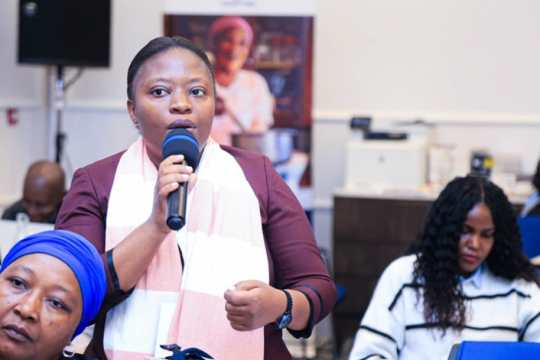
Ms. Joyce Msangi, an alumna of the Inclusive Green Economy (IGE) program, a Senior Forest Officer and Project coordinator of the integrated approach to sustainable cooking solution at the Ministry of Energy, joined national and international stakeholders in discussions on accelerating access to clean cooking solutions and achieving Tanzania's ambitious target of 80 percent access by 2034.
The transition to clean cooking is increasingly recognized as a critical pathway toward improved health, environmental sustainability, gender equality, and climate resilience in Tanzania. These themes took center stage at the clean cooking stakeholders conference held in Arusha on 10–11 June 2026.
The conference, Advancing Tanzania's Clean Cooking Future: Progress, Partnerships, and Pathways Toward 80% Access by 2034, brought together government institutions, development partners, researchers, financiers, civil society organizations, and private sector actors to assess progress, share experiences, and identify practical pathways for scaling up clean cooking solutions across the country.
Strengthening partnerships for Tanzania’s clean cooking future
Organized by the United Nations Capital Development Fund (UNCDF) in partnership with the Government of Tanzania through the Ministry of Energy and with support from the European Union, the conference provided an important platform for reflecting on the implementation of the national clean cooking Strategy (2024–2034). Discussions focused on achievements to date, barriers to adoption, financing opportunities, technological innovations, and mechanisms to strengthen coordination across the clean cooking ecosystem.
Participants emphasized that achieving Tanzania's target of 80 percent access to clean cooking by 2034 will require coordinated action among government institutions, development partners, financial institutions, researchers, and private sector actors. Particular attention was given to addressing challenges related to affordability, access to clean cooking technologies, public awareness, and market development.
Clean cooking as an inclusive green economy opportunity
Working within the Ministry of Energy, Joyce Msangi is directly engaged in efforts to promote sustainable energy solutions and improve access to clean cooking technologies. Her participation in the conference reflected the important role that IGE alumni play in advancing policies that simultaneously support environmental sustainability, economic development, and social inclusion.
Conference discussions highlighted how clean cooking contributes to multiple national development priorities, including reducing pressure on forest resources, improving public health, creating economic opportunities, empowering women and youth, and supporting climate change mitigation efforts. These outcomes closely align with the principles of the Inclusive Green Economy program, which promotes development pathways that are both environmentally sustainable and socially inclusive.
IGE experience informing policy practice
Speaking after the conference, Ms. Msangi reflected on how the IGE program has shaped her professional perspective and strengthened her contributions to energy sector policies.
"The IGE program broadened my understanding of how environmental sustainability, economic development, and social well-being are interconnected, she said.
" The clean cooking stakeholders conference demonstrated the importance of bringing together different actors to develop practical solutions that improve livelihoods while protecting natural resources. Achieving Tanzania's clean cooking ambitions will require evidence-based policies, strong partnerships, and a shared commitment to sustainable development."
She noted that the conference reinforced the importance of integrated approaches to addressing energy access challenges and highlighted the value of evidence-based policymaking in achieving Tanzania's clean cooking targets. According to Joyce Msangi, the knowledge and perspectives gained through the IGE program continue to support her work in advancing policies that contribute to sustainable and inclusive development outcomes.
From dialogue to action: advancing Tanzania’s clean cooking transition
As Tanzania advances the implementation of the national clean cooking strategy (2024–2034), stakeholder engagement platforms such as this conference remain essential for fostering collaboration, sharing lessons, and identifying practical pathways toward achieving national clean cooking targets.
For the growing network of IGE alumni across government, academia, civil society, and the private sector, the conference demonstrated the value of evidence-informed dialogue and cross-sector collaboration in addressing complex development challenges. By bringing together diverse stakeholders, Tanzania is taking important steps toward ensuring that the transition to clean cooking contributes not only to environmental sustainability but also to inclusive economic growth and improved quality of life for its citizens.
By: Salvatory Macha.