Stakeholders in Nigeria’s carbon market are calling for the swift implementation of the country’s carbon market framework recently approved by the Federal Government.
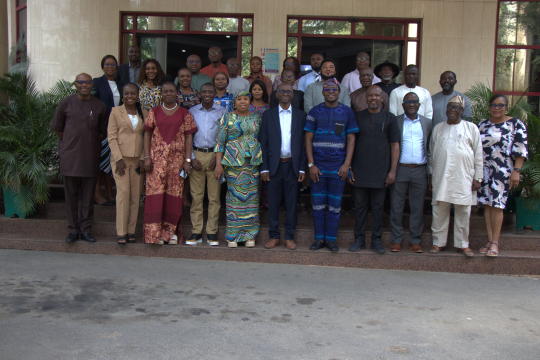
The call was made during the final validation workshop of a research project conducted by EfD Nigeria titled Challenges and Prospects of Nigeria’s Voluntary Carbon Market.
Participants at the workshop commended the Federal Government for approving the national carbon market framework in October 2025. However, they stressed that attention must now shift from policy approval to practical implementation.
A major concern raised was the slow process of issuing Host Country Approval, a key requirement that allows project developers and investors to trade carbon credits internationally. Stakeholders warned that delays in this approval process could discourage investment and slow the growth of Nigeria’s carbon market.
Concern about implementation is a key finding in the study
The concern over implementation emerged as one of the key findings of the EfD Nigeria study.
The research, which was presented by Prof. Nnaemeka Chukwuone and Dr. Chizoba Oranu, also found a strong interest among stakeholders in the Voluntary Carbon Market (VCM) as a potential source of climate finance for Nigeria. However, awareness and understanding of how the market works remain low, particularly among local communities who are expected to host many of the projects.
According to the study, many communities have little or no knowledge of key carbon market processes such as measurement, reporting, and verification systems, carbon pricing, and carbon credit registry systems.
Communities are willing to participate in carbon market projects
Despite this knowledge gap, the communities indicated a willingness to participate in carbon market projects, provided certain conditions are met.
These include transparent benefit-sharing arrangements, direct engagement with communities rather than through exploitative intermediaries, and the provision of alternative livelihoods where access to forests may be restricted.
To address these concerns, the study recommended that the Federal Government should urgently operationalize the national carbon market framework. It also called for clearer institutional roles and approval processes, stronger coordination among government agencies, and the establishment of transparent benefit-sharing mechanisms.
Community-centered carbon market design is needed
In addition, the study proposed a community-centered carbon market design that prioritises informed consent, clarifies land and carbon rights for host communities, and provides reliable alternative livelihoods in forest-based carbon projects.
Experts at the workshop noted that addressing these issues will be critical for building trust, attracting investment, and ensuring that Nigeria’s carbon market delivers both climate and development benefits.
If effectively implemented, stakeholders believe Nigeria’s carbon market could become a major channel for climate finance while supporting sustainable development and community participation.