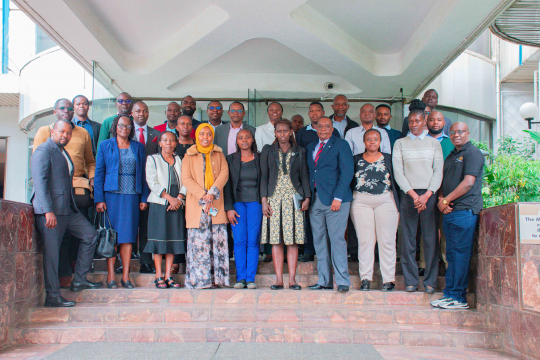
EfD Kenya has launched a new study that will examine how energy-efficient appliances are affecting the lives of households and small enterprises. The study will focus on what happens after an appliance reaches a household. Does a solar water pump increase a farmer's income? Does a clean cookstove reduce the time a woman spends on fuel collection, and do those changes last? These are the questions the research team intends to answer.
The study is conducted in partnership with CLASP, a global non-profit organization advancing clean energy access, and covers five countries: Kenya, Uganda, Ethiopia, Nigeria, and India. The Inception Workshop was held on 14 May 2026 and brought together government representatives, industry, and researchers.
Why this study and why now?
Since 2016, CLASP has run Results-Based Financing programs that subsidize the distribution of energy-efficient appliances to households and small enterprises across Sub-Saharan Africa and South Asia. Over 37,000 appliances have reached users across the five countries, from solar water pumps and refrigerators to clean cooking devices and milling equipment. Kenya accounts for the largest share, with over 20,500 appliance purchases recorded.
Yet despite a decade of programs, solid evidence on whether these appliances are genuinely improving lives has remained limited. This study is designed to close that gap, said Emmanuel Aziebor of CLASP.
The research is led by Principal Investigator Richard Mulwa, EfDKenya, and will survey nearly 3,000 Kenyan users. A group of them will be followed over time to track whether benefits last beyond the first year of ownership.
Covers both measurable and lived impacts
The study will examine how energy-efficient appliances affect the lives of households and small enterprises over time. It will focus on whether appliances such as solar water pumps, refrigerators, clean and improved cookstoves, and milling equipment improve incomes, reduce energy costs, save time, and increase productivity. The research will also assess whether the appliances remain functional years after purchase, how repairs and maintenance are managed, and what happens when appliances reach the end of their lifespan. Using household surveys, longitudinal tracking, focus group discussions, interviews, and narrative impact stories, the study aims to capture both the measurable and lived impacts of energy-efficient technologies.
“The study will uncover both the positive and negative impacts of energy-efficient appliances, generating evidence that can inform future policy and program design," noted Kenneth Kigundu.
"Timely study"
"This is a timely project," said Dianah Masika from the Ministry of Energy, Directorate of Energy Efficiency.
"The Ministry has a challenge around data at the appliance level. This study will contribute to that body of knowledge and will help improve energy efficiency in the country."
She also noted that the Ministry is currently developing a national strategy on the productive use of energy.
"The findings from this study can directly benefit that process," she said.
A participant from the State Department for Industry also highlighted the importance of understanding the origins of appliances used in Kenyan households.
“Most appliances are currently manufactured outside Kenya,” the participant noted.
“It is important for the study to capture the country of origin, as this will help inform policy on local production and reduce dependence on imports.”
Other participants raised concerns about whether the appliances are metered or not, emphasizing the need to understand how energy consumption is tracked and whether users can monitor their usage effectively.
Concerns on whether consumers are aware of their rights when it comes to these appliances were also raised as many users do not know what they are entitled to when a product is faulty.
By: Jane Maina