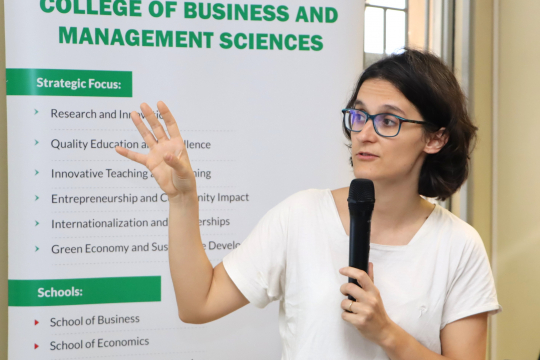
Do international donors cooperate or compete in the provision of aid? How do smaller donors react when major donors withdraw they support? How do these withdrawals affect service delivery? And how should academia approach these challenges? Those are some of the questions that French economist Nathalie Ferriere addressed in her public lecture at Makerere University on April 16.
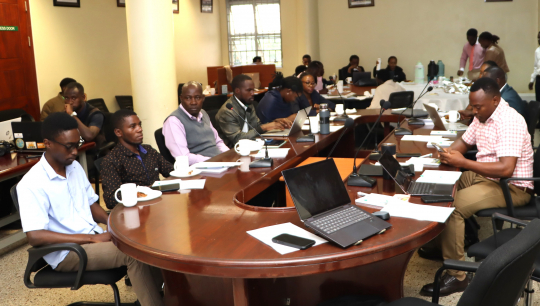
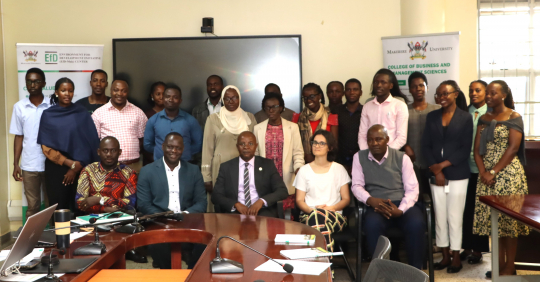
The lecture, titled Donor Cooperation or Competition: What Do We Know from Economics Research and What Should We Investigate.” was attended by academics, researchers, and students at Makerere University
Nathalie Ferriere, an associate professor at Sciences Po Aix affiliated with the Aix-Marseille School of Economics, is in Uganda for a two-week research engagement involving consultations with government institutions, including the Ministries of Finance and Health, as well as local governments.
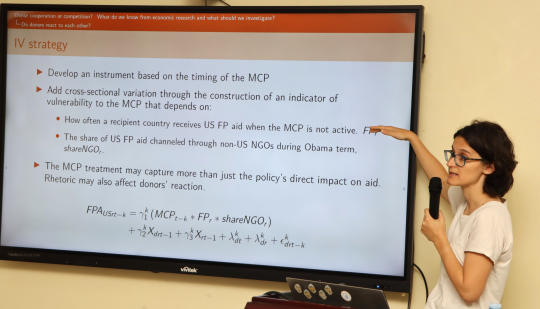
Study donor reactions to aid withdrawals
Her research focuses on how donors respond when a major funder withdraws support, particularly in sensitive sectors such as family planning.
“My research here is about the interaction between family planning providers’ aid. I look at how the withdrawal of US aid in given years affects the spending of other donors,” she explained.
“Once the US stops giving family planning aid, other donors do not react for one or two years, but later they also start to reduce funding,” she said.
Natalie Ferriere warned that such trends could have direct implications for countries like Uganda, where a significant portion of health services relies on foreign aid.
“If you have a decrease in this aid, you will have a decrease in family planning provision, and governments must anticipate such shifts,” she said. .
“If you want to keep the same level of services, the government should increase its own expenditure. My next research will be to understand how governments respond in such situations,” she added.
Lecture opens new research frontiers
College Principal and EfD center Director Edward Bbaale described the lecture as timely and aligned with the university’s strategic direction to strengthen research and international collaboration.
“The topic speaks a lot to me because it opens up research frontiers. What should we really take on as researchers? How can we look at cooperation or competition in terms of aid?” he said.

Donor behaviour key to development outcomes
Lecturer John Bosco Oryema said the lecture underscored the importance of understanding donor dynamics for countries dependent on external funding.
“For developing countries that depend on aid, we need to study the behaviour of our donors. When one reduces, others may also reduce, and our development interventions may fail,” he warned.
One student, Nabakoza Joan, emphasized the risks of fragmented aid.
“When there is a lot of competition, there is fragmentation of funds. But if donors cooperate under one policy, it leads to better outcomes for developing countries,” she explained.
By Jane Anyango