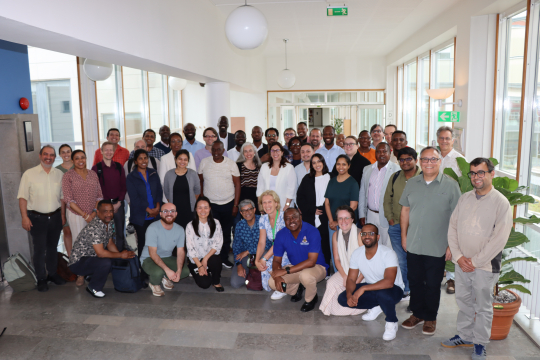
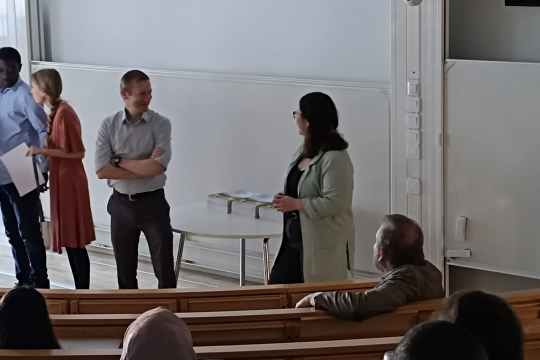


Researchers from all around the world gathered in the University of Gothenburg, Sweden, for the 10th Annual Sustainable Energy Transitions Initiative (SETI) Workshop to share ideas and discuss different aspects of sustainable energy transitions and policy. They also celebrated the tenth anniversary of the collaborative program. The event took place on August 13-16, 2025.
The workshop aimed to clarify SETI’s research agenda for 2025-2028, working to develop a set of specific focal research subjects that intertwine with sustainable energy transition dynamics.
The hybrid workshop featured working groups and parallel research sessions. The working groups tackled topics including inclusive and effective electrification, the energy-waste nexus, urban e-mobility, gender and energy, rethinking cooking energy for equity and health, and the potential of renewable energy solutions for enhancing rural productivity. Research sessions shared a rich body of exciting ongoing work on a wide range of topics related to energy transition.
EfD’s Director, Gunnar Köhlin, and SETI's co-leaders Marc Jeuland (Duke University) and Marcela Jaime (Universidad de Concepción welcomed the more than 40 participants on site. Numerous participants also joined online.
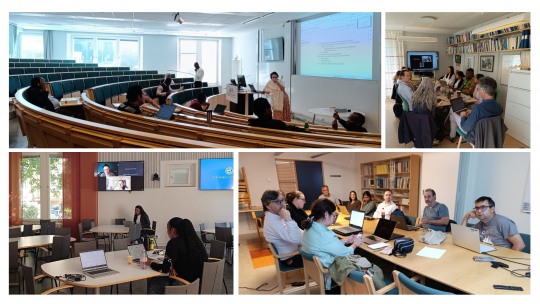
“These annual meetings offer a rare opportunity to spend focused time with a supremely talented community of researchers from all over the world”, reflected Marc Jeuland, who added that “the magic of a global collaborative like this is to facilitate learning and cross fertilization of ideas across contexts, as well as research partnership.”
“The SETI workshop was a unique opportunity to bring together researchers and stakeholders from EfD and our collaborative programs worldwide. Over four days, we not only shared the latest advances in our research but also worked intensively on developing proposals and presenting them to the SETI fellows for feedback”, commented Marcela Jaime. “This comes at a crucial moment, as these inputs are helping us update our network’s knowledge and shape the strategy for 2025–2028, paving the way for more impactful SETI activities in the years ahead.”
The workshop began with the plenary talk Communicating Impact by Petra Hansson, Communication Manager at EfD’s Global Hub. She emphasized the urgency of not only communicating what SETI achieves in terms of research, but also the results and lasting impact of this work. She presented practical tools and inspiring examples of how to do this.
On the second day, participants gathered to commemorate SETI's 10th Anniversary in a plenary session by Gunnar Köhlin, and Subhrendu Pattanayak, Duke University. The attendants heard about the history and highlights of the SETI collaborative program.
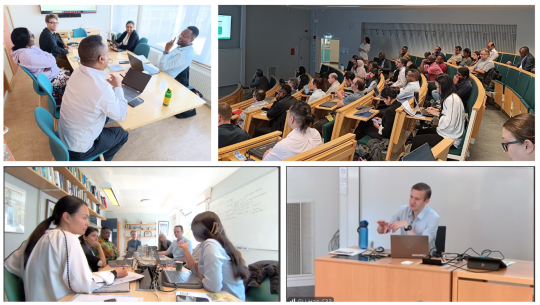
Mr. Yagouba Traoré from the African Energy Commission then shared a keynote lecture Africa's Energy Access & Just Transition: An Opportunity for Investment and Socioeconomic Development, highlighting the significant potential regarding energy resources, critical minerals, and human capital present in the African continent, where more than 70% of its population experiences energy poverty.
A discussion panel followed, Reimagining Africa's Energy Transition in an Era of Geopolitical Realignment and Scarce Development Finance, moderated by Parek Maduot (University of Juba), and offered insights from: John Mutua Mutua (Energy & Petroleum Regulatory Authority, Kenya), Aisha Nanyiti (Makerere University, Uganda), Jonathan Philips (Duke University, USA), Chizoba Obianuju Oranu (University of Nigeria, Nigeria), Philip Kofi Adom (University of Witwatersrand, South Africa), and Jevgenijs Steinbuks (The World Bank).
Many research subjects intertwine with sustainable energy transitions, for instance, gender equality, policy design, types of fuel, clean cooking, and renewables. Researchers in the SETI network cover most of these topics. A clear path for research priorities is necessary to achieve actionable results.
New partnerships, collaborations, opportunities, and debates emerged as key results of this workshop. SETI means to push not only a new research agenda that addresses important knowledge gaps but also plans for increasing policy impact over the coming years.
By Belén Pulgar.