
CECFEE Annual Policy Day 2019
CECFEE held its 2nd Policy Day on 10th November, 2019 by organizing a discussion on conservation of forest resources and wildlife. The key speaker for this event was Mr. P.Sivakumar, IFS, Director of…
CECFEE held its 2nd Policy Day on 10th November, 2019 by organizing a discussion on conservation of forest resources and wildlife. The key speaker for this event was Mr. P.Sivakumar, IFS, Director of…
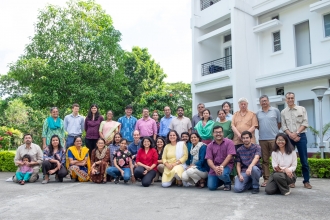
CECFEE hosted its 5th Annual Workshop at the University of Tezpur, Assam. The workshop spanned two days, 10-11 November 2019, and brought together an eclectic mix of researchers and academics. Broadly…

The Center for research on the Economics of Climate, Food, Energy and Environment (CECFEE) of the Indian Statistical Institute, New Delhi, will conduct the 4th Annual CECFEE Research and Policy…
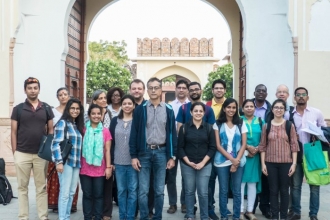
A workshop was organized by the Centre along with the Environment for Development Initiative (EFD) of the University of Gothenburg on October 15th and 16th at Ranthambhore. There were presentations…
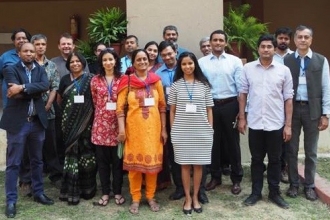
AGENDA Monday, November 2, 2015 Morning Introduction and Welcome – E. Somanathan About EfD – Gunnar Kohlin, University of Gothenburg Credit, LPG Stove Adoption and Charcoal Consumption: Evidence from…
Replacing all oil boilers with renewable energy technologies by 2035 is part of the national energy strategy 2050 in Denmark. Individual heating is supposed to supply around one-fourth of the total residential heating after 2035. About 205,703 homes will need to replace their current oil boilers. This study investigates the drivers for decision makers when adopting different renewable heating technologies.
Over the past three decades, the US natural gas market has witnessed significant changes. Utilizing a standard Bayesian model comparison method, this paper formally determines four regimes existing in the market.
This paper compares the macroeconomic effects of global oil and iron ore price shocks on the Australian economy. Using a Bayesian structural vector autoregression model with sign restrictions, we identify three types of shock: supply, demand and specific demand. The main results suggest that, over the period from 1990Q1 to 2014Q4, the oil shock had a relative larger impact than the iron ore shock on output and inflation, while the iron ore shock was the dominant source of interest and exchange rate movements.
In this paper, we examine the effects of world energy price shocks on China's macroeconomy over the past two decades. We begin by showing that the use of oil prices as a proxy for more general energy price dynamics is not appropriate for the case of China. Having established this fact, we propose a new energy price index which accurately reflects the structure of China's energy expenditure shares, and intertemporal fluctuations in international energy prices.