Macroeconomic Indicators for Electrical Consumption Demand Model in Malaysia

Submitted by Stephanie Scott on

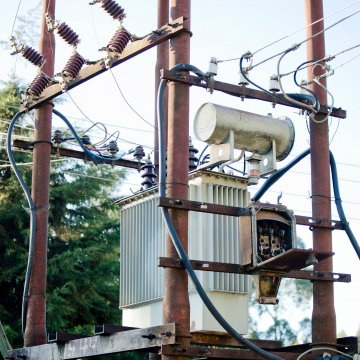
Malaysia has pledged to reduce carbon emissions by 45% in year 2030 and to attain a completely carbon neutral status by year 2050. For those purposes, substantial measures and policies have been implemented geared towards green growth and sustainability, as stipulated in the 9th, 10th, and 11th Malaysia Plans commencing from 2006 until 2020. Nevertheless, it is indeed a challenge in striking to achieve these targets due to reported increment in the total final energy consumption by 30% from 2010 until 2014.

Energy

The effect of FDI on environmental emissions: Evidence from meta-analysis

Submitted by Vicentia Quartey on
EfD Authors:

A frequently-raised issue about foreign direct investment (FDI) is the potentially negative consequences for the environment. The potential environmental cost resulting from increased emissions may undermine the economic gains associated with increases in FDI inflow. Although the literature is dominated with this adverse view of FDI on the environment, there is a possibility that FDI can contribute to a cleaner environment, especially, if FDI comes with green technologies and this creates spillovers for domestic industries.


Climate Change, Energy

Shale Gas Potential in China: A Production Forecast of the Wufeng-Longmaxi Formation and Implications for Future Development 20-17

Submitted by Eugenia Leon on
EfD Authors:

Developing the abundant shale gas in China is a potential means to address the country’s challenges in air pollution and carbon emissions. The purpose of this paper is to evaluate the production potential of the most promising shale gas play—the Wufeng-Longmaxi Formation (WL) in China. We use a Difference-Index analogy method and well-level U.S. shale gas drilling data to estimate the production potential and use a scenario simulation method to propose optimal drilling plans.

Energy

The Persistence of Energy Poverty: A Dynamic Probit Analysis 20-16

Submitted by Eugenia Leon on

This paper contributes to the growing literature on energy poverty in developing countries. We use a dynamic probit estimator on three rounds of panel data from urban Ethiopia to estimate a model of the probability of being energy poor and to investigate the persistence

Energy

Energy Poverty and Household Energy Transition in Rural China 20-15

Submitted by Eugenia Leon on
EfD Authors:

To alleviate environmental problems and accelerate households’ energy transition to cleaner fuel, the Chinese government has enforced a household heating energy transition program in the Jing-Jin-Ji Region. Through subsidies and mandates, the program substitutes household heating coal with electricity, natural gas, or cleaner coal. The program has effectively decreased the emission of air pollutants; however, it also has led to a sharp increase in household heating costs. Through a large-scale household survey in

Energy

Assessing the impacts of nationally appropriate mitigation actions through energy system simulation: a Colombian case

Submitted by Manuela Fonseca on

All countries, including developing ones, have set climate change and energy security as clear target goals. They have developed programs and policies to reach their energy security, emission reduction, and environmental mitigation goals. Colombia has notably developed programs to promote renewable energies and efficiency. However, there is still a need to quantify the impact that these policies could have in the future.

Climate Change, Energy

Examining the decreasing share of renewable energy amid growing thermal capacity: The case of South America

Submitted by Manuela Fonseca on

Concerns about climate change have required energy policy to be reconsidered around the world. The transition from fossil fuels to renewable energy has the potential to contribute significantly to the goals of the Paris Agreement (2015), particularly in the developing world. The recent evolution of total installed capacity of electricity mix in eight South American countries and the current renewable energy policy is considered.

Energy

Estimating the practical potential for deep ocean water extraction in the Caribbean

Submitted by Manuela Fonseca on

Deep ocean water (DOW) is a renewable alternative to the many sustainability challenges that the Caribbean faces today. DOW can provide seawater air conditioning (SWAC) for buildings and greenhouses, provide electricity through an ocean thermal energy conversion plant (OTEC), and provide nutrients for aquaculture and cosmetic industries. However, today the implementation of DOW technologies in the Caribbean is inexistent, and studies about DOW potential in the Caribbean are limited.

Energy