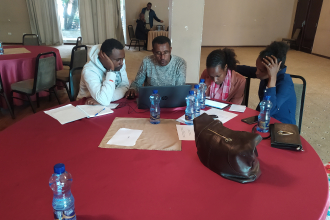
EfD Ethiopia held the second IGE workshop
As part of the IGE capacity-building program, the Environment and Climate Research Center (ECRC) (EfD-Ethiopia) organized a second workshop on August 4, 2020. The objective of the workshop was to…
As part of the IGE capacity-building program, the Environment and Climate Research Center (ECRC) (EfD-Ethiopia) organized a second workshop on August 4, 2020. The objective of the workshop was to…
Over 20 researchers from all over the world presented findings about energy policies, infrastructure, energy use and distribution in countries of the Global South at the Sustainable Energy Transitions…
Stakeholder pressure is among the pathways through which firms are being prodded to adopt environmental management practices. Owing to research paucity from the context of developing countries and overall inconclusiveness, this research investigates whether mimetic, normative, and cot11zercive pressures (which encompass stakeholder pressure) sway firms into adopting resource management and energy efficiency.
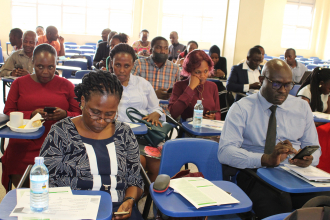
Over 80 participants from the environment and natural resources sector including, senior civil servants, the academia, civil society organization, members of the public, and students convened at…
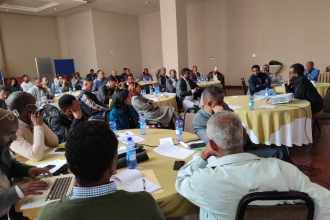
On July 5, 2022, ECRC(EfD-Ethiopia) conducted a stakeholder survey workshop as part of the Capacity Development Programme on Inclusive Green Economy (IGE) in Practice for senior civil servants and…
Key findings: While electricity is a key to economic development, nearly 600 million people in sub-Saharan Africa live without electricity.
This study analyses the socioeconomic benefits of electrification in Uganda.
The findings show that grid connectivity increases the number of work hours, female employment, household expenditure (meaning that the household is able to buy more of the goods that it needs), and key educational outcomes.
Furthermore, the benefits from grid connectivity increase with time.
KEY MESSAGESMost of the businesses in rural areas are home-based, i.e., the household runs businesses such as food sales, restaurants, mobile, and electronics shops, barbering, etc., within their residence. Rural households’ business ownership increased from 17.5% in 2011 to 28.5% in 2016. We found that: |
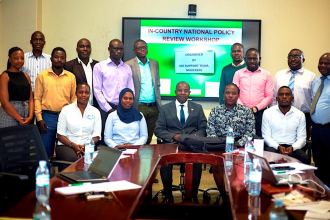
Uganda’s participants in the Inclusive Green Economy (IGE) program, so-called IGE fellows, call for national policy instruments that have clear objectives and implementation plans. They also emphasize…

Twenty researchers from the Global South who obtained their doctor’s degree five years ago or less are participating in the EfD’s Early Career Fellowship program. The purpose of the program is to…