Farmers’ drought experience, risk perceptions, and behavioural intentions for adaptation: evidence from Ethiopia

Submitted by Petra Hansson on

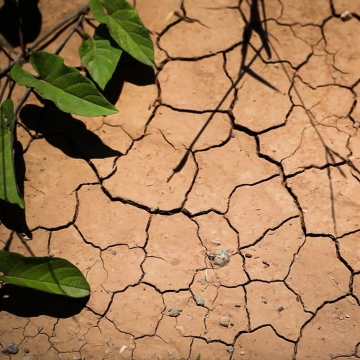
This paper examines farmers’ cognitive perceptions of risk and the behavioral intentions to implement specific drought risk reduction measures using the Protection Motivation Theory (PMT) model. We follow an innovative route by extending a PMT model with a drought experience variable, which, we hypothesize, will influence risk perceptions and the take-up of adaptation measures. In order to do so, we investigated detailed historical drought patterns by looking at the spatial and temporal aspects of drought conditions during crop growing season at the village level.

Agriculture, Climate Change, Land

An integrated assessment of vulnerability to floods using composite index – A district level analysis for Bihar, India

Submitted by Vidisha Chowdhury on
EfD Authors:

Vulnerability assessment using composite indices provides critical information for the policymakers on why certain regions are impacted more than the others. Several researchers have assessed the vulnerability to hazard in diverse spatial and environmental settings, however, not many studies have assessed the vulnerability to flood hazards in Bihar, where flooding is a perennial event.

Climate Change, Land, Policy Design

A multilevel analysis of drought risk in Indian agriculture: implications for managing risk at different geographical levels

Submitted by Vidisha Chowdhury on
EfD Authors:

Drought is an important downside risk in Indian agriculture; and the spatial differences in its intensity and probability of occurrence are considerable. To develop strategies to manage the risk of drought, and to coordinate and implement these strategies, it is essential to understand the variation in drought risk across geographical or administrative levels. This paper, using a multilevel modeling approach, decomposes the variation in drought risk across states, regions, districts, villages and households, and finds it disproportionately distributed.

Agriculture, Climate Change

Dynamics of Connectedness in Clean Energy Stocks

Submitted by César Salazar on
EfD Authors:

This paper examines the dynamics of connectedness among the realized volatility indices of 16 clean energy stocks belonging to the SPGCE and the implied volatility indices of two important stock markets—the S&P 500 and the STOXX50—and two commodities markets—the crude oil and gold markets. The empirical results show a unidirectional connectedness from the implied volatility indices to the clean energy stocks. Our analysis further reveals similar volatility connectedness behaviors among companies in the same energy production subsector.

Climate Change, Energy