
AERC Senior Policy Seminar XXV on “Human Capital Development in Africa”
The African Economic Research Consortium (AERC), is pleased to invite you to the twenty-fifth Senior Policy Seminar (SPS XXV) that will be held on March 29-30, 2023 in Nairobi, Kenya. The conference…
2023 EAERE European Summer School in Resource and Environmental Economics
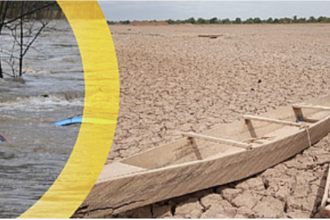
The University of Graz is hosting the 2023 EAERE Summer School which will address the topic of Transnational and Cascading Climate Risks and Adaptation and take place from July 2nd to July 8th, 2023…
How women researchers in EfD Nigeria are changing the society
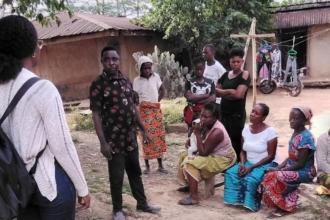
EfD Nigeria parades ten women research fellows who are working very hard to improve the inclusion and participation of women in different aspects of Nigerian society. Meet some of them and learn what…

EfD’s Annual Meeting – a sneak peek into the program
The preparations for EfD’s Annual Meeting on October 5-9, 2023 in Accra, Ghana, are in full swing. The program is still preliminary, but here are some dates to keep in mind, to make sure you don’t…
Global Sustainable Futures arranges panel on the 7th Nordic Development Research Conference
The 7th joint Nordic Development Research Conference (NorDev) will take place on 21-23 August 2023 in Uppsala. NorDev2023 is organized by Uppsala University and the Swedish Development Research…
Addressing plastic bags consumption crises through store monetary and non-monetary interventions in South Africa
This research analyses the impact of retailer interventions focusing on the promotion of reusable bags to reduce plastic bag consumption. For this purpose, retail outlet data for March 2018–February 2020 was used. The retail outlet data was analyzed using a panel fixed effects model to evaluate the impact of three treatments on plastic and reusable bag consumption in South Africa.
Sanctioned Quotas Versus Information Provisioning for Community Wildlife Conservation in Zimbabwe: A Framed Field Experiment Approach
AbstractWe investigate the behavioural responses of natural common-pool resource users to three policy interventions—sanctioned quotas, information provisioning, and a combination of both. We focus on situations in which users find utility in multiple resources (pastures and wild animal stocks) that all stem from the same ecosystem with complex dynamics, and management could trigger a regime shift, drastically altering resource regrowth. We performed a framed field experiment with 384 villagers from communities managing common-pool wildlife in Zimbabwe.