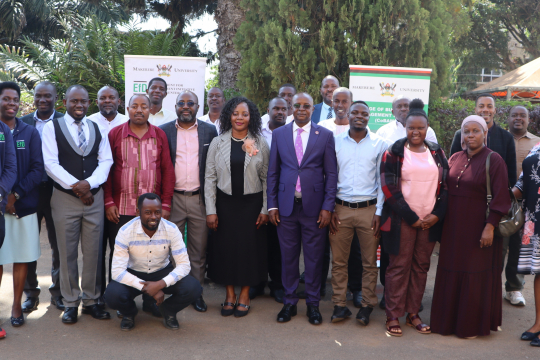
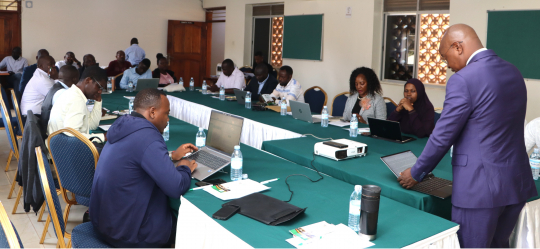
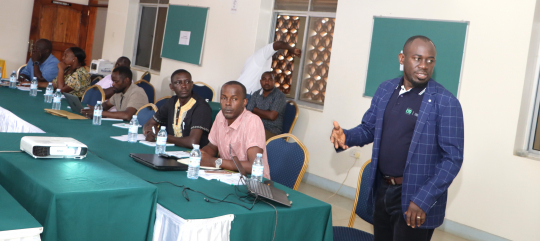
Over 20 local government officials from Kampala Capital City Authority, Entebbe Municipality, and the districts of Wakiso, Mukono, and Mpigi participated in a two-day workshop focused on environmental valuation, accounting, evaluation, and climate change mitigation and adaptation.
The training, held on September 18–19, 2025, was organized by the EfD Uganda and funded by the Makerere University Research and Innovation Fund (Mak-RIF). The goal was to strengthen local capacity for integrating environmental and climate considerations into development planning.
Facilitated by Dr. Aisha Nanyiti, Dr. John Sseruyange, Dr. Peter Babyenda, and Dr. Nick Kilimani, the sessions equipped participants with practical tools to evaluate and incorporate natural capital and climate risks in their decision-making processes.
“Natural resources must be valued and protected”
Professor Edward Bbaale, Director of the EfD-Mak (EfD Uganda) and Principal Investigator of the project, highlighted the urgency of the training in light of Uganda’s escalating climate challenges.
“Uganda is already experiencing the adverse effects of climate variability on agriculture, health, water resources, and the economy,” said Edward Bbaale.
He emphasized the importance of assigning an economic value to ecosystem services like forests, wetlands, and biodiversity to support sustainable land-use decisions.
“A forest cleared for sugarcane may appear to create jobs, but when you account for its carbon sequestration, rainfall formation, and tourism potential, its long-term value far outweighs the short-term economic gains.”
Edward Bbaale urged the inclusion of natural capital in Uganda’s national accounting systems and lauded the commitment of local authorities for prioritizing this critical training.
Health risks from environmental degradation
Representing the Mak-RIF, Chairperson Dr. Sabrina Kitaka connected environmental decline to health threats, citing real-life examples.
“We have just seen a 14-year-old girl in Lwengo contract Crimean-Congo hemorrhagic fever due to increased human-wildlife contact — a direct result of environmental encroachment,” she warned.
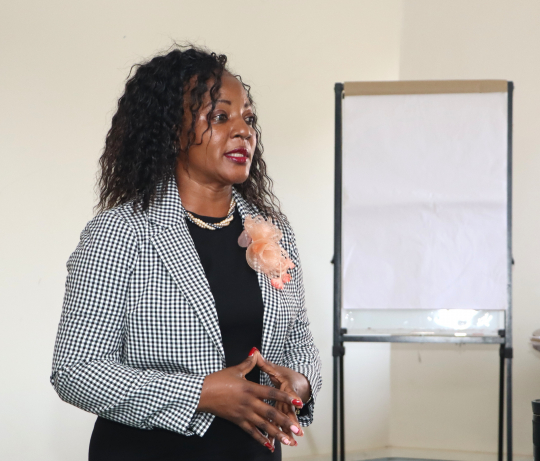
She stressed the importance of cross-sectoral understanding of environmental issues, stating:
“This training is not just for environmentalists. Planners, economists, and health professionals must also be equipped with this knowledge.”
Sabrina Kitaka praised the use of Ugandan experts in the training and emphasized the importance of locally driven solutions.
“We must train Ugandans to solve Uganda’s problems. That’s the spirit of Mak-RIF.”
“Climate action begins at the local level”
Dr. Aisha Nanyiti called for localized policies, tailored to the realities of each district. She explained the difference between mitigation and adaptation, urging officials to create bylaws and strategies to reduce vulnerability to climate-related shocks.
“Districts must create context-appropriate bylaws and planning strategies to reduce vulnerability to floods, droughts, and other climate shocks.”
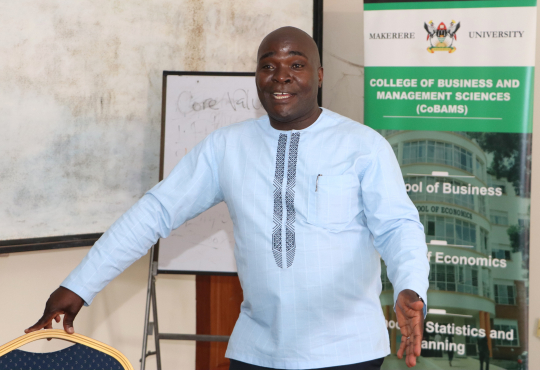
Dr. John Sseruyange highlighted the risks of ignoring environmental evaluation in infrastructure development.
“Roads, schools, and hospitals may be destroyed by floods or landslides if we ignore the environment.”
Tools for valuing nature
Dr. Peter Babyenda introduced tools like the Contingent Valuation Method and Travel Cost Method to help quantify the economic value of natural resources.
“If we don’t value our natural assets, we risk losing them permanently.”
He stressed that environmental protection should be integrated into budgeting and policy-making frameworks like the National Environment Act (2019).
Officials call for continued sessions
Participants called for more regular training sessions. Ibrahim Muwanguzi, Environmental Officer from Wakiso, emphasized the importance of valuing natural assets in government decision-making.
“Most government officials focus solely on economic returns, ignoring the critical but intangible value of natural resources.”
Tonny Mwidyeki from Mpigi appreciated the long-overdue workshop.
“For many of us, it’s been years since we had a refresher like this. If we continue to have such sessions, we will serve our people and protect our environment better.”
Call for action
John Sseruyange reminded participants of the urgent need for action.
“Development depends on the natural world. Let us act now — from our households to our districts — to reverse the damage and secure our future.”
He reaffirmed Makerere University's commitment to continued collaboration in promoting evidence-based environmental policy.
By Jane Anyango, Communication Officer