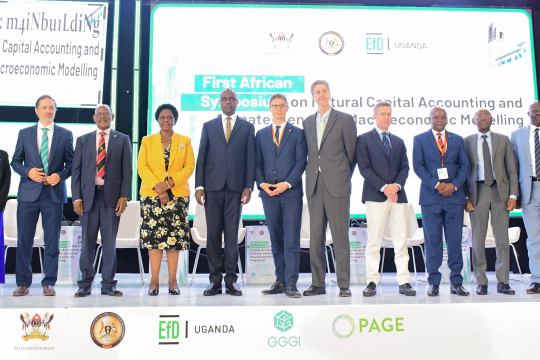
Makerere University has hosted the first African symposium on natural capital accounting and climate-sensitive macroeconomic modelling, bringing together ministers, senior government officials, researchers, and development partners to agree on how Africa should manage its economies in the face of climate change.
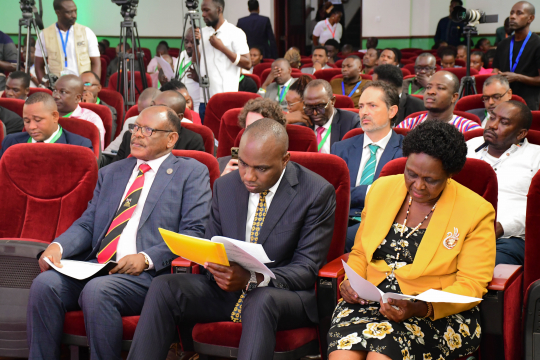
More than 250 participants attended the two-day meeting, reflecting growing demand for economic tools that better capture climate risks, environmental degradation, and the true value of natural resources in national planning.
Fiscal policy must reflect Africa's climate realities
The Minister of State for Finance, Henry Musasizi, made it clear that reform can no longer wait. “We must evolve our frameworks to systematically account for nature and climate in every economic decision,” he said.
His message framed the discussions: fiscal policy, budgeting, and public investment decisions must be informed by climate realities if African economies are to remain stable and resilient.
Practical tool for assessments
Makerere Vice Chancellor Barnabas Nawangwe emphasized that Africa must develop its own analytical tools rather than depend on imported models that do not reflect local conditions. “Policy interventions must reflect the specific economic, environmental, and social dynamics of our countries,” he said.
Nawangwe described the Centre of Excellence for Africa Climate Sensitive Macroeconomic Modelling (CEACM) as a practical response linking academic research directly with the Ministry of Finance to train economists who can integrate climate and natural capital into macro-fiscal decisions.
One of the key outcomes of the symposium was the recognition of CEACM as an emerging regional hub to support African Ministries of Finance. Participants agreed that while many countries have made ambitious climate commitments, they lack the tools to translate them into budget frameworks, investment plans and risk assessments.
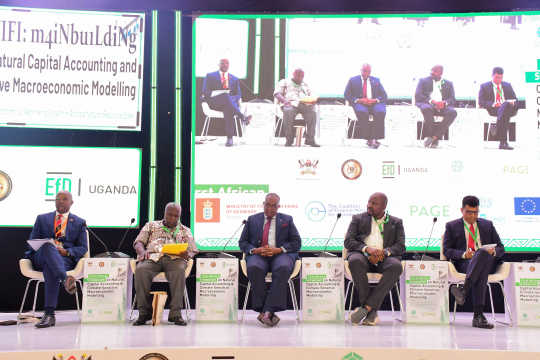
The Model for Natural Capital Policy Assessment (MONCAP), developed with government partners, was highlighted as a concrete step forward. The tool enables ministries to analyse the economic costs of natural capital loss, assess clean energy transitions and estimate the macroeconomic impact of climate shocks.
Makerere is already strengthening capacity through its Master of Science in Economic Policy and Investment Modelling, implemented in partnership with the Ministry of Finance and the Bank of Uganda. The programme integrates climate and natural capital into macroeconomic modelling. Short courses and practical training modules, including MONCAP, will also be rolled out to government planners in Uganda and other African countries.
Joint commitment for NCA
Another major outcome was the adoption of a joint statement that sets out a shared continental direction. The declaration commits participating institutions to strengthen climate-informed macroeconomic analysis, improve national data systems and expand the use of natural capital accounts in fiscal policy and planning. It also underscores the role of African universities and research centres in building long-term modelling capacity.
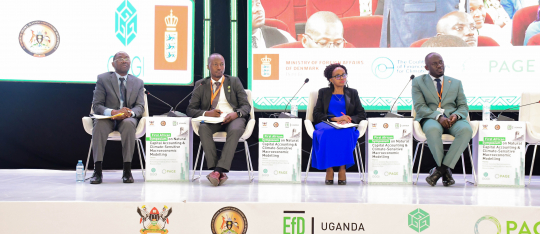
Participants welcomed the establishment of the Pan-African Finance Ministers Forum for Climate Action as a platform for peer learning and policy coordination. They also supported the creation of an Africa-wide knowledge and learning community focused on climate-sensitive macroeconomics, aimed at anchoring expertise on the continent and ensuring policy tools reflect Africa’s diverse economic realities.
The symposium closed with a clear message: Africa’s economic transformation must be guided by homegrown, climate-aware analytical frameworks. With strong participation from ministers and senior technical officials, the meeting signalled a shift from discussion to implementation, focusing on building the tools, partnerships, and capacity needed for a resilient and sustainable future.
By Jane Anyango