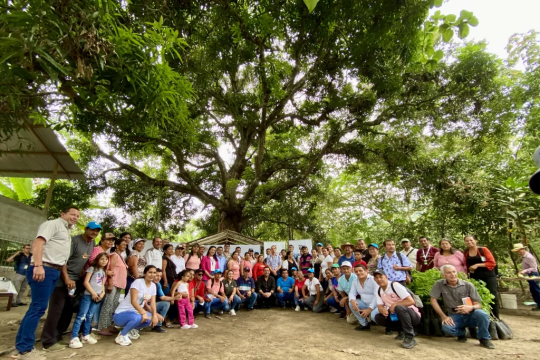
Rural communities in Latin America are highly vulnerable to the effects of climate change, facing unpredictable weather, water shortages, and declining crop yields. However, a new initiative proves that ecosystem-based solutions can turn the tide. An innovative program is reshaping climate adaptation by integrating ecosystem-based strategies into national policies, financial systems, and local governance, ensuring that vulnerable populations are not left behind.
In the face of escalating climate challenges, the Scaling-up Ecosystem-based Adaptation Measures in Rural Latin America (EbA LAC) program drives innovative solutions to enhance climate resilience in Ecuador, Guatemala, and Costa Rica. From 2020 to 2025, EbA LAC is helping governments, financial institutions, and communities integrate ecosystem-based solutions into their adaptation strategies. EbA LAC is one of the major projects of EfD Central America and Mexico (EfD CAM) and bridges the gap between scientific knowledge and policy implementation in the Latin American region.
The program is funded by Germany’s Federal Ministry for the Environment, Nature Conservation, Nuclear Safety and Consumer Protection (BMUV) through its International Climate Initiative (IKI) and led by the German Development Cooperation (GIZ). The initiative partners with the International Union for Conservation of Nature (IUCN) and the Tropical Agricultural Research and Higher Education Center (CATIE).
Stronger commitments from policies to action
One of EbA LAC’s major achievements has been incorporating ecosystem-based adaptation (EbA) practices into local and national policies. The program has influenced key policy instruments, including Rural Development National Plans, Municipal Adaptation Plans, and territorial land-use planning, ensuring long-term governmental commitment to adaptation efforts.
The initiative has reinforced governance frameworks and improved policy coherence across multiple levels by fostering collaboration between national and local governments, civil society, and international organizations.
Innovative financing secures implementation
Beyond policy integration, EbA LAC has pioneered financial mechanisms to scale up adaptation measures. In Costa Rica, the program collaborated with COOCIQUE and COOPECAR to become the first credit cooperatives in Latin America to implement the Environmental and Social Risk Management System (SARAS) and the Agroclimatic platform, allowing them to assess environmental, climate, and social risks in agricultural loan portfolios.
The impact of these financial innovations is expected to extend well beyond 2025, exceeding the project’s official timeline. The program seeks to unlock new business opportunities by financing climate adaptation investments in the agricultural sector. Moreover, by greening their credit portfolios, financial cooperatives can boost their reputation and access new green or climate finance sources.
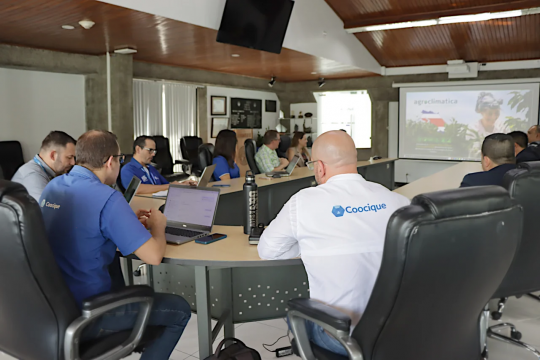
"Working with the financial sector has been a new experience. We are used to working in environmental and agricultural fields, but this project has required us to understand the commercial logic of financial institutions. This has been essential to integrate climate change and adaptation with financial decision-making,” said Eduardo Pacay, climate finance component leader for the project and EfD researcher.
As a result, financial institutions can now direct financing to vulnerable farmers, ensuring that climate adaptation investments reach those most in need. Furthermore, these efforts align with national financial regulations on climate risk management in Costa Rica, ensuring that cooperatives comply with emerging standards.
Empowering communities strengthens local governance
Capacity-building is at the heart of EbA LAC’s approach. Through targeted training programs, the initiative has equipped national and local governmental institutions, grassroots organizations, and rural communities with the knowledge and skills needed to implement and expand EbA strategies.
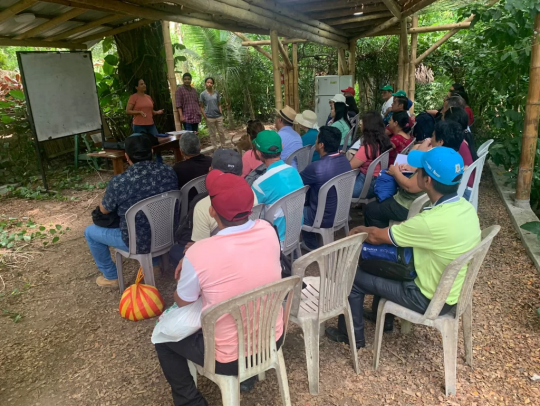
These efforts not only enable local actors to design and manage adaptation initiatives but also help identify and develop ecosystem-based solutions that are eligible for financing through the program’s financial partners. As a result, the strengthened capacity of communities and institutions complements the work with financial cooperatives, facilitating investments in concrete strategies.
Wide range of solutions
These strategies include a wide range of nature-based solutions tailored to local needs and ecosystems. For example, in agricultural landscapes, the program promotes agroforestry systems that combine crops with native tree species, improving soil fertility, enhancing biodiversity, and increasing resilience to droughts and floods. In degraded areas, it supports ecosystem restoration activities such as reforestation with climate-resilient species and natural regeneration to stabilize slopes and recharge aquifers.
At the territorial level, EbA LAC has helped establish and strengthen biological corridors to maintain habitat connectivity and support species migration under changing climate conditions. The program also reinforces watershed councils that enable collaborative management of water resources across multiple users and jurisdictions. In addition, it empowers indigenous platforms that incorporate ancestral ecological knowledge into adaptation planning.
Tangible impacts on the ground
The benefits of these efforts are already evident. Farmers in Costa Rica now have better access to financing for climate adaptation, while policymakers in Ecuador, Guatemala, and Costa Rica have stronger institutional frameworks to incorporate EbA into climate planning.
"Working alongside our partners and stakeholders across Latin America, the EbA LAC program demonstrates how integrating ecosystem-based strategies into policy and finance can catalyze climate resilience in rural communities," said Arlene López, project leader and researcher at EfD.
The financial sector is adopting new tools to assess climate risks, setting a model for future adaptation financing in Latin America. As the program continues, researchers from EfD are monitoring and analyzing its impact, providing insights that can inform future climate adaptation strategies in the Global South. These experiences not only strengthen local and regional resilience but also offer valuable lessons that can guide policy development and financial strategies in other climate-vulnerable regions.
More information about the EbA LAC program can be found at: https://ebalac.com/en/
By: Daniela Rivera