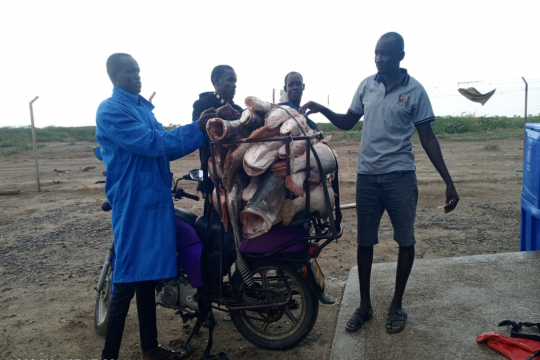
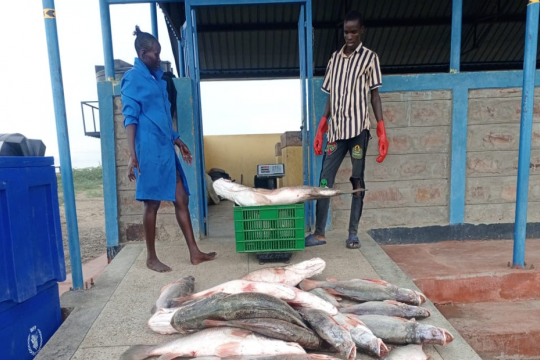
A new study revealed that by using solar-powered refrigerated trucks, Kenyan fishers are finally beating the heat that destroys over a third of their catch every year. This research was conducted by EfD fellows Marc Jeuland (Duke University) and Elly Musembi (University of Nairobi), alongside researchers Alejandro Diaz-Herrera, Mirna Elsharief, Liilnna Teji, Ferran Vega Carol and Jonathan Phillips, from Duke University and Richard Mbithi Mulwa, from the University of Nairobi.
In Kenya, over 1.5 million people rely on fishing. However, fishers face two major problems: extreme heat that rots their catch and an unreliable market system where a lack of storage forces them to sell fresh fish at rock-bottom prices, losing bargaining power.
Temperatures often soar above 50ºC, causing one third of the total fish catch to spoil before it ever reaches a customer. Because they have no way to keep fish fresh, fishers have to dry or salt the fish, which decreases the value of the fish, or sell it quickly at a cheap price to local buyers. This waste costs the Kenyan economy over $500 million USD annually.
A bridge between clean energy and sustainable livelihoods
The researchers evaluated a Nairobi-based social enterprise called Keep IT Cool (KIC) that set up a system to help fishers around Lake Victoria and Lake Turkana by installing solar-powered fridges. Those refrigerated trucks act like "fridges on wheels" and carry fresh fish to big cities like Nairobi when there is a confirmed order from a supermarket or hotel, and a fast payment method. Instead of waiting days to sell dried fish, fishers get cash immediately for fresh fish, which is worth much more.
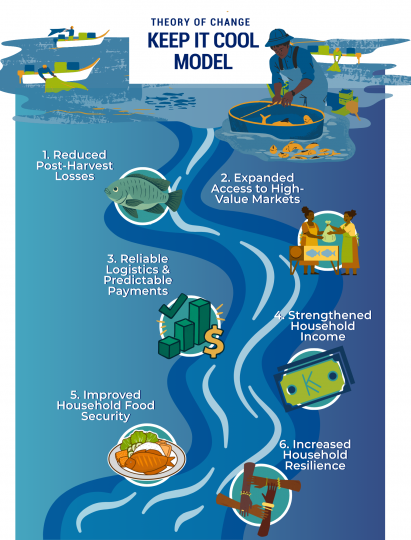
The authors found that the number of fish going rotten dropped significantly, monthly income stayed stable, and the perceived stability and optimism of the fishers increased. Families are now eating a more diverse diet because they have more reliable cash. Furthermore, fishers are using their savings to buy better nets and boats, moving from just surviving to running actual businesses.
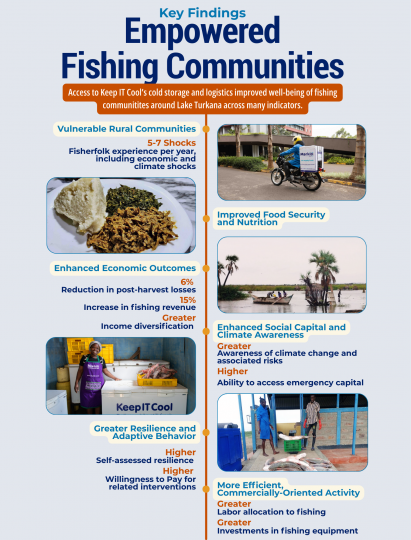
However, while technology is a great start, buying solar freezers is quite expensive. For this to work across all of Kenya, researchers suggest cheaper loans from governments and investors to help lower the cost of the equipment so the businesses can grow. Also, fishers need bank accounts, insurance, and training to manage their money better, to help them through bad fishing seasons.
Mirna Elsharief noted that “As a potential next step, we would aim to share the research insights with relevant stakeholders and impact investors, during the first quarter of 2026, to explore potential areas for future engagement”.
For more information:
-
Click here to access the Policy Brief: Cold Chains, from Net to Fork: Evidence from Kenya on Livelihoods and Community Resilience.
-
Click here to access the Full Technical Report: Evaluating the Adaptation Benefits of Cold Storage and Market Connectivity for Kenyan Fisherfolk on Lake Turkana.
By Belén Pulgar.