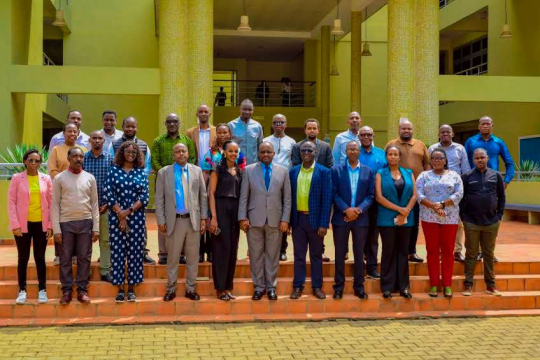
How do farmers perceive Climate Smart Agriculture (CSA) reforms? How can research support the implementation of CSA? What is the role of peer-learning? And how can data inform future policies? These were some questions highlighted at a stakeholder workshop, arranged by EfD’s Inclusive Green Economy program at the University of Rwanda.
The nearly full-day stakeholder meeting gathered 42 people; IGE fellows (participants in the IGE program) and IGE alumni from Rwanda (all cohorts were represented!) and representatives from the ministries of agriculture and finance, the Rwanda Environmental Management Authority, Rwanda Agricultural Board, Rwanda Forestry Authority, the National Land Authority, civil society, such as the Rwanda Organic Agriculture Movement, the private sector and researchers from the University of Rwanda – the host university of the new EfD Rwanda center.
Need to include farmers’ perspectives
The Acting Principal of the College of Business and Economics at the University of Rwanda, Dr. Nkurunziza Joseph, opened the meeting. Dr. Aristide Maniriho, representing the Centre for Research in Environmental Economics, Sustainability and Policy (CREESP) and the acting Director of EfD Rwanda, presented the rationale for this workshop and how CREESP is now linked to EfD, hosting the new EfD center.
The theme of the workshop was Stakeholder perspectives on reforms for implementing evidence-based climate-smart agriculture. It underscores the importance of involving farmers in planning and implementing policies for CSA.
Practical action is needed
There are already several documents guiding the ministries to implement CSA, such as NDC (Nationally Determined Contribution, according to the Paris agreement), the Midterm Plan, and the National Strategy for Transformation. And the day before the workshop, the Rwandan Cabinet had been briefed on the fee structure governing the carbon market following the approval of a law on carbon trading, which is the source of funding and one of the implementation strategies for CSA. However, the participants agreed that more practical and inclusive actions are needed.
“We can’t sit in Kigali and decide what seeds, technology, and methods will work best for the farmers without their involvement,” remarks Dr. Abias Maniragaba, Policy Engagement Specialist in the IGE program.
Accessibility can help bridge the gap
The participants in the meeting noted that a lot of research is conducted, but most of the findings are currently not presented to farmers in an accessible manner. The Rwandan model of Farmer Field School, which includes funded trips to learn from researchers and peers, can, however, contribute to bridging that gap. Easily understandable policy briefs can also be useful.
The outcomes of the discussions will be used by the current cohort of IGE Fellows as they finalize their Transformation Initiative, which is a practical project included in the IGE program.
By: Petra Hansson.