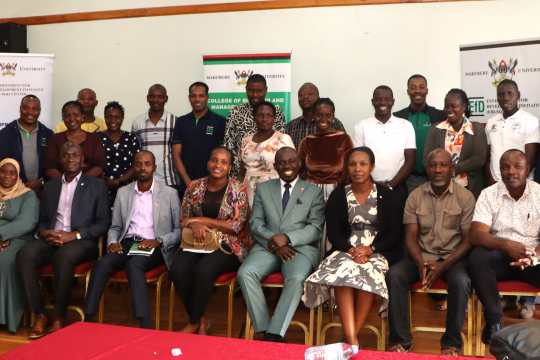
Uganda’s efforts to achieve Climate Smart Agriculture (CSA) goals are being hindered by weak agricultural extension services and poor implementation of existing policies. This was the key message emerging from a high-level policy dialogue held in Fort Portal on September 25, 2025. The event, organized by the EfD Uganda at Makerere University, with support from the EfD Global hub at the University of Gothenburg.
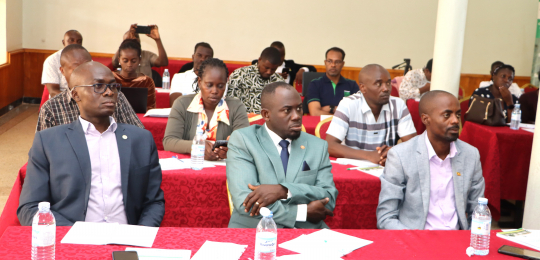
The forum, which gathered over 30 district officials, researchers, and policymakers from the Bunyoro and Rwenzori sub-regions, aimed to enhance grassroots understanding of CSA and bridge the gap between policy and practice. Uganda’s agriculture sector faces increasing pressure from climate change, environmental degradation, and population growth.
Connecting practice with policy
Baguma Brian James, Senior Fisheries Officer for Kabarole District, said that he appreciated the dialogue for rekindling professional and academic insights into CSA.

According to Baguma Brian James, many farmers in Kabarole are already moving towards co-funding support for agricultural inputs, showing the readiness for practical CSA interventions. He hoped that the knowledge gained from the session would result in tangible strategies to support farmer resilience and productivity.
Let science lead the way
Representing the EfD-Mak center, Dr. Nicholas Kilimani highlighted the importance of science-based decision-making in agriculture. He stressed that Uganda can no longer afford “trial and error” approaches.
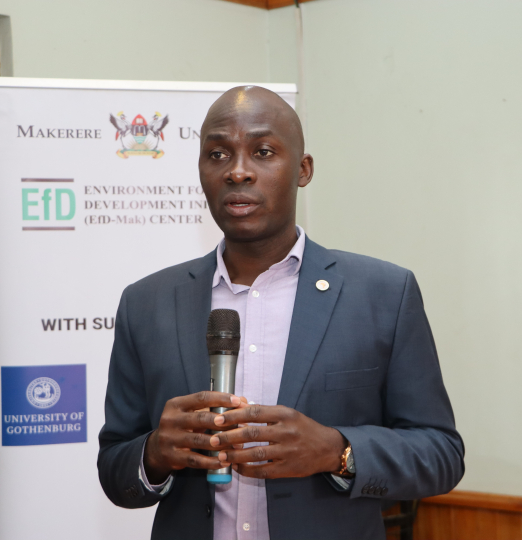
Scientific research must guide policy and farming practices, especially in the face of worsening climate challenges. Nicholas Kilimani pointed out that agriculture, a cornerstone of Uganda’s economy, is under severe threat from unsustainable practices, poor planning, and climate variability. He also underlined the value of international collaboration through the EfD global network to support sustainability.
Laws exist, but action is missing
Fort Portal’s Deputy Resident City Commissioner, Busingye Emmanuel, pointed out a critical gap between environmental laws and their enforcement. He decried the continued degradation of wetlands and blamed poor coordination and inaction by relevant authorities.

Busingye Emmanuel challenged participants to translate knowledge into implementation and warned against the all-too-common trend of attending workshops without follow-through.
“Let’s not attend workshops and stop there. Let us act on the ground,” he urged.
Uganda at risk without CSA adoption
Dr. Peter Babyenda shared concerning statistics on land degradation, warning that with current trends, by 2040, nearly 90% of Uganda’s land could be under agricultural use, increasing environmental pressure.
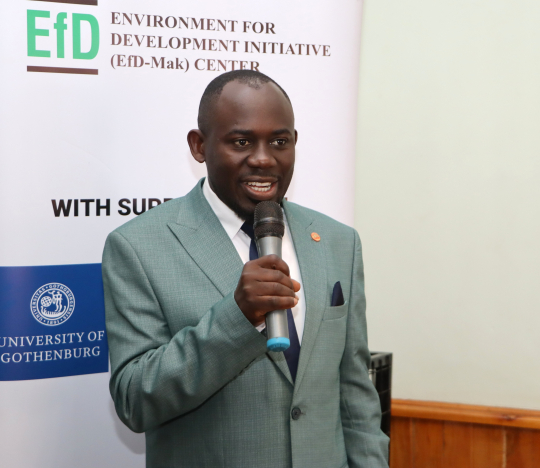
He noted that while CSA can offer a “triple win” — boosting productivity, resilience, and reducing emissions — only 30% of Ugandan farmers currently adopt such practices. Babyenda also warned that Uganda could face trade restrictions, especially from the EU, if it doesn’t adopt deforestation-free and climate-smart agriculture, particularly in coffee production.
Female extension workers outperform the male
Dr. Florence Lwiza Nsereko emphasized the crucial role of effective agricultural extension services in scaling CSA. Despite Uganda’s abundant policy frameworks, she noted, weak extension delivery is limiting their impact. She identified barriers such as poor training, weak institutional support, and negative perceptions among field staff.
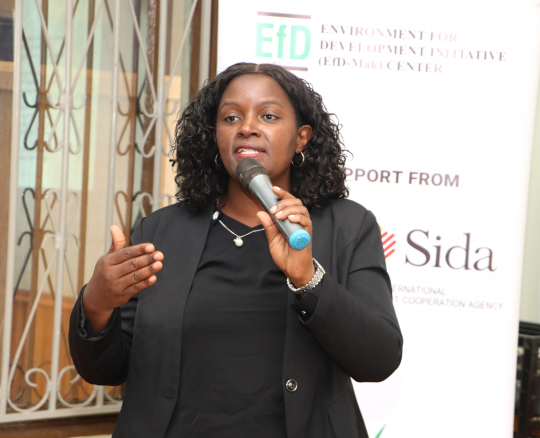
Lwiza also highlighted that female extension workers tend to outperform their male peers in delivering CSA. Western Uganda, being densely populated and highly vulnerable to climate shocks, presents both a risk and an opportunity for impactful CSA implementation.
Clean energy and CSA must go hand-in-hand
Dr. Aisha Nanyiti brought attention to the role of renewable energy in agricultural transformation. Drawing from research across Sub-Saharan Africa and Southeast Asia, she advocated for integrating clean energy solutions with CSA to achieve inclusive and low-carbon agricultural growth.

She identified key enablers such as financial access, regulatory support, and targeted training for micro, small, and medium enterprises (MSMEs) in the energy-agriculture nexus.
Follow-through is key
Fort Portal’s district deputy speaker, Tusiime Florence, expressed concern over the lack of sustainability in such engagements. She urged Makerere University and the EfD-Mak Centre to provide ongoing support rather than one-off workshops.
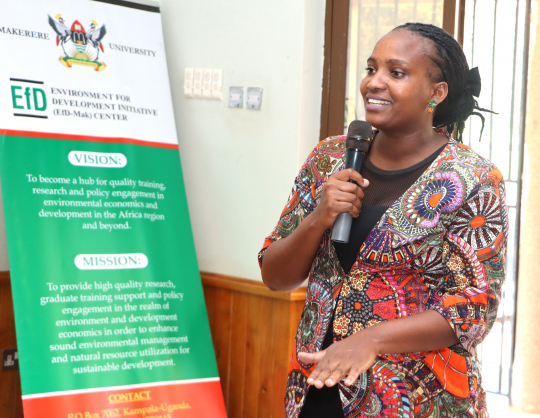
Tusiime highlighted the dire situation of extension workers who often lack transport and funding, yet are expected to deliver on ambitious national goals. She concluded by calling for greater investment in local capacity, stating, “If you come back and work with us, we will make CSA work.”

The Fort Portal dialogue underscored the urgent need to move from policy declarations to field-level implementation. While Uganda has developed robust CSA and climate policies, poor coordination, limited funding, and overstretched extension services continue to hinder progress. Strengthening extension systems, improving farmer awareness, and investing in clean energy partnerships were identified as critical to achieving Uganda’s climate-smart agriculture ambitions.
Compiled and written by Jane Anyango