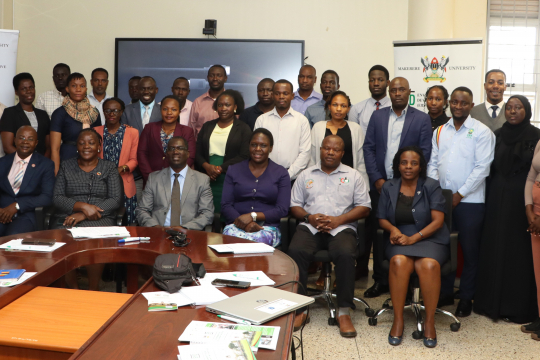
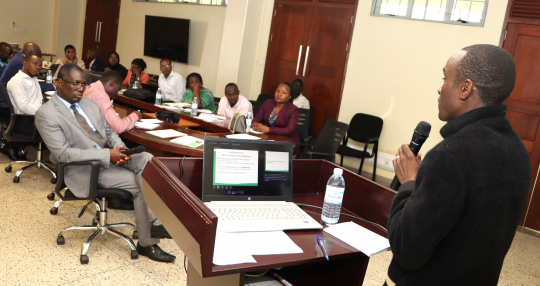
Over 40 senior officials from Uganda’s government ministries and agencies have been called upon to place communities at the heart of biodiversity conservation. The call came during a two-day high-level training held on August 20–21 at Makerere University, organized by EfD Uganda.
The training titled, Biodiversity Conservation, Community-Based Natural Resource Management and National Parks Valuation and Regulation” was led by renowned environmental economist Prof. Edwin Muchapondwa.
The workshop emphasized aligning biodiversity policy with grassroots involvement, advocating for community-based natural resource management (CBNRM) and the economic valuation of Uganda’s ecological assets.
“Communities must be seen not just as beneficiaries but as co-managers of biodiversity,” said Edwin Muchapondwa. “Policy frameworks need to devolve rights to local people to increase their stake in conservation outcomes.”
The participants tackled pressing biodiversity threats, including habitat loss, poaching, climate change, and agricultural expansion. The sessions focused on equipping decision-makers with knowledge on legal frameworks, conservation principles, valuation methodologies, and regulatory integration into Uganda’s National Development Plan III (NDP III) and beyond.
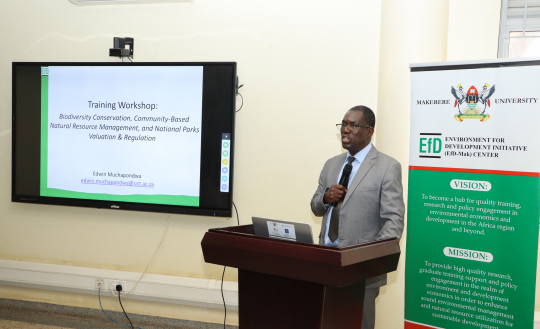
One of the training’s central themes was valuing nature in economic terms—transforming biodiversity from an abstract ideal into a quantifiable national asset.
“When we reduce everything to a common metric, we can make objective, evidence-based decisions—especially when weighing development against conservation,” Muchapondwa emphasized.
The officials learned to apply valuation tools such as contingent valuation, hedonic pricing, and payment for ecosystem services, preparing them to incorporate biodiversity into impact assessments, tourism strategy, and national budgeting.
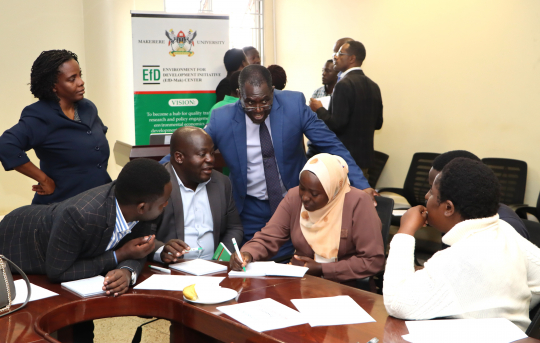
Policymakers seek advice on sustainable tourism
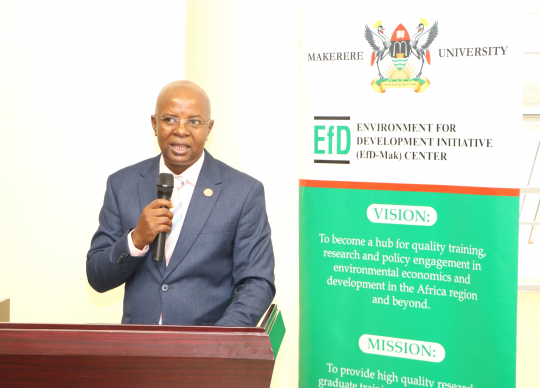
Edward Bbaale, Director of the EfD–Mak Centre, opened the event by calling for deeper collaboration between academia and policymakers, especially around tourism and economic development.
“We’ve had little research from Makerere on tourism and natural resource valuation,” said Bbaale. “Yet this is exactly where government seeks advice.”
Uganda, aiming to grow its GDP tenfold to $500 billion by 2050, is banking on tourism, agro-industrialization, and manufacturing. However, Bbaale cautioned that growth must be rooted in sustainable resource use.
Policies must be locally grounded
Peter Babyenda, a Research Fellow at EfD–Mak, warned that Uganda risks depleting its natural wealth unless it learns to integrate biodiversity into economic policy.
“Our forests, wetlands, and ecosystems are routinely excluded from GDP calculations due to limited technical capacity and funding,” said Babyenda.
He emphasized the importance of empowering frontline technical staff in ministries such as Tourism, Water, and Environment through training supported by SIDA. The goal: to shift from emotion-driven to evidence-based conservation policymaking.

He also warned of the consequences of poorly informed policy, citing a failed transport enforcement proposal as an example of inadequate public and community engagement.
“Especially with human-wildlife conflicts, you must involve locals,” he said. “Solutions like electric fencing must be safe and community-driven.”
The training was a wake-up call
“This training was a timely eye-opener,” said Adson Tumwebaze from the National Environment Management Authority
“It helps us integrate ecosystem valuation into our research and planning, aligning with national policies like the National Biodiversity Action Plan and BISAP. You can’t plan development on an ecosystem without understanding its value.”
“Can biodiversity and development coexist? They must. Uganda’s tourism sector, a key economic pillar, depends entirely on natural resources. We can’t protect what we haven’t identified or valued. Accurate data is essential,” said Alice Nalweera, Economic Policy Researcher
Arthur Ebong from the National Planning Authority said, “The training filled a gap between planning and execution. We often ‘mainstream’ biodiversity without truly understanding or integrating it. Now, with tools like hedonic pricing and cost-benefit analysis, we can develop more effective policies and even revise academic curricula to better prepare future planners.”
“This training was a wake-up call. We often defend conservation emotionally. Now, with economic valuation, we can present facts—real value comparisons that support budget allocations and fee adjustments. More field officers need this training,” noted Gertrude Kirabo, Uganda Wildlife Authority.
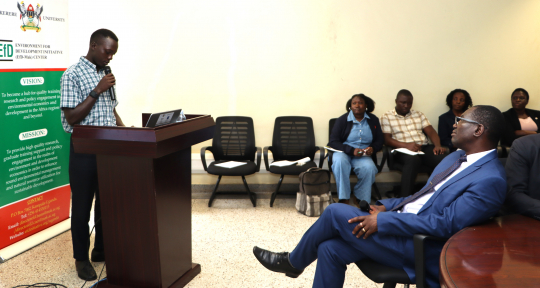
The event concluded with renewed commitments to inter-agency cooperation and evidence-based policymaking. Participants called for sustained partnerships among academia, government, and local communities to ensure biodiversity conservation becomes both a development strategy and an economic investment.
By Jane Anyango | Communication Officer