
Over 30 environmental officers from 11 districts in Western Uganda gathered in Fort Portal for training organized by the EfD Uganda at Makerere University. Funded by the Makerere Research and Innovations Fund (MakRIF), the training aimed to build capacity in environmental evaluation, valuation, accounting, and climate change mitigation and adaptation.
The training included participants from Mubende, Kiryandongo, Kyenjojo, Fort Portal, Masindi, Kabarole, Kamwenge, Hoima, Ntoroko, Kyegegwa, and Buliisa. It followed a similar session previously held in the Central Region at Entebbe.
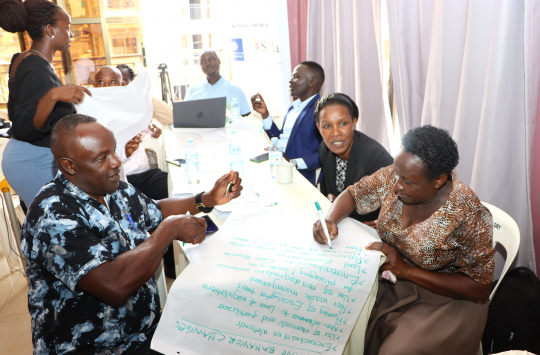
Facilitators included Dr. John Sseruyange, Peter Babyenda, Aisha Nanyiti, and Nick Kilimani, who led participants through technical sessions designed to equip them with tools to value ecosystems and incorporate environmental data into district and national planning.
“Important to know the value of our natural resources”
Dr. Peter Babyenda, Policy Engagement Specialist at EfD-Mak, stressed that Uganda's development targets outlined in National Development Plan IV (NDP IV) depend heavily on natural resources. He raised concerns that key ecosystems like Mabira Forest, Lubigi Wetland, and Lake Victoria remain economically undervalued.
“We don’t know the value of most of these forests and wetlands,” he stated, emphasizing that district officers are best positioned to collect this crucial data. He added that economic valuation would help in making informed decisions about environmental trade-offs, such as land use changes for industrial development.

UGX 150 Million invested in training to fill valuation gaps
EfD-Mak secured UGX 150 million from MakRIF to carry out regional training sessions. Peter Babyenda explained that the aim is to train district officers to gather, value, and analyze environmental information so Uganda can understand the real worth of its natural assets.
He introduced EfD-Mak’s Natural Capital Policy Assessment Model, which relies on accurate grassroots data. This model supports national policy by providing evidence for balancing development and conservation.
Peter Babyenda reiterated the need for sustainable development that does not compromise environmental integrity
He said that EfD-Mak intends to follow up with officers to assess how well they apply their new knowledge. The officers were encouraged to submit proposals for environmental valuation projects, such as those assessing the economic value of national parks or wetlands.
“This is the kind of thinking we want to inspire,” said Peter Babyenda, underlining that funding can be sourced for strong, evidence-based proposals.
Training addresses a critical capacity gap
Dr. John Sseruyange highlighted a gap between existing environmental laws and their implementation at the district level.
“We found a gap among environmental experts in local governments. This training addresses that gap,” he said.
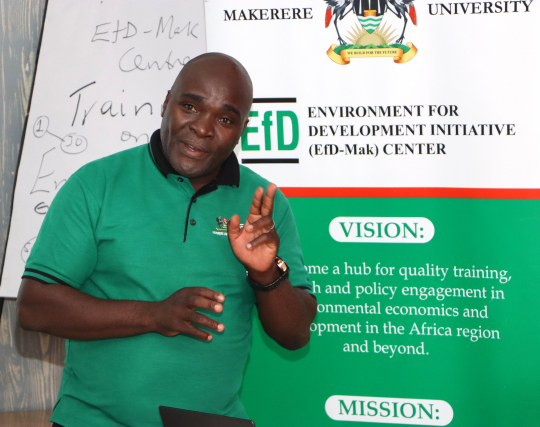
Environmental impact assessments require field research, community engagement, and technical studies — all of which demand resources beyond staff numbers. The training aimed to build the capacity and commitment needed to meet these challenges.
EfD-Mak also organizes regional outreach, policy dialogues, and national-level discussions to ensure insights gained are translated into policy actions. Dissemination platforms include radio, TV, policy briefs, and academic publications.
“We must help communities understand the value of nature”
Jeremaya Munobi, a Forestry Officer from Ntoroko District, said the training was vital for local officials working on the frontline of conservation. He noted that communities often misuse wetlands and other ecosystems because they lack an understanding of their economic value.
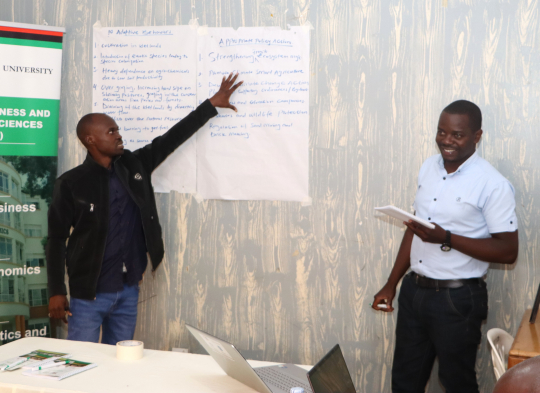
“If we can show what’s lost in shillings when wetlands like Kiyanja are degraded, we can design better policies and educate communities more effectively,” he said. However, he pointed out that logistical and funding challenges at the district level hinder implementation.
Munobi concluded that with stronger support, district governments can more effectively manage and conserve natural resources.
By Jane Anyango
Comms officer.