"Child penalty" – how having children affects women's careers
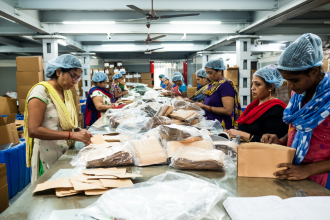
In a world where gender inequality is already prevalent in social environments and labor markets, the decision to have children further tilts the scale against women.
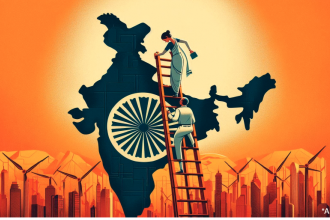
High temperatures have unequal impacts on household consumption across India and thus widen socio-economic inequality. To fight this, the country’s climate response must promote mindful consumption among the affluent and equip vulnerable communities with effective tools for survival.
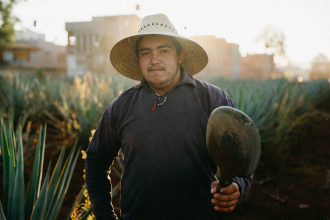
Tequila conjures images of lime wedges, salt, and late nights. The popular spirit is deeply connected to the blue agave plants it's made from - and, perhaps surprisingly, to bat populations in Mexico.
On Sunday, December 12, Claudia Goldin was awarded the Nobel Prize in Economic Sciences for her work on women’s progress in the workforce. In this piece, Farzana Afridi reflects on the significance of Goldin’s win and the contribution of her research to understanding the gender dynamics of labour markets. She also delves into the implications of this research for developing countries like India, where female labour force participation has remained low despite economic growth, and why this matters for economic growth.
Around the world, governments are fighting poverty, environmental degradation, and many other deprivations. Despite lacking resources and limited capacity, they have no choice but to try. Numerous policies and interventions are published every year: subsidies, promotion, social mobilization, and so on. Each policy looks great in writing, but many of them do not move at all. Hardly anyone in government can even answer how many such policies exist. These policies are adapted for the sake of satisfying populism or to show progress.
From an individual perspective, climate change may be perceived as distant or difficult to understand. Its influence is likely to be restricted to conversations about changes in the climate, such as variations in temperature, rainfall patterns, or shifts in the timing of the seasons. However, in seemingly simple choices, such as the selection of food, the clothes we wear, or the means of transportation we use, we rarely pay enough attention to fully understand the environmental impact that such decisions can have.
Over the last three decades, agricultural and industrial sector workers have suffered consumption losses due to temperature rise while those in the services sector saw consumption increases. This article discusses the broad range of impacts of climate change across sectors and highlights the stark rise in inequality of household consumption due to increased temperature variability. It emphasises the need for social protection schemes, and data on the economic impacts of climate change to aid the design of adaptation policies.
The reform of the water sector requires the consensus of the people and a reasonable change management roadmap. In Vietnam in general, or in large cities like Ho Chi Minh City specifically, there is no need to search far for lessons.
On International Women’s Day, Farzana Afridi considers a key issue in the creation of good jobs for women – the provision of skilling. She discusses the lack of physical and financial access to skill training, shortage of demand-relevant and high-quality programmes, and inefficient matching with jobs post-training. While highlighting recent government proposals to address these concerns – such as launching a unified Skill India Digital Platform – she contends that a more gender-sensitive approach is needed.
The 737 ascends over the green highlands around Addis. Intense sun and green and thousands of little bright square dots. Each is a tin roof – I have been there. Smallholders who grow coffee and beans and some have a cow. There are lakes with the typical rift valley color of muddy mineral-laden waters. Just as I get my phone ready for a pic we break the clouds and then I just get veiled glimpses from below. I am experienced, I know what the clouds are made of and what role they play for the climate. My flight will add another 3 tons of CO2 to the climate.