Child welfare programs and child nutrition: Evidence from a mandated school meal program in India

Submitted by Vidisha Chowdhury on
EfD Authors:

Utilizing the data I collected on a nationally mandated school meal program in India, I examine the extent to which children benefit from the targeted public transfer. Relying upon built-in randomness in whether a child's 24-hour food consumption recall was for a school or non-school day, I find that the daily nutrient intake of program participants increased substantially by 49% to 100% of the transfers. The results are robust to the potential endogeneity of program placement and individual participation.

Health

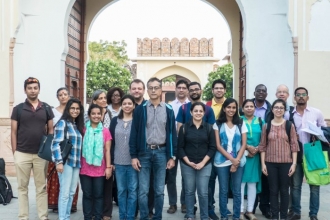
4th Annual CECFEE Research and Policy Workshop

The Center for research on the Economics of Climate, Food, Energy and Environment (CECFEE) of the Indian Statistical Institute, New Delhi, will conduct the 4th Annual CECFEE Research and Policy…

Date: Friday 16 — Saturday 17 November, 2018
Location: Goa,India

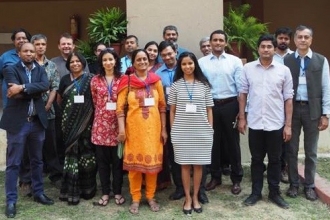
2nd Annual CECFEE Workshop, 15th-16th October 2016

A workshop was organized by the Centre along with the Environment for Development Initiative (EFD) of the University of Gothenburg on October 15th and 16th at Ranthambhore. There were presentations…

Date: Saturday 15 — Sunday 16 October, 2016
Location: Ranthambor,Rajasthan (India)

1st Annual CECFEE Workshop, 2nd-3rd November, 2015

AGENDA Monday, November 2, 2015 Morning Introduction and Welcome – E. Somanathan About EfD – Gunnar Kohlin, University of Gothenburg Credit, LPG Stove Adoption and Charcoal Consumption: Evidence from…

Date: Monday 2 — Tuesday 3 November, 2015
Location: Delhi, India

The determinants of self-medication: Evidence from urban Vietnam

Submitted by Luat Do on

This study examines the primary determinants of self-medications among urban citizens in Ho Chi Minh City, Vietnam using survey data. Employing logistic models, the article finds that the probability of self-medication is positively associated with the respondents' high school degree or vocational certificate, married status, and income while it is negatively related to employed status, the number of children, the geographical distance from home to the nearest hospital, doing exercise, and living in a central region.

Health

Do the more educated utilize more health care services? Evidence from Vietnam using a regression discontinuity design

Submitted by Luat Do on
EfD Authors:

In 1991, Vietnam implemented a compulsory primary schooling reform that provides this study a natural experiment to estimate the causal effect of education on health care utilization with a regression discontinuity design. This paper finds that education causes statistically significant impacts on health care utilization, although the signs of the impacts change with specific types of health care services examined.

Health

Intergenerational Earnings and Income Mobility in Vietnam

Submitted by Luat Do on
EfD Authors:

This paper empirically examines the intergenerational mobility of earnings and income in Vietnam using the two‐sample two‐stage least squares estimation. The baseline intergenerational elasticity estimates show that Vietnam occupies the intermediate degrees of intergenerational mobility of earnings and income for both sons and daughters. In particular, a rise of 10 per cent in fathers’ earnings is on average associated with an increase of 3.61 per cent and 3.94 per cent for sons’ earnings and income, respectively.

Health

Correlates of body mass index among primary school children in Ho Chi Minh City, Vietnam

Submitted by Luat Do on
EfD Authors:

Objectives

To document the prevalence of overweight and obesity and examine associated risk factors.

Study design

A cross-sectional survey was conducted in 16 primary public schools in eight districts of Ho Chi Minh City in 2016. A multistage clustering sampling method was used to collect a sample of 1806 pupils attending the first, second, and third grades (7–9 years).

Health