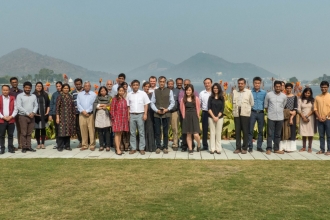
3rd Annual CECFEE Workshop
The Centre for research on the Economics of Climate, Food, Energy and Environment (CECFEE) of the Indian Statistical Institute organized the 3rd annual CECFEE on 17-18th of November, 2017. The…

The Centre for research on the Economics of Climate, Food, Energy and Environment (CECFEE) of the Indian Statistical Institute organized the 3rd annual CECFEE on 17-18th of November, 2017. The…
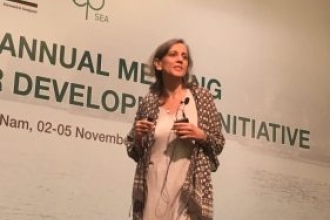
CECFEE Member Professor Rohini Somanathan delivered the Keynote at the EfD annual Meeting, 2018 held at Hanoi, Vietnam on “Gender-bias and Gendered Outcomes: Some Pitfalls of Inference”.
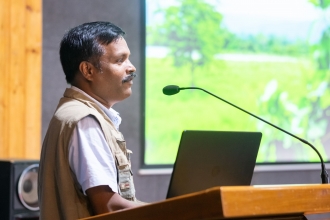
CECFEE held its 2nd Policy Day on 10th November, 2019 by organizing a discussion on conservation of forest resources and wildlife. The key speaker for this event was Mr. P.Sivakumar, IFS, Director of…
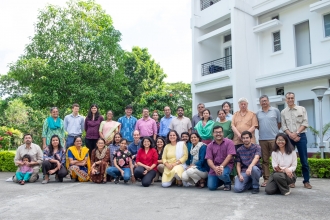
CECFEE hosted its 5th Annual Workshop at the University of Tezpur, Assam. The workshop spanned two days, 10-11 November 2019, and brought together an eclectic mix of researchers and academics. Broadly…

The Center for research on the Economics of Climate, Food, Energy and Environment (CECFEE) of the Indian Statistical Institute, New Delhi, will conduct the 4th Annual CECFEE Research and Policy…
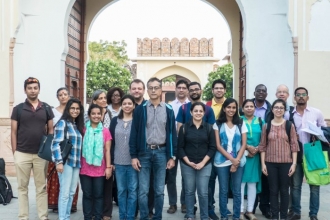
A workshop was organized by the Centre along with the Environment for Development Initiative (EFD) of the University of Gothenburg on October 15th and 16th at Ranthambhore. There were presentations…
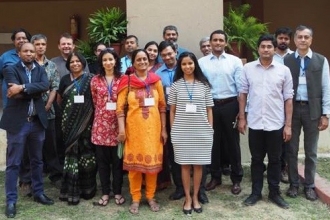
AGENDA Monday, November 2, 2015 Morning Introduction and Welcome – E. Somanathan About EfD – Gunnar Kohlin, University of Gothenburg Credit, LPG Stove Adoption and Charcoal Consumption: Evidence from…
Flood risk management has become important more than ever, because an escalating threat of unpredictable and extreme weather is affecting flood-prone communities. People-centred risk communication has been proposed as an effective strategy that can stimulate people to protect themselves against flood risks. However, little research with a sound theoretical underpinning has been done to examine the effectiveness of such a strategy in developing countries. We use a field experiment to analyse how risk communication can influence households’ intentions to implement mitigation measures.