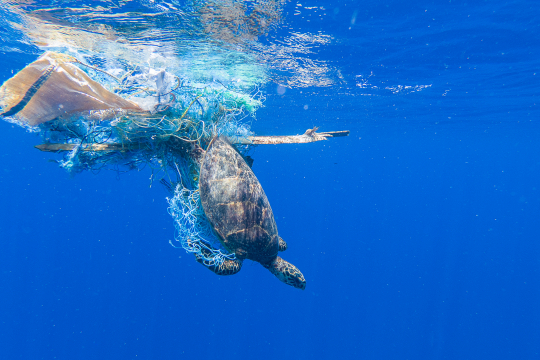
The use of biodegradable fishing gear is increasingly seen as a way to mitigate the negative impacts associated with abandoned, lost, or otherwise discarded fishing gear (ALDFG), often referred to as “ghost gear”. However, a major concern with such an environmentally friendly technique is its potential to reduce catch efficiency due to its degradable characteristics, which may diminish competitiveness. To contribute to the limited empirical evidence, we conducted a survey experiment to investigate how the effectiveness of biodegradable gear, compared to conventional fishing gear, influences the adoption by Norwegian fishers. Our findings reveal that fishers are willing to adopt biodegradable fishing gear without conditions if its catch efficiency is comparable to conventional gear. We consider alternative adoption conditions and find that, as the relative efficiency of biodegradable gear decreases, the individual adoption decision becomes more conditional on other fishers doing so. These findings suggest that strategic concerns make conditional adoption important to widespread use of biodegradable gear. Specifically, adoption depends on improving the relative catch efficiency of biodegradable gear or implementing policies that lead to widespread adoption. Results indicates that marine environment protection concerns drive adoption, while economic concerns drive opposition.
Ghost fishing and the voluntary adoption of biodegradable gear
EfD Authors

Country
Sustainable Development Goals

Publication reference
Do, H.-L., & Cherry, T. L. (2025). Ghost fishing and the voluntary adoption of biodegradable gear. Resource and Energy Economics, 84, 101534. https://doi.org/10.1016/j.reseneeco.2025.101534