A recent study highlights the complex relationship between economic growth and poverty reduction in Ethiopia from 2001 to 2020. It shows, among others, a great GDP (Gross Domestic Product) growth in Ethiopia, a diminishing share of agriculture, and an increasing share of the service sector. Inflation and negative trade balance are some of the major challenges.
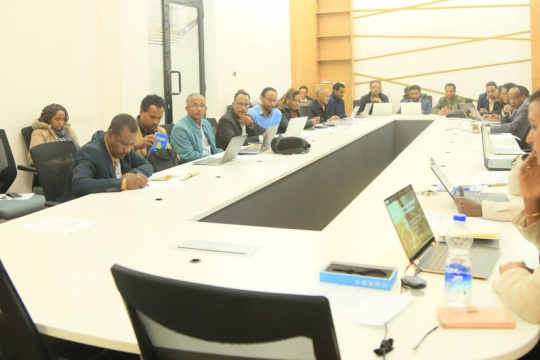
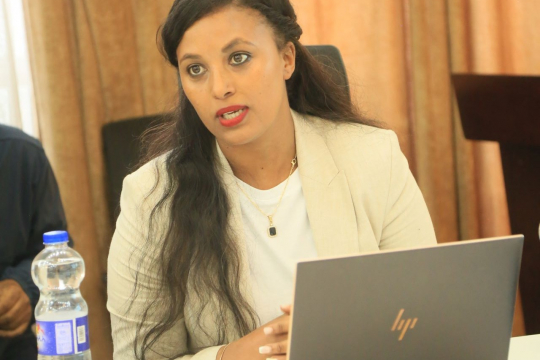
The study titled Is Growth Pro-Poor in Ethiopia? A CGE–Plus Analysis (CGE stands for Computable General Equilibrium, a large-scale economic model to analyzes how different parts of an economy interact over time), led by SETI's Research Fellow Selamawit Kebede, was presented to the Poverty and Social Welfare Center at the Policy Studies Institute on July 4, 2025.
The objective of the investigation was to answer three key questions: What are the main drivers of poverty reduction? What is the empirical relationship between poverty reduction and economic growth? Has the growth in Ethiopia been pro-poor?
Selamawit Kebede highlights Ethiopia's remarkable economic growth and poverty reduction over the past two decades. However, she also pointed to persistent challenges such as inflation, low agricultural productivity, and skill gaps. The study included a benchmarking exercise, comparing Ethiopia's progress with other sub-Saharan African countries and global targets, drawing lessons from diverse international experiences.
Distribution more important than growth for poverty reduction
The study revealed that while Ethiopia's economy achieved significant growth, with GDP increasing more than thirteen-fold and per capita income rising substantially, the share of agriculture in the economy has declined, with the service sector now dominating. Inflation emerged as a significant hurdle, and despite increased gross domestic fixed investment, import expenditures continued to outpace export earnings.
At the macro level, the analysis suggests the Ethiopian economy is in a long-run equilibrium, meaning that, over time, the various drivers of growth (population, inflation, trade) will continue to influence it, but the economy's underlying structure and capacity will not drastically change unless there’s a significant change.
Interestingly, a negative relationship between GDP growth and private investment was observed, potentially indicating a crowding-out effect due to public investment. Long-term growth drivers include population changes, inflation, exchange rates, urbanization, imports, and exports.
At the micro level, factors like population size, education, asset holdings (especially livestock), and urbanization significantly influenced household welfare and consumption growth. The research highlights that poverty reduction was influenced more by distributional effects than by economic growth itself.
Growth in agriculture has great impact
Selamawit Kebede reports a decline in the number of poor people, the poverty gap, and the intensity of poverty over the study period, though the decline slowed in the latter half of 2010. While overall inequality decreased, this trend was not consistent across all regional states. Notably, the study's inequality figures were higher than previously reported in other literature.
Using CGE (Computable General Equilibrium) analysis, the team simulated the impacts of various growth scenarios. Findings indicated that growth driven by agriculture and agro-processing was more effective in reducing poverty than non-agricultural growth, primarily because it’s a crucial income source for the poor. In high-growth scenarios, growth primarily benefited those with high incomes, showing minimal impacts on poverty.
Policy recommendations
Authors suggested modifications to the standard CGE model to better reflect Ethiopia's unique economic context such as, the need to "shock" the economy to transition to a higher economic equilibrium, referring to a state where the economy is more productive and prosperous than its current state, encouraging private investment, promoting asset building at the household level to increase consumption and reduce poverty, and the need for further studies with more accurate analyses derived from internal government data.
By Belén Pulgar.