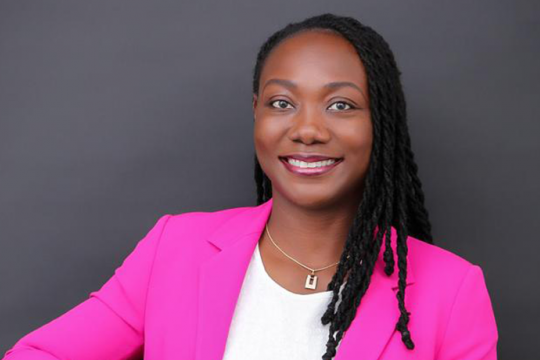
Dr. Nkechi Owoo has made history as the first woman in 80 years to be promoted to Full Professor of Economics at the University of Ghana. She is a health and demographic economist whose research spans poverty, gender, health, and environmental sustainability. Prof. Nkechi Owoo is deeply committed to ensuring African researchers have a central voice in shaping the continent’s development. As a member of EfD Ghana, she has led innovative projects on household business performance, youth employment programs, and the influence of patriarchal norms on women’s fertility intentions, among others. She also led the all-female research team that won the 2022 EfD Peter Berck’s Best Discussion Paper Award. We spoke with her about this milestone achievement and her vision for inclusive, impactful economic research in Africa.
What does becoming the first woman Full Professor of Economics at the University of Ghana mean to you—personally and for women in economics more broadly?
For me, this milestone is a reminder that prayer, hard work, and determination truly pay off. It also reflects the impact of mentorship and the many people who poured into me from my earliest days as a researcher. I am deeply grateful for every hand that helped shape this journey. For women in Economics, especially those just starting, I think it shows that even with the difficulties we often face, growth is possible. The field is still open to new perspectives, and the challenges, while real, can be overcome.
Your research often explores poverty, gender, and inequality -- pressing issues in Africa’s development story. What drives your focus on these themes, and what impact do you hope your work will continue to make?
My ideas can come from anywhere. From a conference conversation to a news segment that makes a claim I know isn’t grounded in evidence, or simply from what I see happening around me. These moments remind me how many assumptions shape our understanding of poverty, gender, and inequality. Economics gives us a strong foundation, but the issues we face are too complex for any one discipline. That’s why I enjoy collaborating with colleagues in public health, psychology, geography, demography, and beyond. Their perspectives help us build more complete and practical solutions. What I ultimately hope for is impact: that my work helps clarify misconceptions, highlights inequities that deserve attention, and contributes to better, fairer policies.
You’ve spoken about the marginalization of local researchers in development discussions. What do you see as the main barriers, and how can initiatives like EfD help strengthen African-led scholarship?
There’s definitely growing awareness about the marginalization of African researchers, but real barriers remain. One big issue is that we’re often not present at the decision-making tables whether it’s about setting research priorities, collecting data, or interpreting and publishing results. When those conversations happen without us, important local perspectives are lost. We also need many more African researchers showing up at major international conferences and meetings, especially those focused on addressing development challenges. That’s where you hear cutting-edge ideas, build meaningful networks, and become part of global projects. But limited funding continues to hold people back, and that’s a challenge across the continent. For women, the hurdles can be even higher. Travel, networking, and fellowships often require time away from home, and childcare or other domestic responsibilities can make that difficult. So, more targeted support for women is necessary. EfD is already helping in important ways by supporting early-career researchers, providing training, and paying attention to the specific barriers that women face within the network. These are encouraging steps, and they make a real difference in promoting stronger African-led research.
Looking back, what pivotal moments or challenges most shaped your journey from PhD student to Full Professor?
When I look back, the most pivotal moments in my journey have always revolved around people. My parents were the first to plant the seed of pursuing a PhD, and that aspiration stayed with me. During my doctoral studies at Clark University (Massachusetts, USA), my best friend and I were truly in the trenches together. We encouraged each other, pushed each other, and made a sort of tag-team commitment to never give up. Mentorship has also been central at every stage of my career. As a young researcher at the University of Ghana, senior colleagues took the time to guide me, helping me understand how to find my focus and navigate the academic space. Their advice was invaluable, and it shaped decisions I never deviated from. Another turning point came when a mentor encouraged me to submit my first paper to an international conference. I took the chance, was accepted, and that single push opened doors to global networks, collaborations, and a world of ideas. It also taught me the importance of showing up, sharing my work, and being visible in academic circles. So, while the challenges like limited resources, balancing multiple roles, among others, certainly shaped me, it was the people around me who made the journey possible. Their belief in me, their time, and their advice have been the strongest catalysts in my path from PhD student to full professor.
What advice would you offer to young African scholars -- especially women -- aspiring to build meaningful careers in economic research?
Every journey is different, and for women, especially African women, we often “maximize different utility functions,” if you’ll excuse the economics jargon. Many of us are balancing aspirations for a meaningful research career with the desire for a fulfilling family life. The practicalities of the latter can sometimes interfere with the former, and it’s important to acknowledge that honestly. But it is possible to pursue both. It may come with a few sleepless nights, but fulfilment in multiple areas of life is within reach. What matters is choosing the combination of priorities that brings you the most satisfaction. You don’t have to follow anyone else’s timeline or definition of success. At the same time, building a meaningful career in economic research requires intentionality. Invest early in your skills like rigorous methods, writing, and analytical tools. These will give you independence and confidence. Be strategic about the opportunities you pursue and focus on the ones that align with your long-term goals. Equally important is building community. Seek out mentors and peers who support you, challenge you, and help you navigate the inevitable tough moments. From my experience, strong mentors and networks open doors, create collaborations, and keep you grounded when the path feels overwhelming. Finally, as African scholars, we bring rich perspectives and lived experiences that the global research community needs. Understand that your voice matters, so find it early and use it.
By: Vicentia Quartey