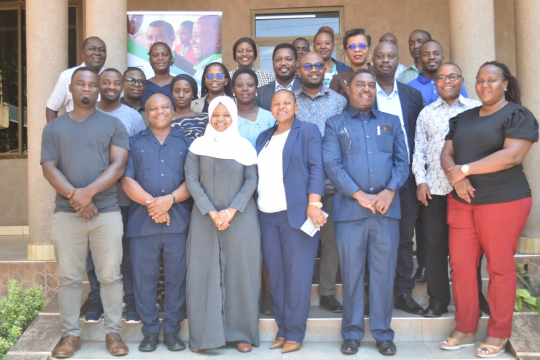
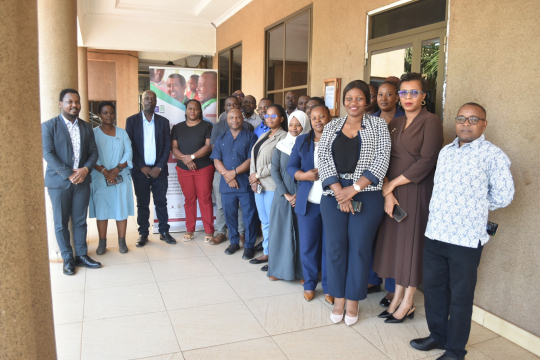
Tanzania aims to accelerating its transition toward climate-smart, inclusive, and sustainable agriculture. National experts, policymakers, and researchers convened to strengthen policy reforms under the Inclusive Green Economy (IGE) program. Stakeholders emphasized that inclusive, socially acceptable, and evidence-based policy reforms are essential for a successful green transition in the agriculture sector.
The IGE program, implemented across Tanzania, Ethiopia, Kenya, Rwanda, and Uganda, aims to build national and regional capacities for green economic transformation. This year’s theme focuses on Climate-Smart Agriculture (CSA), with Transformative Initiatives, that is, the participants’ practical projects during the project, centering on expanding smallholder farmers’ access to climate-smart irrigation technologies.
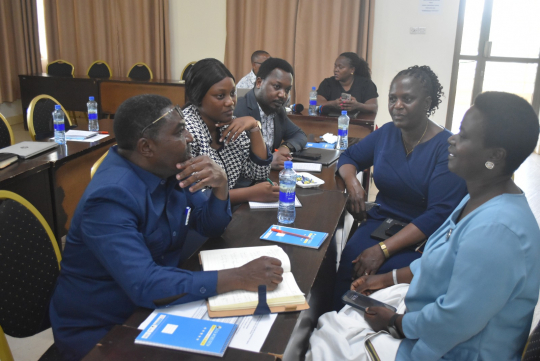
Representatives from government institutions, academia, and development agencies noted the urgency of supporting farmers to adapt to climate impacts by promoting climate-resilient crop varieties such as sorghum, cassava, and legumes, and expanding irrigation infrastructure that reduces dependency on rainfall.
Indigenous crops and smart irrigation take center stage
Speaking during the workshop, Dr. Innocensia John, Head of the Department of Agriculture, Economics and Business at the University of Dar es Salaam, underscored the growing importance of climate-resilient farming systems.
“Climate-smart irrigation is essential for building a resilient and food-secure Tanzania because it reduces farmers’ dependence on unpredictable rainfall, improves water-use efficiency, and enables higher, more stable yields under climate stress,” she said.
“Combined with indigenous crops and other CSA practices, it forms a nature-based, low-emission pathway to climate-resilient agriculture.”
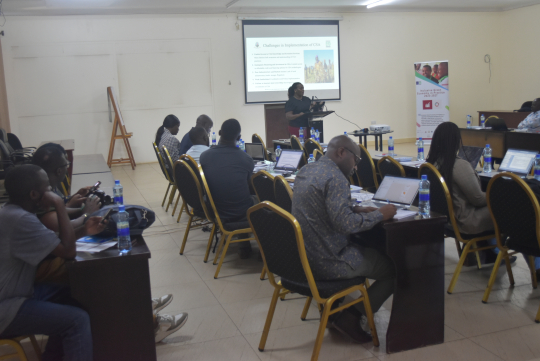
IGE program strengthens policy and community capacity
Dr. Aloyce Hepelwa, Coordinator of the IGE program at the University of Dar es Salaam, reaffirmed the program’s commitment to supporting communities and policymakers with the tools needed for a just, green transition.
“The IGE project focuses on empowering communities to use resources productively without harming the environment. Following the Tanzania vision 2025 and awareness creation in the government sectors, we expect to see increased production, environmental conservation, and sustainable land use,” he emphasized.
Tanzania’s CSA program gains momentum
Dr. Zabron C. Nziku from the Tanzania Livestock Research Institute outlined the achievements of the country’s Climate Smart Agriculture Programme (2015–2025).
“The CSA Programme focuses on increasing productivity, strengthening resilience, improving institutional frameworks, and expanding value addition. Tanzania is now adopting more resilient practices such as conservation agriculture, improved crop varieties, and better livestock husbandry,” he said.
Strong policy backing for CSA in the National Development Vision 2050
“The Vision directs that all development initiatives implemented in the country should prioritize environmental protection,” said Mr. Vedastus Sitta, National Planning Commission.
“Climate-smart agriculture is essential in achieving a competitive and climate-resilient economy.”
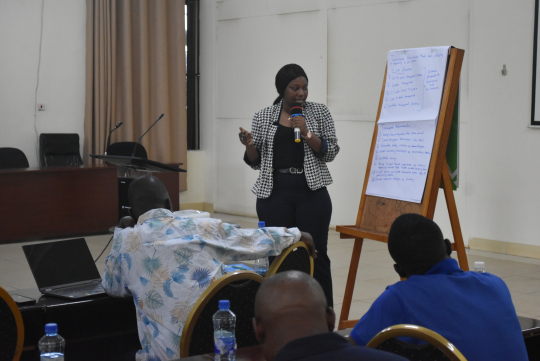
The stakeholders’ workshop organized by EfD Tanzania under the IGE Program at the University of Dar es Salaam included discussions and presentations. It was held in Morogoro on December 5th, 2025, bringing together participants from government ministries, including the Ministry of Agriculture, Vice President’s Office, National Planning Commission, and Ministry of Finance, alongside agricultural stakeholders, researchers, farmers, and members of the media.
By: Salvatory Macha.
Links from media representatives: WAKULIMA WATAKIWA KUTUMIA ZANA BORA ZA KILIMO KUKABILIANA NA MABADILIKO YA TABIANCHI – Full Shangwe Blog
KILIMO CHA KISASA NGUZO YA USALAMA WA CHAKULA NA UCHUMI WA KIJANI - MICHUZI BLOG
https://www.youtube.com/attribution_link?a=YJ639S5fWWrhwpGm&u=/live/f8D…