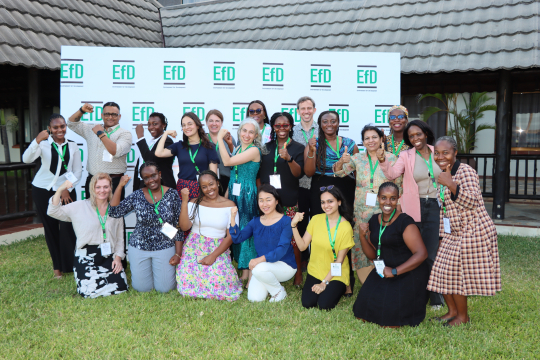
Women researchers are underrepresented in the field of economics, and they face some career obstacles that their male colleagues don’t. To help level the playing field, the Women in Environmental Economics for Development (WinEED) program initiated a mentoring program aimed at women researchers who had submitted papers to EfD’s Annual Meeting 2025. The outcome was very positive, and a continuation of the program is planned.
The initiative, which ran from May to October, aimed to strengthen research quality and boost confidence among women in the EfD network. It was led by Mintewab Ayele, in collaboration with Mariana Vedoveto and Erin Sills, all of whom are from North Carolina State University.
The program offered three phases of mentoring: expert review, peer review, and presentation practice. Out of 35 women invited, 15 joined the expert review phase, and two continued to later stages.
Participants saw great improvements
A large number of senior researchers volunteered to provide targeted and constructive feedback and support to the mentees. The participants were matched by topic and method, helping the mentees refine their analyses and communication skills. The organizers emphasized confidentiality, consent, and respect throughout the process.
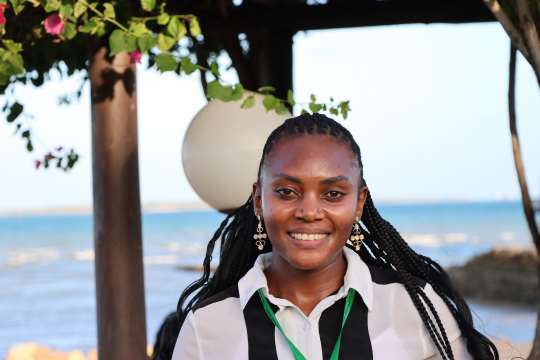
Hannah Ngugi, a junior researcher at the University of Nairobi, joined EfD Kenya a little over a year ago and is one of the participants. She is very enthusiastic about the program and how it helped her improve her paper and presentation.
Feedback applicable to other projects
“My mentor, Katrina Mullan, really walked that extra mile to even refer me to a student she was supervising and working on the same topic to figure out the data together. I found this extremely supportive. She helped me describe the data better, improve the modelling, and gave me alternative ways to do things, such as estimate customers’ willingness to pay,” she says.
Hannah Ngugi also participated in the peer review and presentation practice.
“I’m so grateful for all the help I have received, and the feedback I got will absolutely be applicable for other research papers in the future,” she says.
Looking ahead, the roadmap for future years recommends starting the mentoring earlier, improving communication with reviewers, and encouraging more participants to complete all three phases. The initiative will also maintain clear documentation and evaluation tools to ensure smooth handovers and continuous improvement.
The WinEED program continues to be a key step toward greater inclusion and professional growth for women researchers across the EfD network.
By: Petra Hansson