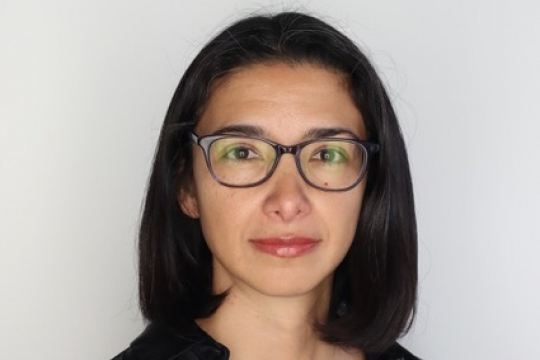
What do rainwater-harvesting systems in urban Mexico, cleaner cooking fuel in Ghana, and a lifelong love of math have in common? The answer is Paulina Oliva, one of the keynote speakers at this year’s EfD Annual Meeting in Tanzania. A professor at the University of Southern California and a well-known name in environmental economics, Paulina Oliva brings a deeply personal and pragmatic perspective to the urgent environmental challenges of the Global South.
Growing up in Querétaro and later moving to Mexico City for her undergraduate studies, Oliva’s path into economics wasn’t planned. It was sparked by curiosity and a drive to solve real-world problems.
“Somebody told me I should look into economics,” she recalls. “I was good at math and really cared about public policy. Mexico has a lot of issues, and I wanted to find solutions to such issues.”
The road led to environmental policy
That passion led her to a Ph.D. at UC Berkeley, where she initially thought she’d specialize in development or labor economics. But time and again, her research ideas circled back to environmental questions, especially the impact of pollution on health.
“It was almost unconscious,” she says. “Eventually I realized: this is what I want to do.”
Fast-forward to today, and her research sits at the forefront of environmental policy design. At EfD’s Annual Meeting, she’ll present a project in Ghana that tackles a deceptively simple question: how can governments help households transition from charcoal to cleaner LPG cooking fuels without breaking the bank?
“In theory, subsidies help,” Oliva explains. “But in practice, much of the money goes to people who would have switched anyway.” Her team’s solution targeted the poorest households who were least likely to switch without subsidies. Smaller households favor small purchases, whereas more well-off households can make larger purchases. So, the project targeted only the small 3-kg cylinders that poorer households prefer. The result: similar adoption rates as broad subsidy programs, but at 30% less cost.
Looks for lasting impact
It’s smart, tangible work that exemplifies Oliva’s broader mission: finding cost-effective, evidence-based ways to improve lives and protect the environment in developing countries.
Beyond Ghana, she’s also been rolling up her sleeves in Mexico City, working with NGOs on rainwater-harvesting systems in underserved areas.
“The design is great,” she says, “but we’re studying where the system breaks down. Is it the maintenance, the training, the technical know-how?”
It’s another example of her determination to ensure that good ideas translate into lasting impact.
Broad scope of work
Paulina Oliva’s work stretches over a broad field, teaching, installing water meters to track household consumption, advising on J-PAL funding boards, helping launch a new initiative in Brazil on ecosystem services, and much more. But one thing ties it all together: a deep belief in using data, economics, and human insight to tackle the world’s most pressing environmental challenges.
Outside of work, she’s just as passionate. With her husband and two kids (ages 11 and 6), you may find her hiking, exploring wildlife, or gently nudging her children to fall in love with nature.
“I try not to talk to them about climate change, but help them see what’s worth protecting.”
The attendees at EfD’s Annual Meeting will get a front-row seat to Oliva’s work and worldview. It promises to be an energizing keynote, full of ideas, curiosity, and inspiring results.
By: Petra Hansson